



When Indiana passed a law in 2016 banning abortions on the basis of sex, race, or disability, Planned Parenthood immediately challenged it in court. Federal courts have enjoined the law, ruling that the right to an abortion supersedes the right to pass laws prohibiting discrimination.
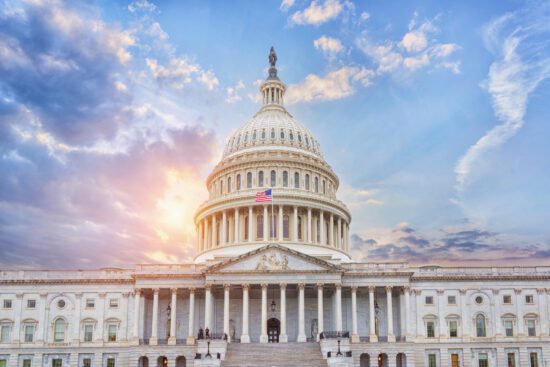
The State of Indiana is appealing the decision to the U.S. Supreme Court, and the ERLC has filed a friend-of-the-court brief in defense of the Indiana law. Joining with National Association of Evangelicals, Concerned Women for America, National Legal Foundation and Pacific Justice Institute, the ERLC’s brief urges the Supreme Court to uphold Indiana’s law and protect unborn children from discriminatory abortions.
Laws like Indiana’s are in response to extremely high abortion rates for unborn children diagnosed with Down Syndrome or other genetic abnormalities with prenatal genetic testing. Because the U.S. Supreme Court has never taken a case dealing with nondiscrimination abortion regulations, our legal brief also urges the Court to reconsider its abortion jurisprudence. Federal courts are far too often ruling that abortion rights supersede foundational constitutional legal protections, such as equal rights under the law regardless of race, sex, or disability.
Russell Moore commented on the case in Baptist Press, "This country will one day shudder at the thought of a child being snuffed out in the womb simply because that child had an extra chromosome. The abortion industry's defense of abortions based on sex, race and disability exposes their thirst for profit."
The ERLC’s SCOTUS brief makes the following legal arguments:
- The Supreme Court has not adjudicated the ability to prevent discrimination on the basis of sex, race, and disability in abortion.
- Sex-selection discrimination against females is real.
- Disparity in abortion rates among races raise serious concerns for states that can be legitimately taken into account.
- As prenatal genetics testing becomes cheaper and more widely available, eugenic practices of aborting children with genetic abnormalities is increasing.
- This case provides an appropriate vehicle for the Supreme Court to reconsider whether Roe v. Wade and its progeny of abortion jurisprudence should be reevaluated or overruled, in whole or in part.
- Our nation has compelling interests in preventing discrimination on the basis of race, sex, and disability.
But our nation’s broader debates about the dignity of every life are bigger than our legal arguments. In fact, even if the Supreme Court were to do the right thing and overturn Roe v. Wade, ending abortion would require making the whole-life, pro-life arguments persuasively in our state legislatures, our communities, our neighborhoods, and our friendships. As one former Planned Parenthood clinic director turned pro-life advocate says, our goal can’t be merely to make abortion illegal, but to make it unthinkable.
That requires caring for women facing unexpected pregnancies and that means standing up for the dignity of our neighbors with disabilities, showing the world why our brothers and sisters with Down Syndrome help us all flourish more, not less.
There are people like Princeton University professor of bioethics, Peter Singer, who often makes utterly immoral arguments that ending the lives of unborn children who are diagnosed with Down Syndrome is not only justifiable but will also bring greater all-around happiness to individuals and families.
Anyone who has ever known a child or adult with an intellectual disability knows this can’t be further from the truth. That is the heart behind Indiana’s law and our legal brief supporting it. May the church live and minister to our neighbors to help show them this truth that every single human being is made in the image of God.