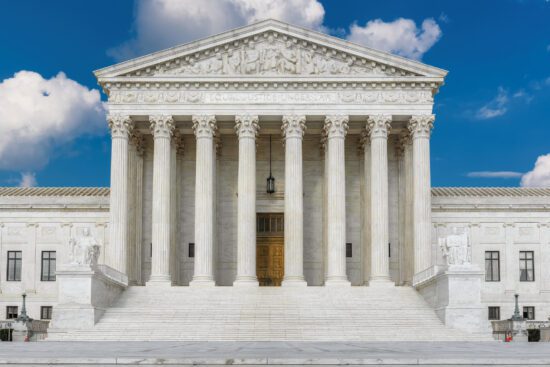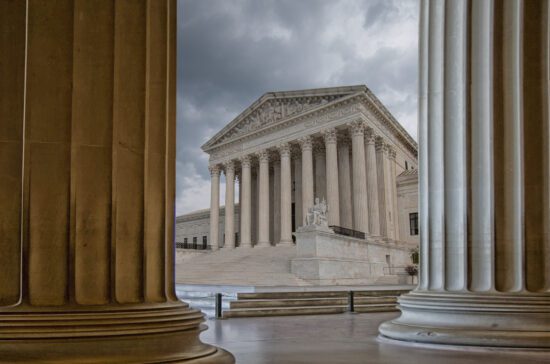



Today, the U.S. Supreme Court will hear oral arguments in a case titled Joseph A. Kennedy, v. Bremerton School District. Here’s what you need to know about this case:
What is this case about?
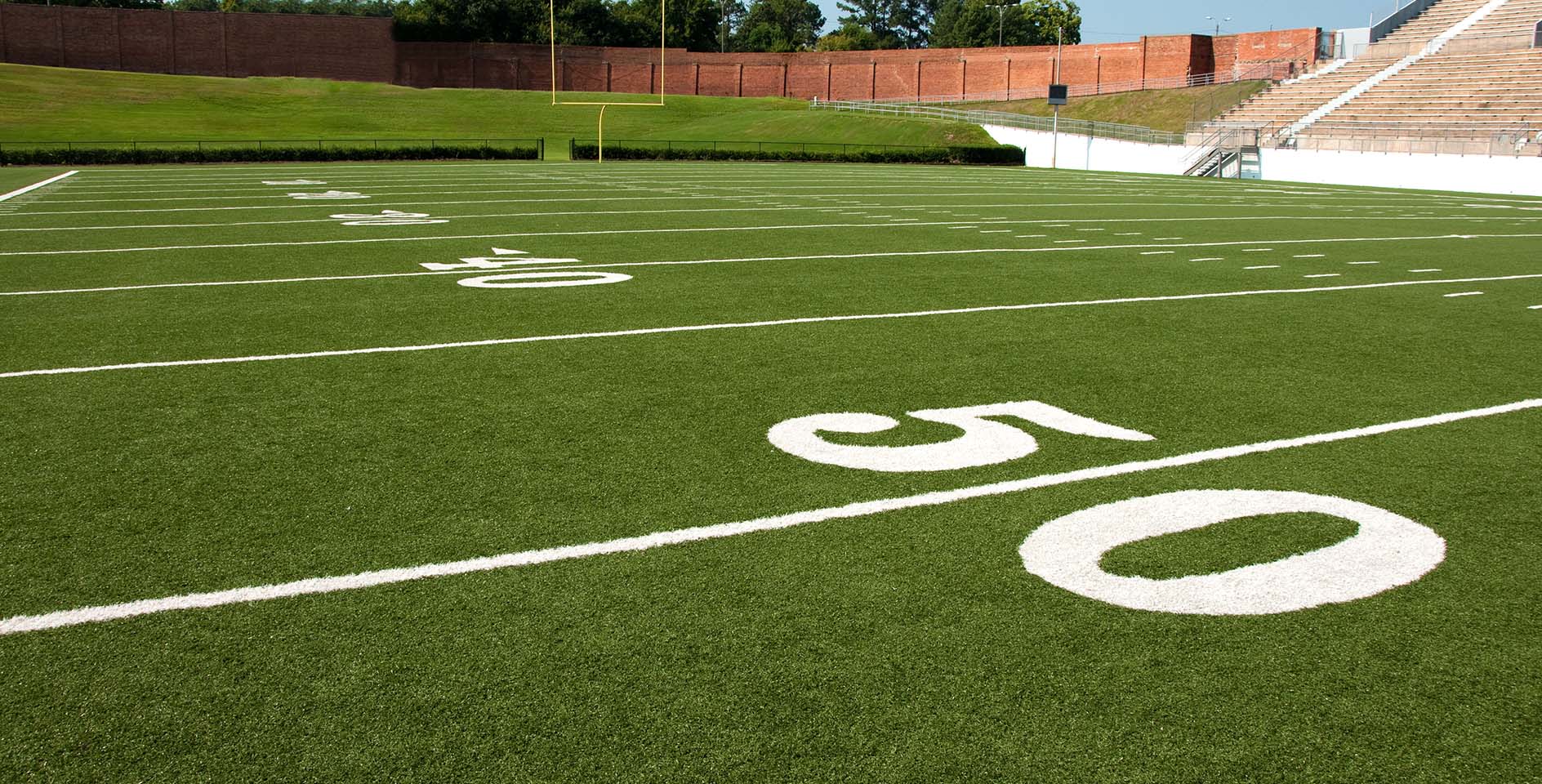
This is a case about the rights of teachers and coaches to privately express their religious belief while working for schools. Coach Kennedy, a high school football coach in Bremerton, Washington, had a tradition of kneeling and quietly praying at the 50-yard line after football games. He was suspended by Bremerton High School, and later fired because of his action. He filed a lawsuit against the school district, arguing that the school’s actions violated the Constitution.
As our brief states, “Coach Kennedy . . . acted after a game, without directing his speech or conduct toward any particular audience, without anyone in compulsory attendance, without his inviting anyone, and on an outdoor field open to the entire public (not just students and other school employees).” It goes on to state, “This was a private gathering of like-minded individuals, and that gathering was itself shielded by the First Amendment protections of religion, speech, and assembly.”
Why does this matter for Southern Baptists?
As Christians, our faith shapes the totality of how we live and the structure of our lives, and the government must allow people of faith to live out their convictions according to their religious beliefs. A teacher, administrator, student, or coach does not shed their religious beliefs simply because they enter the schoolhouse door, or as in this case, the field of play. Kennedy was living out his faith in public, and he should have the ability to do so without being punished.
Across the denomination, Southern Baptists can be found working in the public education sector. As Christians, Scripture calls us to do “all in the name of the Lord Jesus, giving thanks to God the Father through him” (Col. 3:17). Believers ought to be able to do this in the public square without fear of repercussions.
How has the ERLC been involved?
The ERLC was involved with briefs at the petition for certiorari stage and before the Supreme Court on the merits. The brief the ERLC joined argued that,
. . . the school should have allowed the exercise of the constitutional freedoms to speak, pray, and assemble. It cannot convert its improper halting of such practices into a legal virtue by resort to the Establishment Clause, as that clause certainly did not proscribe the unassisted, privately initiated exercise of religion by Coach Kennedy.
The Establishment Clause does not require public schools to be policed as religion-free zones, and a reasonable, objective person understands that teachers can act in private capacities, even while on school grounds and even during school hours. When teachers do so, their freedoms are not to be curtailed, and they are not to be punished.
What’s next for this case?
After the Supreme Court hears oral arguments today, it will release its opinion later this term, likely in May or June. The ERLC will continue to follow and cover future developments on this case. And, as we have been assigned by Southern Baptist, we will always protect religious liberty before Congress, the courts, and in the public square.