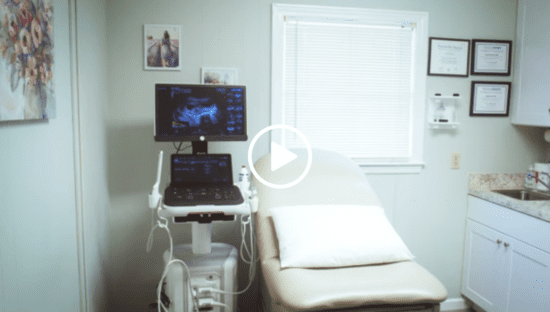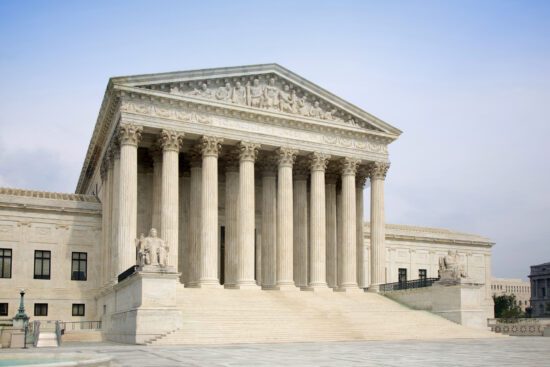




This week marked another win for the pro-life movement as the Supreme Court rejected a challenge to a Kentucky abortion law. The law, which was passed by Kentucky’s General Assembly and signed by Gov. Matt Bevin in 2017, requires doctors to display and describe ultrasound images and, when possible, to play audio of the fetal heartbeat for women seeking abortions ahead of the procedure.
The law had previously been upheld by the 6th Circuit U.S. Court of Appeals. Following the 6th Circuit’s decision, the American Civil Liberties Union (ACLU) appealed the ruling to the Supreme Court. The law’s implementation was blocked pending the Court’s decision. Now that the Supreme Court has declined to hear the appeal, the law will go into effect.
In challenging the case, the ACLU claimed that the law violated the First Amendment rights of physicians. According to the ACLU, requiring doctors to describe the details of the ultrasound represented an unconstitutional form of compelled speech. But as the appeals court ruled, “there is nothing suspect with a state’s requiring a doctor, before performing an abortion, to make truthful, non-misleading factual disclosures, relevant to informed consent.”
Indeed, informed consent is the real benefit of such laws, which also exist in several other states. As the commonwealth argued in a brief urging the Supreme Court to deny review, “The rationale behind [the law] is the common sense notion that nothing can better inform a patient of the nature and consequences of an abortion than actually seeing an image of the fetus who will be aborted and receiving a medically-accurate description of that image.”
The Court’s refusal to hear the appeal is welcomed news for defenders of the pre-born. It is no surprise that the advent of ultrasound technology has made a significant difference in the fight to protect the most vulnerable among us. Ultrasounds bring us face to face with the life inside the womb. And when witnessing these images—especially the incredible definition and clarity available through 3D and 4D ultrasounds—there is no denying the existence of a living person within the womb. Studies have shown that in many cases, simply viewing the ultrasound images has led women who intended to have abortions to choose life.
Ultrasounds bring us face to face with the life inside the womb.
Doubtless, some will argue that requiring women seeking abortions to undergo an ultrasound or have the images explained to them is immoral or unloving. In fact, Planned Parenthood did so immediately. After the Supreme Court’s announcement, Planned Parenthood posted a series of tweets that read in part, “Today is a dark day. The Supreme Court just allowed a harmful abortion restriction to go into effect . . . The only thing it does is shame and stigmatize people for seeking abortion services.” A bleak picture indeed, but this hyperbole is hardly warranted.
Sadly, Planned Parenthood and the abortion lobby have thoroughly suffused our society with false information about abortion. Beyond simple inaccuracies, the outrageous claims advanced by pro-choice activists and organizations—that what is in the womb is less than a life, that an unborn child is merely tissue or a clump of cells, that abortions are essentially amoral and inconsequential—have devastating, real-life consequences. And such distortions desperately need to be combated with truth.
The last thing that a pregnant woman who is vulnerable and scared needs is false information. Ensuring that women have full access to relevant and vital information concerning both the life they are carrying and the implications of their decisions is both gracious and kind. Rather than perpetrating harm or creating a stigma, these laws are intended to protect vulnerable people.
This law is important because every life matters. Christians recognize that every life is precious because every person is made in the image of God (Gen. 1:28). This means that Christians are to care about all people. We care about mothers who are vulnerable or afraid. We care about the precious lives of our unborn neighbors. And even as we celebrate this victory, we recognize that legislation will never be enough.
Christians must continue to work and pray in support of those who are grappling with the fears and uncertainties of unplanned pregnancies. We must continue to support the work of pregnancy resource centers and to advance the cause of adoption. We must support our neighbors who are in the midst of crisis and point toward alternatives to abortion. And we must continue to combat the lies of Planned Parenthood and the abortion lobby that harm the innocent by preying upon the fears of vulnerable women.