
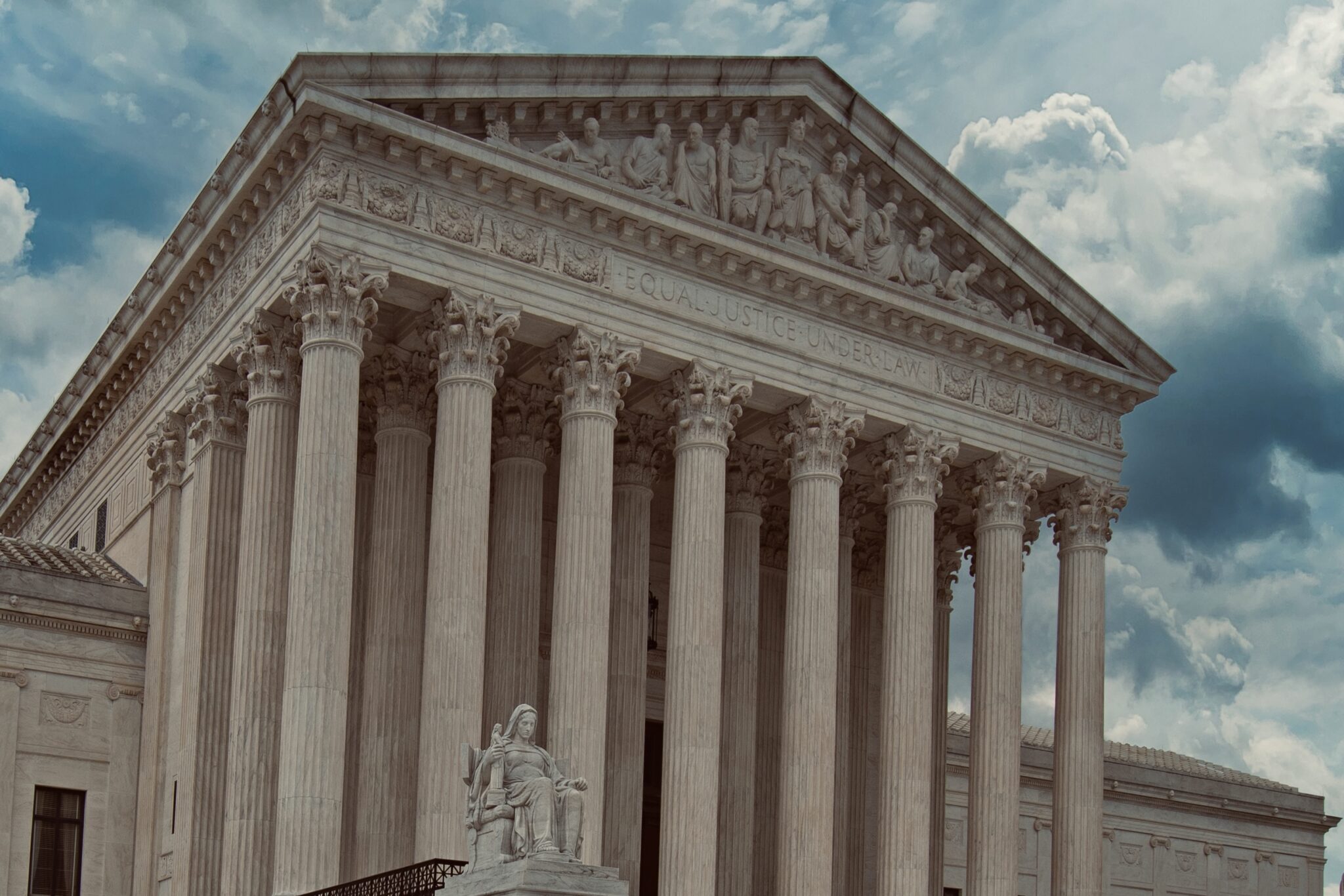


What is the same-sex marriage case the Supreme Court is hearing?
Today the Supreme Court is hearing oral arguments in the case of Obergefell v. Hodges, which is consolidated with three other cases (Tanco v. Haslam (Tennessee); DeBoer v. Snyder (Michigan); Bourke v. Beshear (Kentucky)). These cases challenged two issues concerning whether the Fourteenth Amendment's must guarantee the right for same-sex couples to marry.
What issues will the court decide?
The two issues to be answered in this case are:
1) Does the Fourteenth Amendment require a state to license a marriage between two people of the same sex?
2) Does the Fourteenth Amendment require a state to recognize a marriage between two people of the same sex when their marriage was lawfully licensed and performed out-of-state?
These are known as the “marriage” and “recognition” questions, respectively. The Court could answer “yes” or “no” to both questions. Additionally, the Court could say that individual states are not required to issue marriage licenses to same-sex couples but, due to the Full Faith and Credit clause, must recognize such marriage licenses as valid when issue in another state.
Why is the argument relying on the Fourteenth Amendment?
The Supreme Court rarely recognizes new “fundamental rights” in the Constitution that have previously existed, which is what many opponents of same-sex marriage say is being asked for. Because of this obstacle LGBT marriage advocates are claiming that the right to marry is already well established and they simply want access to it in order to marry a person of their choosing.
What is the argument that the Court is creating a new “fundamental right” by allowing same-sex couples to marry?
Marriage is currently considered a “fundamental right” by the Supreme Court and clearly applies to opposite-sex couples. When considering whether an asserted right is "fundamental," says Chris Gacek, we are to rely on the test that the court set out in Washington v. Glucksberg (1997).
First, the court requires the presentation of a "'careful description' of the asserted fundamental right or liberty interest." The claimed right must be described precisely. Second, such rights must be "deeply rooted in this Nation's history and tradition."
Furthermore, the right must be "so rooted in the traditions and conscience of our people as to be ranked as fundamental." The sought-after right must be "implicit in the concept of ordered liberty" so that "neither liberty nor justice would exist if (it was) sacrificed."
In the current cases, a broad definition like "being able to marry the person of one's choice" does not describe what the plaintiffs seek. They are permitted to marry at present, but they must marry a person of the opposite sex.
That is how the right to marry has always been understood, but that is not the type of marriage the challengers want. Rather, they seek the legitimation of a new right — a right to a governmentally recognized conjugal arrangement for persons of the same sex.
What happens if the court rules to overturn the state prohibitions against same-sex marriage?
The Court could invalidate all bans against same-sex marriage in the individuals state. The same effect would occur, however, if the Court forces the states to recognize same-sex marriages from other states. In either situation, recognition of same-sex marriage by the states would be the law of the land.
What is the Obama administration’s position on this case?
The Justice Department's decided in 2011 to stop defending the federal anti-marriage law. Since then the administration has actively backed the creation of a right for same-sex couples to marry. The Obama administration has also filed an amicus brief supporting the same-sex marriage side, which will receive considerable attention from the Court.
How many same-sex couples currently have marriage licenses?
There are an estimated 350,000 same-sex couples that have received state marriage licenses. That's just 0.3 percent of the nation's 242 million adults.
When will the case be decided?
The final ruling is not expected until June or early July.