How does being a Christians affect one’s public service? And what can Southern Baptists do to influence the public square? Welcome to the ERLC Podcast, where our goal is to help you think biblically about today’s cultural issues. Today, we’re featuring a panel with elected representatives that we hosted at the 2025 SBC Annual Meeting.
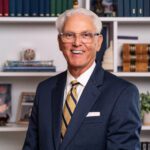
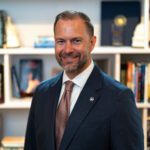
During SBC25 in Dallas, ERLC President Brent Leatherwood spoke with Ambassador designate Mark Walker, President Trump’s appointee for the Office of International Religious Freedom, Congressman Nathaniel Moran from Texas, and Sen. James Lankford from Oklahoma about being a Christian in Washington, D.C.
Before being named as the Ambassador designate, Mark Walker represented North Carolina’s 6th Congressional District in the U.S. House of Representatives from 2015 to 2021. Congressman Nathaniel Moran serves the first district of Texas, and is one of five Republicans appointed to the Ethics Committee, the body which upholds the House Code of Official Conduct. Lastly, Senator James Lankford served four years in the US House of Representatives for central Oklahoma, until he was elected to the US Senate in 2014.
Watch Southern Baptists in the Public Square here.
Episode Transcript: Southern Baptists in the Public Square
Narration:
Welcome to the ERLC podcast, where our goal is to help you think biblically about today’s cultural issues. I’m Lindsay Nicolet, and today we’re featuring a panel with elected representatives that we hosted at the 2025 SBC annual meeting. How does being a Christian affect one’s public service? And what can Southern Baptist do to influence the public square? During SBC25 in Dallas, ERLC president Brent Leatherwood spoke with Ambassador Designate Mark Walker, president Trump’s appointee for the Office of International Religious Freedom, Congressman Nathaniel Moran from Texas, and Senator James Langford from Oklahoma about being a Christian in Washington, D.C. Before being named as the Ambassador Designate, Mark Walker represented North Carolina’s sixth Congressional District in the US House of Representatives from 2015 to 2021. Congressman Nathaniel Moran serves the first district of Texas and is one of five Republicans appointed to the Ethics Committee, the body which upholds the House Code of Official conduct. Finally, Senator James Lankford served four years in the US House of Representatives for Central Oklahoma until he was elected to the US Senate in 2014. Now, let’s turn to ERLC president Brent Leatherwood’s conversation with these leaders.
Brent Leatherwood:
My name is Brent Leatherwood and I am the President of your Ethics and Religious Liberty Commission. And joining me on the stage are some dear friends, old and new, that I have the privilege of working with in our nation’s capital. And so let me provide them the kind of honor they’re due by introducing them properly. So right here to my left is US Senator James Lankford from the state of Oklahoma. He…
<applause>
Senator James Lankford:
There you go.
Brent Leatherwood:
[We] got some Okies in the crowd. He served four years in the United States House of Representatives. I lead with that because I worked in the house. And so, I’m kind of a creature of the house.
Senator James Lankford:
But now, but now you’re the president. Now you’re [in the] Executive Branch.
Brent Leatherwood:
<laugh>. Yeah, <laugh>. And so then he was elected, after serving in the US House, he was elected to the US Senate in 2014 before his service in Congress. And this is key: James served students and families for more than 20 years in ministry, including 15 years as the Director of Student Ministry for the Baptist Convention of Oklahoma and director of the Falls Creek Youth Camp. I imagine that may have come in handy in your election.
Senator James Lankford:
There have been many pastors [who] serve in Congress. I think I’m the only youth pastor, and I think that’s for obvious reasons, based on youth pastors that are here that know that full well.
Ambassador Designee Mark Walker:
You usually need constant direction is why
Brent Leatherwood:
<laugh>, To Senator Lankford’s left is Ambassador Designate Mark Walker, Congressman Walker. He soon will be Ambassador Walker. Congressman Walker, he was a Southern Baptist pastor and public servant. He represented North Carolina’s sixth Congressional District and the US House of Representatives. [He] served there from 2015 to 2021. He’s been recognized for his efforts to build bipartisan coalitions in support of religious freedom, human rights, and international engagement. Prior to that, he was a pastor for 16 years. And, Congressman Walker, I think it might be those coalitions in support of religious freedom and support of human rights and international engagement that might have something to do with why President Trump has nominated you to be ambassador for International Religious Freedom.
Ambassador Designee Mark Walker:
Well, I will tell you this: it makes me reflect back on my time and work with the International Mission Board and doing some mission trips there. But yes, I think that may have had a factor in it. And we’re certainly glad to hear from him. I’m looking forward to hopefully getting through Senate confirmation at some point.
Senator James Lankford:
Easy. We’ll see how this panel goes.
Brent Leatherwood:
<laugh>.
Ambassador Designee Mark Walker:
I’m saving my closing arguments.
Brent Leatherwood:
Advise and consent, advise and consent. And down at the end is Congressman Nathaniel Moran. He is just from a little bit east of here. He represents Texas’s First District. He is now in his second term, and he is one of only five Republicans who was appointed to the Ethics Committee. Ethics committee. That seems like something we might talk about a little bit tonight. So we’re grateful for that. But prior to that, he served locally as a judge in Texas. Now, for those of y’all who aren’t from Texas, you might say, “oh, he was a member of the judiciary.” No, no, no. That means he was the county executive. And he’s proud of that. As a matter of fact, many of his colleagues in Congress, they still call him Judge, which I think is great for you because you really do try and focus locally on finding answers, Congressman.
Congressman Nathaniel Moran:
That’s right. Pleasure to be here tonight with you guys all. Thank you for allowing us to have this really important conversation. I did joke with you, uh, backstage that I told my staff not to call me Congressman ’cause I didn’t wanna be demoted from Judge to Congressman <laugh>. So, keep it at Judge, as it were. So thank you for allowing me to be part of this great panel tonight.
Brent Leatherwood:
Well, and the common tie that binds all of us is we are Southern Baptists. These truly are examples of Southern Baptists serving in the public square. And I think the three of you, let me just start out by saying this, I think the three of you do so with distinction and the churches of the SBC are truly grateful for y’all. Alright, so, Congressman Moran, we’re going to ask all three of y’all to chime in here with this first question, but we’ll start with you. Give our audience, which has a number of pastors and ministering leaders in it, give us a sense of your faith background. What is your testimony? Where did you come to know Jesus?
Congressman Nathaniel Moran:
Well, thanks Brent, for starting there, ’cause truly that’s the most important thing in this life, isn’t it? It starts with that decision to follow Jesus Christ. This last week, we celebrated – in fact, this morning, at our home church in Tyler, Texas at South Spring Baptist Church – my little 8-year-old, my fourth child, came up and made his public profession of faith in front of the church.
Congressman Nathaniel Moran:
Such an important time. He had dedicated his life on May 30th. There around bedtime, I was putting the kids to bed, and I remembered back to when I was seven years old and gave my heart to Christ. But the foundation of faith for me really started with my parents. And that’s how I came to East Texas. My parents are from Illinois, but they met when my dad was actually doing a tent revival. You guys remember when tent revivals were actually happening in this, in the United States? Well, my dad was doing that in the sixties, and my mom was playing her accordion and singing in a little trio from a town nearby. And they met and he took her back to Bible college in southern Arizona. And years later then came to East Texas to help start a small Bible college and a ministry there.
Congressman Nathaniel Moran:
And he worked in that ministry. My parents worked in that ministry for about 10 years. So I grew up in a little bitty single wide trailer home in East Texas, Southern Smith County, on a bible college campus going to tent revivals during the week and church on Sundays, and got saved at the age of seven. And Brent, I remember that time when I accepted the Lord was during a VBS time in the summer. And I walked from the back of the church all the way down to the very front. And it seemed like an eternal walk to get down there to the altar. But I knew the Lord was calling me and had spoken to my heart to relinquish control. And that’s the hardest thing, really, for a lot of us to do, is relinquish control and say, “Lord, take control of my life. I’m gonna give it to you. And I recognize that I’m not good enough, that I’m a sinner, that I need a Savior, and that you are the only path to heaven.” And since the age of seven, then, have dedicated my life, frankly, to serving Him and finding the call in my life and saying, “Lord, when, where, and how would you have me serve in this life to do your work and for your glory?”
Brent Leatherwood:
That’s so good. Congressman Walker?
Ambassador Designee Mark Walker:
Yeah, I, interesting, similar, first time I’m hearing a little bit of your story, Congressman. My dad will be 80 on Friday of this coming week – I’m sorry, Saturday. And he’s been pastoring for my entire life. He still is and has a country, rural church there in North Carolina where he is. He should be finished by now in the eastern time zone, <laugh>. But, you know, I grew up in that environment. I think the first time I did make a profession of faith, if you remember all those scary seventies Christian movies, there was one of ’em that sent me down the aisle when I was age four. But it wasn’t until later on that I really reached a place – as far as understanding and a surrender and a personal relationship with the Lord – I wanted no part of the ministry.
Ambassador Designee Mark Walker:
I never got into the world from a rebellious standpoint, but I had seen the taxation. And for those of you that work in ministry and, you know, the constant being on call and dealing with people from all walks of life. I pursued business and finance. But it was about age 26 [or] 27, God began to lead us into ministry, [I] went back to Bible college, and got a theology degree and served 16 years as a pastor. But I look back and I cannot talk too much about my mom and dad and their faith and how it influenced us. Because so many times you see ministry children that don’t make it through that; that pressure cooker’s too much and they haven’t darkened a door. And just to see my dad, how he stayed in the Word and how he stayed faithful and how he is finishing strong has always been something that I’ve admired.
Ambassador Designee Mark Walker:
But that relationship and that close walk with the Lord as a young person was instrumental for me: coming to my own understanding that I was a sinner, needing [to be] saved by grace. Because when you grow up in that environment, you’re not exactly at age four or five womanizing or drinking or carousing with those that do. You know, you gotta be at the church three times a week. So to walk through that, but still understand that without the work, the finished work of Jesus Christ, that I’m no better – I’m just as big a sinner as anybody else. And to realize that what Jesus Christ – the price that He paid for me – it took us a few years into the teen years before we finally kind of grasped that and was able to move forward. And grateful for that opportunity, of course, the testimony of my parents.
Brent Leatherwood:
Senator, how about you?
Senator James Lankford:
So I did not have that, but grateful to be able to hear the story of God’s faithfulness. My parents divorced when I was four years old. My mom moved in with her parents and then moved into a little rent house, actually about five miles east of here. So as you’re coming down I-30 – you’re heading to the East Jim Miller in I-30 – in that neighborhood, that’s where I grew up. Just about five miles from here. Mom was, quite frankly, embarrassed of the divorce and wanted to be able to plug in and be in church. But as she told me years later, “I wanted to go to a big church and just kind of hide.” And so we went to First Baptist Church Dallas, and I grew up there at First Baptist Dallas. I had some friends there that joke with me and say, “I will not have to wait in line to get into Heaven ’cause Dr. W. A. Criswell baptized me. So I’ll be in the express lane, [and] all y’all will have to wait to check credentials. I won’t: I’ll be in the W. A. Criswell Line over on that side.”
Senator James Lankford:
Easter Sunday, 1976. For me, I was baptized, but I remember it was several weeks before that on a Sunday evening, I’d actually listened in church, which is a miraculous thing for an 8-year-old to do, sitting up in the balcony. And I knew enough to understand there is a God and I don’t know Him. It was just that simple. And I remember praying in my bed that night by myself and asking Jesus to forgive me. And that was my starting point. I got plugged into Royal Ambassadors, got plugged into things at my church to be able to help me begin to grow. And my mom was really eager to be able to get me around Christian men to be able to have an influence around in my life. And so, there were a lot of men at that church, at First Baptist Dallas, that were very impactful to me personally growing up. And I’m very, very grateful for the ministry that was there. So for me, that’s the beginning point, but gratefully, that’s not where my journey with God ended.
Brent Leatherwood:
Yeah. So this next question, it’s, again, for all three of you before we kind of go into some individual ones, but you’re obviously working, you’re following the call of the Lord, you’re doing incredible things in the church, outside the church, in the area of law. Give folks a sense of how you knew: what was it that called you into public service. From your time in the church, in your walk with the Lord, what was it that led you to know, “I need to go and serve in my community, for my congressional district, or even [the] United States Senate?” Like, what was that?
Senator James Lankford:
So, let me start. I’m going to see if I can find my bride somewhere in the audience…right there. Okay. My bride, Cindy, calls this life’s greatest interruption for us. 22 years of youth ministry, you don’t run into a lot of folks that talk to their youth pastor and say, “you know, you should be a senator one day.” <laugh>. That conversation just doesn’t come up. And it wasn’t for us. I wasn’t involved in anything in politics, wasn’t involved in precinct meetings, wasn’t none of that. I was a voter. Now, I was the nerdy kid who read the newspaper growing up, and I was in speech and debate and all those things, and I loved the different policy areas, but I was a youth pastor serving in Falls Creek. If you’re in youth ministry, there is no greater place to serve than in Falls Creek.
Senator James Lankford:
And we’d literally watch thousands of students a summer come to Christ there. So for me, that was our focus. But in 2008, God began to speak both to Cindy and I. And it was just this very clear, “get ready” – that’s all it was. Every time I sat down to read Scripture, every time my pastor would preach, whatever it may be, the Holy Spirit would just repeat the same thing: “get ready, get ready, get ready.” We had a month that we were hearing nothing but “get ready.” And for a month, that’s pretty exciting. But that went on for about six months, and after six months, it’s not exciting anymore. It’s unsettling. And I remember speaking at a “See You at the Pole” rally in Okmulgee, Oklahoma September of 2008, driving back home late that night and saying, “God, I don’t know what to do with this.
Senator James Lankford:
I’ve taught students for years how to listen to your voice. I’m trying to listen. I don’t know what you’re trying to say.” So, I got home late that night after griping with God for two hours in the car, and was just literally reading the news online that night. And I’m just going through the different things. And as strange as it sounds, as I’m reading through the news online that night, there’s a story about the current member of Congress in my district that she was considering running for governor two years later. That’s all it was. It was just like a rumor story. And it’s September of that year, and I can’t explain it other than as I’m reading the story, the Holy Spirit just thumped me on the heart and said, “That’s what I want you to do.” It’s the first thing I’d heard in six months other than “get ready.”
Senator James Lankford:
And I remember leaning back in my chair and saying, “well, God, that’s insane.” <laugh>. That’s, that’s not even rational. That’s not even possible. I mean, it was just a processing moment of like, well, that’s not real. So I didn’t tell Cindy that night about it ’cause no one goes to their wife and says, “let’s run for Congress.” Okay, that’s not a normal conversation. <laugh>. But three days later, I can’t shake it. Back in my little study in my house, I thought, “I’m just going to research the district.” And so, as I’m researching the district and just trying to look at boundaries and all those things, and trying to be able to figure this out, my wife comes in, looks over my shoulder and looks at the computer– which faces the middle of the room – looks at the computer and says, “what are you looking at?”
Senator James Lankford:
And I said, “county statistics.” <laugh>. And I thought, “I don’t know how to answer the next question.” And she hesitated for a long time, and she said, “we’re about to run for Congress, aren’t we?” And I said, “what makes you say that?” <laugh> And she hesitated for a while, and she said, “I don’t know. I just know.” And I said, “I need to tell you what God said to me three days ago.” And so, I laid it all out. We talked it out for a long time that night, and we determined, “we’re going to pray about this for a month.” And I honestly thought this was going to be like an Abraham & Isaac moment where God was going to say, “you were faithful to pray about even a crazy thing for a month. Thank you very much. You don’t have to do this crazy thing.” But at the end of our one month, God said, “oh no, we’re killing Isaac in this version.”
Senator James Lankford:
You know, there’s no ram in this one. And so, that one month became seven months of struggling with it. And at the end of that, I said to Cindy, “I’m going to be an old man one day telling my grandchildren about the time I didn’t follow God.” And we’ve all met somebody like that. And I said, “I don’t want to be that man. And I don’t know why God’s calling us to this, but He is.” And so, I resigned my position as the director of Falls Creek, we lived off our substantial youth ministry life savings, <laugh> for a year, ran for Congress, and was elected in 2010. So, it was a real stretch for us that we did not expect.
Ambassador Designee Mark Walker:
That was fascinating. A little bit about mine is, you know, I paid attention to politics, but never really had dove in with both feet. But I remember somebody had given me a ticket to the 2012 Republican National Convention in Tampa. I wasn’t a delegate, [I sat] up in the nosebleed section. Well, there was a break, so I kind of worked my way down to the floor to kinda see, you know, how they bed the big signs with all the different states. And, I’m walking there and I’m just reflecting. And it hit me out of nowhere in my heart, not audibly, but said, “this is your future.” Now, I didn’t know [the] school board county commissioner, I didn’t know – this is August of 2012. And so, I get back home and I’m, you know, not throwing all of that out to Kelly, my wife, and I said, “look, I think something in the political arena, we want to maybe merge into our lives or something.”
Ambassador Designee Mark Walker:
I attended a few of the city council meetings there in Greensboro, North Carolina. But I was watching the night of the election returns, the presidential election in 2012. And, when it was declared who the winner was, I think it was the second term of President Barack Obama. It was like, “boom, I’m running for the US Congress.” I got up, walked down the hallway very proudly, had my head, you know, head held back and was announcing to my dear wife, I said, “Kelly, I’m running for the United States Congress.” <laugh>, And my wife, she’s a trauma specialist – has a doctorate in nurse practice – and sees a lot of, you know, nasty things. So her language in the ER is a little more salty than mine is as a minister – no, I’m not that bad. But she did ask a couple important questions.
Ambassador Designee Mark Walker:
She said, “okay, great.” She said, “do you know anybody in Raleigh,” which is the state capital, “– much less Washington, D.C.? And I think, “that’s a good question.” If you’re gonna run for Congress, you probably should know at least somebody in your state capital. But long story short, we stepped out by faith. There was a 30-year incumbent there, [and] he decided to retire. And then we didn’t know that we would have to run against the Senate majority leader’s son by the same name, just a junior. But God allowed us to walk through it. We stepped away from ministry December 31st, 2013. I felt like that would be a conflict, not knocking those who do. But we did not have a salary for 2014. And somehow, God provided for us through that year and had some wonderful opportunities.
Ambassador Designee Mark Walker:
But maybe, you know, my dear father-in-law – who is deceased, but was a pastor [in] one place, one location for nearly 40 years – I was trying to explain to him that just as sure as I was of the call – that God was calling me from the business arena in the political arena or from the business arena to the church arena – I felt just as strong a calling to this day without doubting it, that he was also moving us from a full-time vocational position to what I felt like was another ministry area. And really the closure on this, Brent, I just got tired of working with crazy people. So I thought I’d go work with – nevermind. <laugh>. So, oh, is this on video? No, I’m just teasing. But, so no. We were very, very blessed about how God directed that path and honored it.
Brent Leatherwood:
So you mentioned you got a ticket to go to the 2012 RNC in Tampa? That’s the one that was hit by a hurricane, you know, was delayed with. Did that say anything about, you know, your future in politics that a storm was coming?
Ambassador Designee Mark Walker:
Well, if you’ve been in ministry, in politics, there’s usually a storm always coming.
Brent Leatherwood:
That’s right. <laugh>,Or if you’ve been in denominational politics, you know, Speaker Johnson likes to say his time as a trustee of the ERLC prepared him for Congress.
Ambassador Designee Mark Walker:
Listen, I’ve often said it’s the best education: if you can survive a Baptist business meeting, you can go work anywhere.
Brent Leatherwood:
Congressman Moran, how about you?
Congressman Nathaniel Moran:
Brent, before I answer this question: Senator Lankford, you did not know this before you got up here, but in 1987, I was a camper at Falls Creek.
Senator James Lankford:
Really?
Congressman Nathaniel Moran:
I was indeed.
Senator James Lankford:
That’s great.
Congressman Nathaniel Moran:
So, I love this question because it allows me to talk about how my parents raised me and my three brothers. There were four of us. I have a twin brother, genetically, the same – identical twin brother. And even though my parents were in the ministry full time growing up, they taught us early on that there was equal and eternal value in the call that was placed on our life. And the highest call that we could pursue was the call that God had for us, the call that he had created each one of us for. None of the four of us are in full-time ministry – what would be traditional ministry – but we all are ministers of the gospel in the vocation that God has called us in: one in education, one in business, one in engineering, and then me in public policy.
Congressman Nathaniel Moran:
I’ve known since the fourth grade that God called me to public policy and government service back to the public. But I was thankful that my parents helped me understand early on that there was no hierarchy in the calls that we have in this life: that they’re equal and eternal, so long as we do everything for Christ. And so long as in what we do, we are building the kingdom. That’s really what it’s about. When I was in college, I almost forgot that, because I did some missionary work in Alaska coming out of my, almost my, last semester of getting my MBA at Texas Tech and looking for the next step.
Congressman Nathaniel Moran:
And I had spent the summer in Alaska missions work, and I got a call that fall from the missionary pastor in Alaska. And he said, “Nathaniel, we had a great summer with you up here. There is a church in Emmonak, Alaska, which is way out in Western Alaska, and we would love for you to come to be the missionary pastor in January when you graduate.” And boy, I thought about that, and I thought, “that is a high call. That is a great call. I ought to do this. This would be great service to the Lord and to the kingdom.” And I said, “Jim, absolutely I’ll be there.” But I couldn’t sleep for the next week. The Holy Spirit was dealing with me because I knew internally that was not the call that God had on my life. It was a great call, and I called Jim a week later, and to his credit, when I explained to him, “Jim, I can’t come. This is not what God has for my life,” he said, “Nathaniel, if it’s not, then you should not come, because the last thing we need is somebody coming to Alaska in the middle of the winter when it’s not your call.
Congressman Nathaniel Moran:
The church won’t be served best for it, and you won’t be served best for it. You need to follow the thing that God has in your life.” And so, immediately I took the L-SAT, I went to law school, and I came out and I began to practice law and pursue the thing that God had in my life. When I got elected to Congress, I was thankful that I still had that relationship with Jim in Alaska, and we communicated, and he said, “aren’t you glad you followed your call?
Congressman Nathaniel Moran:
Aren’t you glad you are where God had you to be? Well, more specifically, about 15 months before I ran for Congress, a lot like what you guys were talking about, kind of this time of prayer and solitude for me – I was a county judge at the time, we’d gone through five months of COVID, September of [2020]. At the time, I had no indication that my current Congressman would ever walk away from his spot. But I spent three days in prayer, in solitude. I’d felt the need to do that. And I would go down to a cabin in the woods about 20 minutes from where I lived during the day. And they come home during night. And after three days, I came back to my wife and I said, “I feel the Lord’s urging to prepare to run for Congress.
Congressman Nathaniel Moran:
And we need to start praying about that as a couple.” And we started meeting with our pastor, our church, uh, pastor and his wife, and we began to pray as, as a, a pastor couple and our family. And then I began to involve a little larger circle. And then we had some friends from church that we involved in that prayer circle. And it took us about eight months to work through that process where we felt like we’re ready, and we know this is the calling that God has on our lives as a couple. We needed that runway. We really did. We still have two younger kids at home. We knew it was gonna be a sacrifice for my wife and those kiddos to be there. My upper two kids were in their last years of high school and we’re like, “Lord, is this really where you wanna be? Because we wanna do this for you, not for us. It’s about kingdom work. It’s not about trying to promote ourselves. Is this how you’d have us serve?” And it became clear, but it was only as a result of that long term prayer and solitude time I had with Him and the, the bonds of fellowship and support we had in our local church to prepare us for that, and then to support us through it and to continue to support us now that we’re in it.
Brent Leatherwood:
Okay. That’s good. That’s good. Congressman Walker, let me come to you for this next one. Tell our folks, you know, you’ve got a unique portfolio that is coming your way that’s going to give you visibility globally. But obviously you have a heart for the local church. You have a heart for public service. Give our folks here a sense of what’s it like to be a Christian, a Christ follower, in the public square right now in America in 2025?
Ambassador Designee Mark Walker:
I think it’s a challenge in our culture. Sometimes, no matter whether you’re in Congress or whether you’re back home or whatever your hometown is, because you’re inundated so much with ideology that is contrary to the Scriptures. But I want to pivot and still answer the question because I think we also have to be careful of a lot of nominal Christianity that kind of sneaks into the political culture. A lot of people have memorized our vernacular, and I think wanting to make sure that you represent in a way where, you know, 1 Corinthians 13 – I’m sure you guys have used it for, you know, weddings and things – but Paul captures something there. He said, “if I can move mountains, if I can even speak in the tongues, or if…” he goes in this whole list of things there, he says, “but if I don’t have love, then it profits me nothing.”
Ambassador Designee Mark Walker:
And I’m thinking, “man, that’s quite a list that he lays out there.” So the way that I answer your question is in this world, where in the political arena as a believer, where you’re encountering intentions to kind of come after what it is that we believe – those Judeo-Christian principles – the challenge is to, one side of that, push back with everything I can, but not to the place or not to cross a line that I’m no longer representative of Jesus Christ in that environment. That is the challenge that I think that we face there: to speak truth, to represent the people and the values that [they] believe in. And look, and I get it: even though you’re on NBC news today, if you can put out a tweet, you can be on the Cable News channel that night.
Ambassador Designee Mark Walker:
You can carry yourself, you can use language, you can do all these things that will build your social media, that will help you raise campaign dollars. But the real challenge, Brent, if I could, maybe this, if this was exactly what you were looking for or not here: the real challenge is to be that bold believer and to go to battle at spiritual warfare, but remember: there are parameters that I could literally lose my testimony in the impact for Jesus Christ He has called me to be. If I get outside those lines, to me, that’s the most challenging part of this position.
Brent Leatherwood:
Wow. That’s so good. Senator Lankford, obviously serving in the public square, particularly in a position like you, you’ve got a lot of triumphs, [and] you deal with a lot of adversity, and I’m curious: [with] either one of those, are there verses in Scripture that you find yourself continually returning to, to make sure that you are, you know, upholding the standards that we know that we showed as Christ followers?
Senator James Lankford:
So I do the same thing everybody in this room does: I spend time in Scripture every day. But I shifted my discipline several years ago, and it’s really been very helpful to me personally. Scripture, we lose track of this, and if I can just talk about this briefly: 36 of the 39 books of the Old Testament were written to, by, or about a political leader. Let me knock that in the head and drag it past you again: 36 of the 39 books of the Old Testament were written to, by, or about a political leader. So when you read it and understand some of the context and things that are coming out of it, it’s different when you’re in a political role. So several years ago, I shifted to starting to read the Psalms every morning. So I start my day reading through the Psalms.
Senator James Lankford:
Today is the 158th day of the year, in case you’re wondering. So I’m in the eighth Psalm. I’ve restarted again to be able to go through it. The reason I shifted to doing that in the morning then I read other Scripture in the evening on it and reading through the Bible, but in the morning, it resets my heart because many of the Psalms are written by David or by other political leaders. And if you read those Ssalms, almost all of them have some context of, “God, do you see what’s happening in culture? Do you see the enemies? Do you see the wickedness? Do you see what they’re saying about me?” David says that multiple times, “God, they’re after me.” We all live that, where literally there are people that are after us to destroy us. And you realize this is not new in a political world. There have been people of faith that have been in this kind of role for millennia that have called out to God and found Him faithful. So to me, the Psalms reset my heart in a different way than maybe they do for others because of the context they were actually written from and to. It really does refresh me. So that’s my place. I go back every morning to, we go, “okay, let’s go get hit in the face again. This’ll be fun. Because God will be faithful in that as well.”
Ambassador Designee Mark Walker:
Will the Senator yield 30 seconds?
Senator James Lankford:
<laugh>. Yes.
Ambassador Designee Mark Walker:
I’ve had the privilege of watching him walk what he’s talking about right now. Inside that circle of House and Senate members, you have an inside perspective. And I can tell you, Senator James Lankford doesn’t just talk the talk, he walks the walk. And his impact, not just for Oklahomans, but for the country and for other members of both the House and Senate, are impacted by his closeness of how he lives out his life for Jesus Christ in the halls of Congress. I’ve witnessed it, and I’m proud to be able to say I’ve seen it firsthand.
Congressman Nathaniel Moran:
Brent, I’m just gonna add, honestly I love what these two guys are saying, and I want to make a comment about both of what they just alluded to. The first is what Mark said earlier: there’s not a different set of rules that’s set up in Scripture for if you’re in politics and if you’re not in politics.
Ambassador Designee Mark Walker:
That’s good, yeah.
Congressman Nathaniel Moran:
The Lord, He gives us directives about how we should speak and behave and treat other people. That doesn’t change when you get into politics. And there are so many people that all of a sudden, especially even people in our churches that believe that now that you’re in politics, you need to behave differently. You need to say stuff differently. You need to fight differently in some realm. That’s not true. The fruit of the spirit is still supposed to be evident in our lives in everything that we do. And so, when you start measuring the true behind the scenes activities of people like Senator Lankford and Mark that live it out day in and day out behind the scenes, then you really know who is staying close to the Lord and in their Scripture and in their walk.
Congressman Nathaniel Moran:
And I think that’s critically important that we recognize because one of the hardest things I think, probably for all of us in politics, is to deal with the difference, the chasm between the reality of what goes on in DC and what is perceived on the ground back in our district. And oftentimes that perception is hard to overcome because you’re trying to live out Truth in the way the Lord would have you do and fight in the way He would have Himself supposed to fight. But then people are like, “well, you’re not, you know, you’re not on Twitter every day and you’re not saying all these things, and you’re not stirring people’s fear, anger, and frustration up on television every night.” And by the way, if you’re watching TV and it’s doing that to you, turn it off.
Congressman Nathaniel Moran:
They’re doing that to you to sell advertising. That is not of the Lord. And so, ignore those voices in the light. And then Senator Lankford, I want to come back to what you said about the Old Testament. I love talking about Esther, folks like Esther and Daniel because when you look at Esther’s life, somebody asked me once, “if you’re a Christian, how can you be in politics?” And my response was, “if you’re a Christian, how can you not be involved in politics?” We are involved in a spiritual battle, but it shows itself in a cultural and political manner. And you look at Esther, what did she do? Because she was willing to step out and do the things she was supposed to do, she changed the heart of a king, she changed the laws of the nation, and she saved a nation and the people.
Congressman Nathaniel Moran:
Aren’t those the things we’re trying to accomplish in these days? We should do the exact same thing. We should step out when the Lord calls us in every way. And by the way, each one of you are called to do that in some way in your communities. Be involved in some way. You don’t have to run for office. Leadership is not position, leadership is action. And it’s an act of faith. The Lord calls us to that action every day in whatever circle and whatever way he presents in that moment.
Brent Leatherwood:
Alright. So you, you mean to tell me it’s true that if you’re not feverishly tweeting about something all the time, it means you’re not working on it or you don’t care about it? <laughs> What were you going to say?
Senator James Lankford:
No, I was just, we don’t want to take over your questions on this.
Brent Leatherwood:
No, let’s do it.
Senator James Lankford:
Here’s my concern. It plays off right from what you were saying on it’s a heartbeat issue for me: I don’t see – in the Bible that I read at least, and I don’t know what translation you read – an asterisk next to “love your neighbor as yourself” with an asterisk, says, “see footnote three.” And then it says, “unless you’re in politics.”
Brent Leatherwood:
<laugh>.
Senator James Lankford:
“…and then stick ’em.” Okay. But there is a perception, and I would tell you, there is a thread that runs through the church where people would say the angriest is the most effective. It is counter to Scripture. But what is happening right now in the church is shredding churches. I’ve talked to so many pastors that have said they’re struggling in their church because they have people that are attacking them saying, “I want you to talk about more politics. I want you to talk about more anger. I want you to go after people.” I had someone that came to me a couple years ago: it was a pastor, he said, “the way that I preach, no Democrat would be comfortable in my church.” And I think he thought I would laugh. And I instead said to him, “you’re telling me half of your city can’t come hear the Gospel in your church? Why are you doing that?” The anger of our culture is bleeding into our congregations, and it is counter to the Gospel.
Senator James Lankford:
I would tell you, I go to pastors all the time and to people, and I would say, “read Titus. Three chapters.” Paul is writing to Titus, who is ministering among the Cretans that Paul even called lazy brutes, liars and gluttons. That’s a congregation. Okay. And he said, “this is who’s there in Crete.” But at the end of it, he’s talking about, “if you want to make a difference in Crete, be gentle, be kind, be compassionate. Remember how much you’ve been forgiven of and forgive others.” I mean, Titus chapter three is the description of how to be able to impact a culture. And it is completely counter to how it’s done in most places, even among the church right now. And I am afraid the church is getting drawn into the Fox news anger culture, rather than getting drawn into the leadership of the Holy Spirit. That’s not how Jesus changed the culture forever. It’s just not.
Brent Leatherwood:
Well said. Well said. So, Senator Lankford has a brand new book out. It’s called Turnaround: America’s Revival. We have a few copies up here if you’d like to purchase one, or maybe they’re –
Senator James Lankford:
Those are free right there.
Brent Leatherwood:
Oh, those are free right there. So there you go. We’ve got some to give away. Yeah. It’s a very good book. Senator, you know, we’re here on Sunday night of the Southern Baptist Convention. Generally, [when] someone of your stature comes out with a book, it might be followed by some sort of announcement. If you have any announcement that you would like to – I mean, I know we’re early in this term, but the consultants are already on the ground in Iowa for several folks. If there’s anything that you wanna break tonight, we will do that.
Senator James Lankford:
I’m happily married for 33 years. That’s my <laugh>. So, yeah, no presidential run. Yeah. This book really is just three years of writing for me on the plane back and forth. This book really came out of my grief for where the church is going. Because all of us have people that are politically engaged in our churches. Some of you may be here and they want to just talk politics in the hallway all the time, and they get drawn into it. This is my challenge to us to say, “make sure we’re watching who we are, not just what we do.”
Brent Leatherwood:
Well, so you write something here and I want to get your response to this. Those who think about politics all the time – you know who you are – sometimes forget that elections are only one aspect of our national direction. Elections don’t change who we are. Elections reveal who we are. An election gives a quick look into the mind and emotion of our nation at that moment. What’s your takeaway on our recent elections? What do they say about us right now?
Senator James Lankford:
Yeah, we’re all over the place. If I just go to the elections – go back to Ronald Reagan and look at the elections; in the swing as a nation and look at the margins and how they continue to be able to draw in. We as a people are drifting just as a culture. And I think we’re trying to be able to find a stable place to be able to stand. We’re more and more in debt as a nation, and people get angry when we’re in debt. And so they’re looking for who’s going to fix this? Who’s going to solve this? And to me, the heart of the nation is turning towards “who’s the person I can pick that’s going to fix all of this.” Part of my challenge is [saying], “hey, the country’s not fixed by an election.”
Senator James Lankford:
Washington doesn’t change the country. The country changes Washington. And so the question is, what changes the country? And I believe it’s the church and the gospel. That’s what changes the country. And so, I have pastors and leaders that catch me all the time and say, “what can I do to be able to change what’s happening?” And I go ,”preach the gospel, minister to people, reach folks.” And most folks are like, “okay, what else could I do?” It was like, that’s actually the biggest issue to be able to focus in on. And then it’s setting the example for your family or your community, finding areas to be able to volunteer and engage on. What I try to lay out in the book is really a challenge to individuals, especially people of faith: what do I do with cultural anger? What do I do when I’m living it?
Senator James Lankford:
Going back to your counsel on that, how do I practice these biblical principles here? And what is it that I can do that will really make a difference in the nation? Sometimes God interrupts our life and calls us to run for office. He calls each of us to a task to be able to impact our family, our community, our neighbors, and our neighborhood. And we will change the nation when we do this in a way that actually begins to change a culture, a neighborhood, a community, a state, and then a nation. That’s how God used 12 guys. And one of them, you know, betrayed him. That’s how God used 12 guys and affected the entire world. And we are caught up in, “no, I just want to elect somebody and solve this.” That’s not how it really works.
Brent Leatherwood:
“Give us a king. Give us – “
Senator James Lankford:
A king. Yeah. “Give us a king and they’ll just solve all this force.” Right. “And we won’t have to do anything.” Right. That’s not how it really works.
Brent Leatherwood:
Congressman Moran, there’s an old saying that “politics flows downstream from culture.” And it would seem that with what I just read and what Senator Lankford just said, in many ways, Washington is actually a reflection of us and what’s out there. Do you agree with that? And what does that say about us as a nation?
Congressman Nathaniel Moran:
Yeah. It is a reflection of us. On issues like debt, a lot of folks will come talk to me about the national debt, and they’ll say to me, “when are you going to do something about the national debt?” And my initial response is, “when are you going to let me do something about the national debt?” Quite honestly, it’s a difficult conversation because we’re in debt because, on this issue, I can say we are in debt because people like the money coming from the government. Because the moment they say, “well, you need to cut spending.” Okay, great. We try to cut spending. They say, “whoa, but don’t cut the spending coming to me. Cut somebody else’s spending.” Well, that’s not really the way it works. And it’s the same way on a plethora of issues because the representation that we have in Washington, D.C. really is a reflection of the congressional districts or the senatorial districts or the folks that are back home saying, “this is what I want out there.”
Congressman Nathaniel Moran:
You can do a poll of Congress, and everybody hates Congress: then you poll on their specific member of Congress, and they love their member of Congress. But the truth is, each one is just a reflection of that particular district. And it starts with the hearts. You see, the number of things that we have difficulty with today, a lot of it traces back to moral relativism from the sixties that now has invaded our legislative doctrine. And now that we’re allowing to happen, it happened in a slow burn overnight – [it] won’t reverse itself overnight. Why? But it started with our hearts where the thing that was illegal then became permissive and then became the thing that we supported. We can’t allow that to happen. There is one truth and one truth only, and it’s set forth in Holy Scripture. And when we get away from that and we start allowing people to decide what truth is, and we decide to make exceptions because maybe things in our family have changed, and we want to excuse behavior, then our nation is gonna go right. It starts with individual hearts, corporate hearts as a congregation, and then what are we doing in our communities? I completely agree with what Senator Lankford said.
Brent Leatherwood:
Congressman Walker, I mentioned at the outset that President Trump has nominated you to be the ambassador for International Religious Freedom. And it is very important, I will say this just personally, it’s very important that Congressman Walker gets this position. We just authored a letter to the chairman of the committee that’s in charge of his nomination, his confirmation, and we asked for it to be prioritized. We need him in that position sooner rather than later because of what we see around the world: global hotspots where folks are being persecuted for their religious beliefs. And so in light of that, let me ask you, why is religious liberty still an important tenant? What does it mean these days? Because right now, it seems to be almost a point of contention between Christians and maybe even some Southern Baptists. And so I’m curious, as somebody who is getting ready to be in charge of international religious freedom for our country, why does it matter?
Ambassador Designee Mark Walker:
Well, because evil never rests. And we know that the enemy is constantly seeking whom he may devour, walking to and fro. So to have an opportunity – I was actually having this very similar discussion with my children the other day – to have the opportunity to hopefully expose, and maybe in some cases, even eradicate the atrocities that are committed on people of faith – boys and girls whose only crime is they believe in the same Jesus that you and I do – We’re certainly humbled and honored by that. But if you look throughout the Scriptures, you know, Jeremiah 29:11, we love that verse. You know, everybody puts it on their wall on their plaque. But if you go two verses down, it says, “when you seek him with all your heart.” Religious liberty is something, in my opinion, that we should be seeking God’s guidance and direction on every day because of the atrocities.
Ambassador Designee Mark Walker:
I don’t know how many people have actually taken a mission trip to or been in a different country. You know, America, even with all its flaws, there’s kind of this bubble here. But you get into some of these places where these Christians, they don’t have anybody to call. They can’t call the sheriff. They can’t call their pastor. The only people they’re depending on is the Holy Spirit. These are our brothers and sisters that are suffering. I remember when I first got into Congress, I gave a speech on the floor – James, you remember the 21 Coptic Christians that were beheaded there. But whether it’s Boran, whether it’s Al-Shabaab, throughout Sub-Saharan Africa, it is atrocious. It doesn’t make the news a lot. But we’re looking at these different places.
Ambassador Designee Mark Walker:
For example, in North Korea, if you profess Christ, not only are you killed, but they do their best to wipe out the entire generation of family members as a deterrent. This is happening every single day. So it should matter to all believers because these folks matter to God. And obviously, through the Great Commission, there’s so many different Scripture references that God is calling us to make sure, not just love our neighbor, but to be out there and to make sure that we can do all that we can to, as I said, to expose and hopefully eradicate some of this atrocity that we’re seeing on fellow believers across the world.
Brent Leatherwood:
Let’s go down the line here. What is one thing you would have your fellow Southern Baptists keep in mind as they seek to make Christ known in our country today?
Senator James Lankford:
Oh, obviously live it out. Live the values. Don’t let the culture draw you into the anger of the culture and think that things get better. If I just get louder, things will get better – if I get louder. I jokingly say to folks, “if loud was the goal and loud was the target, a group of five year olds in the backyard would be the greatest ever, ’cause they’re super loud.” Okay, but we really do get drawn into a culture that says, “if you’re louder, if you’re angrier, if you do more on social media, you’re more popular, more impactful.” Be faithful. Do that really, really well and see what God does with that. And you’re praying for us, and thank you for doing that, ’cause I do have a lot of people that catch me on that. And we really appreciate that. That’s only a biblical mandate, but it’s a blessing to all of us as well, to be able to hear it as you’re praying for us. That person, when you’re watching TV and that whoever it is in politics that makes you mad and makes you wanna scream at the TV, understand that person is our mission field.
Senator James Lankford:
So we would appreciate it if as you’re seeing the TV and you’re wanting to yell at the TV, instead, you would pray for that person and you would pray for us because God has placed us there for a reason, and that’s our mission field and our task to be able to be an impact there. Yeah.
Ambassador Designee Mark Walker:
Brent, I would say to combine boldness and compassion. To merge those two together, to not be afraid to call out evil for what it is and to stand strong in principles, but also combine compassion. But here’s the thing: I don’t believe that you can do that. I don’t believe I can do that in my human wisdom. In my human strength, the only way that I think you can successfully merge those two is a daily walk with the Lord. Being in the Word, praying and fasting when you can. Those are the things that I think that our culture needs right now is somebody who is standing strong and standing firm, but they still see Christ in all that you do.
Congressman Nathaniel Moran:
Brent, I’m gonna say two things. The first is to all the churches here and all the leaders: don’t water down truth, right? You cannot do that. Truth is immutable and it’s inherent. And the word of God is unchanging. You cannot water down truth. That’s number one. Number two, remember this and be vocal about this, that the hope we have in this country, the hope that we have in this world, the hope that we have in our lives is not in any man. It’s not on any man sitting on this platform or any other man or woman in Washington, D.C. There is one and only one hope in this world. His name is Jesus. And He has to be the focus of everything that we do day in and day out in our lives. And we must give all of our effort for him and to bring others to the saving knowledge of what he did on the cross 2000 years ago.
Senator James Lankford:
Hey, can I jump in before you? Because it sounds like you’re about to make a closing statement.
Brent Leatherwood:
Well, I’m gonna read more from your book, but I’ll give you the last word
Senator James Lankford:
Well, Well, I’ll let you do that too.
Brent Leatherwood:
<laughs>
Senator James Lankford:
So, let me just make this statement. All of us that serve in D.C., representing our states and our values, we see Brent all the time. And it’s always funny to me when somebody catches me and they say, “well, yeah, ERLC and Brent Leatherwood, they speak for Southern Baptist.” And I’ll stop and I’ll go, “no, he doesn’t. No one speaks for Southern Baptists. Each church, each person speaks for themselves.” Southern Baptists, we don’t have a polity. This is not the political Pope, okay? That’s not how this works. In our faith, in our denomination on this, he has a very challenging task to be able to speak for us without speaking for us. Does that make sense? And it is a very, very tough task. But I would tell you he’s everywhere. He’s speaking out about abortion and about what we’re gonna do on Planned Parenthood.
Senator James Lankford:
He’s speaking about adoption. He’s speaking about international religious liberty, including the rights to protect the religious liberty of people who don’t follow Jesus. Because for those of us that are Jesus followers, we want to protect the rights of people who don’t follow Jesus to make sure our rights never get squashed. The same way he speaks out on complicated, difficult issues, [like] in vitro fertilization. I mean, stuff that’s tough issues. He’s out there working on it and actually engaging. And it’s proven, again with the letter and everything, trying to be able to work on Mark’s nomination. But I just want to tell you, as a person who sees you at work and sees your team at work, thank you for the work that you do. And I really mean that.
Brent Leatherwood:
Well, I appreciate that. Yeah, I appreciate that. So, just a little bit further down, you write in your book, you write this: “Just don’t think that all our country needs right now is the perfect election, and suddenly everything is solved. We need engaged citizens that will love and serve their family in this country before and after going to the polling place. Our civic duty is far more than voting. It is personally reflecting what we want in our nation, so that together we make it a better nation.” And so, Senator, I’m gonna give you the last word: in your mind, what is your vision of a more perfect union for our nation?
Senator James Lankford:
Well, it’s obvious that people would come to know Christ because you don’t understand forgiveness. You can’t love others until you’ve been loved deeply. Uh, so that’s why I’m so passionate about the work of the church and promulgation of the gospel, because people are struggling and looking for everything. I mean, we see it go for drugs, go for relationships, go for everything else when they’re just struggling through that. So that’d be the first part of it. The second part of it is we relearn again how to disagree. Churches are fighting, communities are fighting each other, okay? We disagree on things. We don’t have a dictatorship that tells us how to think. We think and pray on our own, we’re Americans. But that gives us the freedom and the opportunity to be able to grow like no other nation in the history of the planet’s ever had that opportunity. But we also have the opportunity to destroy the gift that we’ve been given.
Narration:
The examples of Ambassador designate Mark Walker, Congressman Nathaniel Moran and Senator James Langford should fortify our conviction that Christians are needed in the public square. Now more than ever, we’re thankful these Southern Baptists and others like them have a voice on Capitol Hill. Let’s pray for them. Join them in advocating for good policies that reflect the truth of God’s word and engage others with a Christ-likeness that sets us apart. Thanks for listening to this episode of the ERLC podcast. Join us next time as we feature a panel with Texas and Tennessee State Baptist executives.