Southern Baptists have had a longstanding commitment to advocating for the protection of preborn lives and opposing abortion in every form. This is rooted in the biblical revelation that all people are created in God’s image and have inherent value. During a recent pro-life advocacy trip to Washington, D.C., Southern Baptist college students, leaders, and pastors joined us for the 2026 March for Life and advocated alongside us on Capitol Hill.
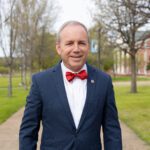
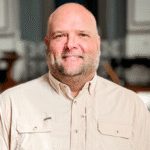
On this episode, you’ll hear from two individuals involved in that trip, Dr. Dub Oliver, president of Union University, and Jason Marlin, lead pastor of First Baptist Church in Kirksville, Missouri, and an ERLC trustee. Both men reflect on their recent experience at the 53rd annual March for Life and share about the importance of educating and equipping the next generation to engage faithfully on pro-life issues.
Episode Transcript: Southern Baptists, pro-life advocacy, and the March for Life
Narration:
Welcome to The ERLC Podcast, where our goal is to help you think biblically about today’s cultural issues. I’m Lindsay Nicolet, and today we’re talking with leaders about their experiences with pro-life advocacy around the 2026 March for Life in Washington, D.C.
Narration:
Southern Baptists have had a longstanding commitment to advocating for the protection of preborn lives and opposing abortion in every form. This is rooted in the biblical revelation that all people are created in God’s image and have inherent value. During a recent pro-life advocacy trip to Washington, D.C., Southern Baptist college students, leaders, and pastors joined us for the 2026 March for Life and advocated alongside us on Capitol Hill. On today’s episode, you’ll hear from two individuals involved in that trip, Dr. Dub Oliver, president of Union University, and Jason Marlin, lead pastor of First Baptist Church in Kirksville, Missouri, and an ERLC trustee.
Both men reflect on their recent experience at the 53rd annual March for Life and share about the importance of educating and equipping the next generation to engage faithfully on pro-life issues. Samuel W. “Dub” Oliver was elected as Union’s 16th president in 2014. He previously served as president of East Texas Baptist University and in a variety of senior leadership roles at Baylor University. Dr. Oliver and his wife Susie have one daughter and three grandchildren. Jason serves as the lead pastor at First Baptist Church, Kirksville, Missouri. Jason is passionate about teaching the word of God in creative and compelling ways to motivate people to make, mature, and mobilize disciples. Jason and his wife Sarah have six children.
Now let’s turn to Elizabeth Bristol’s conversation with Dr. Dub Oliver and Jason Marlin.
Elizabeth Bristow:
Dr. Oliver, thanks for joining us today.
Dub Oliver:
Thanks for inviting me. It’s good to be with you, Elizabeth.
Elizabeth Bristow:
Absolutely. Well, we were just together for the March for Life that happens annually this time in January in Washington, D.C., so we would love for you to tell us a little bit more about your experience at the March for Life. What encouraged you about what you saw or experienced at this year’s march?
Dub Oliver:
Yeah, thanks so much. Thanks for hosting the group of us that the ERLC did at the March for Life this year. The conversations that we had, I’m always encouraged by a couple things. One is that there are so many people who gather annually to focus on the issue of life and to talk about the culture of life. And particularly, you know, for 50 years we were marching to get Roe v. Wade overturned. Fortunately, that very bad decision has been overturned, but we knew all along that a culture of life isn’t dependent upon the Supreme Court or any legislation. It really is about changing people’s hearts. And so one of the things that always encourages me is just to go back and to be with people who are working on these issues, to see so many young people who are committed to these issues, to see so many people who are my age, who are committed to these issues, and to know that it’s true that we don’t just want to make abortion illegal, but we want to make it unthinkable. And so continuing to work on hearts and minds and to see that process each time is really encouraging.
Elizabeth Bristow:
That’s very true. And as Southern Baptists, the issue of life is of utmost importance to us. We see all throughout the scriptures the dignity of life and how we are to protect it as we are made in God’s image. So why do you believe that the March for Life and Southern Baptists engaging in it is important?
Dub Oliver:
Yeah, I think it’s hugely important. It’s who we are. As Baptists, we believe in life. We see the dignity and worth of each individual bearing the image and likeness of God. And we need to express that in all the ways that we can. And we certainly do. We think about that in helping people through disaster relief. We see that in offering them the free gift of salvation every Sunday in our churches. We see that as we have nurseries in our churches and Sunday schools in our churches and all kinds of activities. I think about my own congregation, Inglewood Baptist Church here in Jackson, Tennessee, that has a special needs ministry that is indicative of how Southern Baptists are saying we value all life. And so, you know, again, the March for Life is a very specific and focused event around the issue of abortion. And that’s why sanctity of life is so important in Southern Baptist life. But it’s not just these children in the womb that can’t speak for themselves. It really is, for Southern Baptists, a culture of all life and really holding that out as valuable.
Elizabeth Bristow:
Well, let’s talk about some of the challenges that you see Christians facing in our culture when it comes to promoting life.
Dub Oliver:
Yeah, I think there are massive challenges. Dr. Hollingsworth shared about this when we were together in Washington, D.C., and it’s conversations that we’ve been having on campus also. The questions of our day focus around what does it mean to be human and what is a human person, these really contested ideas in our culture. And there are bigger flash points maybe currently, things like trans issues and issues around sexuality that are huge and contentious. There are also, you know, growing issues in our country around end of life issues. And you know, we see in Canada medical assistance in dying. What a terrible euphemism for euthanasia. And that has started to seep into our own country as well with now states passing these kinds of assisted suicide laws and we’re pushing back against that. And then you have this culture even really around abortion, where it’s moved from women having to go to an abortion clinic to just getting online, typing a few keystrokes, and getting these abortion-causing drugs mailed to them and really never having a discussion with anybody about it.
And so, as Southern Baptists and as people who want to be about life, it really is incumbent upon us to talk about these issues in our churches, to be intentional about talking about these issues from the pulpit and in our youth groups and in our adult Sunday school classes, in every way trying to build this up. And it’s one of the reasons why I know the ERLC wanted to have us there, particularly focused on college students. And one of the reasons that I’m so passionate about this at Union for our own students is that we would be able to raise these issues among this next generation.
Elizabeth Bristow:
That’s fantastic. As a college president, what is the importance of the younger generation’s role in the pro-life movement?
Dub Oliver:
Yeah, it’s so encouraging. I mean, we had 20 students from Union that were there. There were tens of thousands of college students that were there. And it’s really encouraging to see them take this issue up and to see that they understand it and they’re engaging it in this way, that it’s a real issue for them. And of course, you know, all of them understand that they live in a culture in the United States where abortion is available. And so their own moms chose life. And so it can be encouraging to them. They’re also very creative, they’re very passionate. They’re great about engaging their own colleagues and fellow students in these issues. And so again, this is what we want to do is we want to equip them, we want to empower them, we want to encourage them, we want to cheer them on, we want to do anything we can to help them because, again, as people who are my age move off the stage and don’t have influence, we want to make sure that there are generation after generation picking up this issue in Southern Baptist life.
Elizabeth Bristow:
That’s really good. What are some practical ways that you think Southern Baptist can support a culture of life beyond just attending the March itself?
Dub Oliver:
Again, I would encourage the listeners, if you have a chance to go to Washington, D.C. to attend the March for Life, it is amazing. If you’re committed to this issue, it will encourage you to press on in this issue. A number of states also have a state march for life. And so you can take place in your state March for Life. Again, it’s a more local thing, but it’s a good way to get involved. But even more local than that is almost every community has a pregnancy resource center. In Jackson, Tennessee, it’s called Birth Choice, a phenomenal resource supported by the Psalm 139 Project, by the way, at the ERLC. Thank you for that. I serve on the Board of Advisors for Birth Choice. It’s an incredible ministry that literally saves children’s lives. And again, you don’t have to serve on a board of advisors. Just as you’re going about your grocery shopping, pick up a packet of diapers.
People my age, we don’t go down the baby aisle very often. Now, we’re grandparents so we do from time to time. But you know, just go down that aisle and pick up a few things and take it to your pregnancy resource center. They’re trying to resource these women who are abortion minded or who are confused about these issues and having those resources available to them. Donate to these pregnancy resource centers, volunteer for them, participate in their fundraising activities. Just simple things like that can make a difference. Talk to your children and your grandchildren about how thankful you are for life. Share with them scriptures like Psalm 139 and tell them that they’re fearfully and wonderfully made. Remind them that they’re created in the image of God and so are all of these other people. And thank your pastor when he preaches on issues of life and these things from the pulpit. All of those things, any of those things, will help us extend the culture of life across our country. And certainly Southern Baptists have an incredible opportunity to influence.
Elizabeth Bristow:
That’s great. Thanks for just leading us through some of these practical ways that we can all get involved in our communities on pro-life issue. In closing, let’s just quickly discuss why do you think it’s important for Southern Baptist to even have a voice and in a presence in D.C.?
Dub Oliver:
Yeah, you know, being there, again, thanks for hosting this group. I know the ERLC’s trying to say how can we be a voice for Southern Baptists. To be at Leland House right there on Capitol Hill, to know that Southern Baptists have a presence there in the capitol, to go to Speaker Johnson’s office and meet with his staff, to go meet with Senator Thune’s staff. We didn’t get to see the speaker because he was hosting a Louisiana state group that was for life. Some of our group got to meet with him, but all of us got to meet with his staff. Senator Thune was out while the Senate was on recess, but getting to meet with their staff, to hear them talk about their policy director who’s a member of a Southern Baptist church talking about these issues and how they’re working through those things.
So encouraging to go meet with representatives from Tennessee, our own representative here in Union, David Kustoff, who’s not a Southern Baptist, but is someone who is a partner with us on issues of life. To meet with the representatives from Missouri who are working on this, to see the relationships that ERLC has and the work that they’re doing is incredibly important. And listen, I know a lot of that can’t be sort of trumpeted out and pushed out and shown, but when you get a glimpse of it, and I’m so thankful that we got a glimpse of it, when you get a glimpse of it, you see how critical that it is that Southern Baptists, the largest Protestant denomination in the country, are walking up and down the halls on Capitol Hill, talking with people, encouraging them, giving them information, making sure that they understand the issues from a Southern Baptist perspective. And we’re likely not going to win all those votes. We may not win any of them, but to not have that voice would be just a dereliction of our stewardship as Southern Baptists. The Lord has incredibly blessed us and it’s really critical that we’re in those places offering what we know about God’s Word and about his way to the people who are making these decisions.
Elizabeth Bristow:
Jason, thanks so much for joining us today.
Jason Marlin:
Thanks for having me. Looking forward to visiting with you and talking more about the March for Life and everything. It’s going to be a fun time.
Elizabeth Bristow:
Absolutely. Well start out by telling us about your experience at the March for Life this year, and what encouraged you the most about what you saw and experienced at this year’s march?
Jason Marlin:
Yeah, so I got an email from you guys just asking if we would be interested. I have a college town here that I minister to, a pretty big college ministry that we have here in the church. We’re trying to get more college students involved in the March for Life and just kind of would see if we’d be interested. So I reached out to our college pastor and he sent it out to our college group and we tried to limit it to about four or five, and we had four or five just jump on it immediately. They were excited about the opportunity to go up. They were pretty active on their campus as well, so we wanted to let our voice be heard there in D.C. as well. We wanted to get the younger generation involved, really kind of have a voice for life and to see, not only in D.C., but really on the local level as well, how to get the young people involved. So that was really my intent was to how can we get the college age people to go ahead and get them excited about politics and get them excited about the fight for life.
Elizabeth Bristow:
Tell us a little bit about who you brought with you on the trip.
Jason Marlin:
So I brought our college pastor, Ethan Bray, and then I brought my son, he’s a senior in high school, going to be a freshman in college next year. And then we brought three current college women who are juniors and seniors.
Elizabeth Bristow:
So why do you think it’s important for people to even be involved in the March for Life?
Jason Marlin:
Well, I mean, I think everybody knows that the, I hate to say the opposition, but that really is what it is. The opposition is vocal, the opposition is working, and if we don’t work, then there’s only one side working and they’re going to be the ones who get their points across, and they’re going to be the ones who get the laws passed. They’re going to be the ones who get their ideas pushed through social media, pushed through the culture, and we’ve got to be able to speak up and we’ve got to be able to affect culture the best way we can as well. I think sadly the church and Christians in general sit back more than we should. So I think it’s important for us to speak up and important for us to teach our younger generation to speak up as well.
Elizabeth Bristow:
Well, on that front, what do you think are some challenges that we are facing as Christians when it comes to promoting life in our culture?
Jason Marlin:
Well, I think a lot of times people just are really just scared, probably. I think a lot of times people are just fearful. I think they’re either fearful of what people are going to say back to them. They’re fearful of rejection, they’re fearful of, they don’t know what arguments they are going to say. Even this past Wednesday night, we were talking as a church body, and we were going through the book of Acts. In Acts 2, one of the early church’s prayer was just a prayer for boldness. If we could actually do the same as a church, “Hey Lord, just give us boldness,” because that’s still needed today as well. You could see the difference between the disciples before Christ’s resurrection. They went back to fishing, basically. Then after the resurrection, after the power of the Holy Spirit came upon them, there’s a dramatic change.
And we just kind of described how we’ve received the Holy Spirit as well. We have that power, we’re told that we’re not given a spirit of fear, but one of power. So we have that opportunity to not walk in fear, but to speak boldly and to go ahead and not be afraid to confront, not be afraid to call out sin, and to shine a light. We’re called to be a light to the world. So that’s really what I’m hoping we’re trying to encourage our church members and encourage more people to do is just to be that light on a hill.
Elizabeth Bristow:
Speaking of being a light, what are some of the practical ways, you’ve touched on it, but what are more practical ways that Christians can support a culture of life beyond just attending the march itself?
Jason Marlin:
I’m sure in most local areas there’s a pregnancy help center. I think that’s probably one of the easiest and probably best local ways to get involved. Get involved in that local pregnancy help center, financially help them, prayerfully help them, and maybe you can do an offering that helps. I know we do something called Baby Bottle Blessings. That’s what our church does. We take up offerings for our local pregnancy help center. Also, giving resources to people who are in need, directing them to help. And then also just politically as well, trying to get involved politically. But starting in the local area as well. Making sure that the school system, making sure that the city is trying to be pro-life in all the areas that it counts, if you will.
And then as we continue, whether it’s national or statewide, just talking to people. One thing I noticed whenever we were there in Washington, D.C., is the senators and the representatives, they actually listened whenever we actually sat down and talked with them. And I think that was something that I was encouraged by, that they would actually care to listen to little old us from small towns in Missouri or small towns in Tennessee or wherever we may be from, that they were actually wanting to sit and listen to our hearts and how we viewed life. And of course we were mainly speaking to people who had the same views for us, but I was encouraged to hear and really affirm their votes and affirm their views on life as well.
Elizabeth Bristow:
So I hope that the trip, also, with the ones that you brought from your local church context, I hope that it emboldened them to go back into their communities and find ways to pour into what we’ve even talked about with serving in pro-life pregnancy centers or in other various ways. Do you believe that there is more engagement among college students in the pro-life work today? And the second part of that question, how can campus ministries and churches better equip students to engage in pro-life work with boldness and with grace?
Jason Marlin:
Yeah, I think there’s more involvement today than even when I was probably that age. First of all, just the knowledge. I don’t think I was as knowledgeable when I was in college of the resources or of the things that were available out there. You know, I think we’ve done a decent job of being able to educate teenagers and college students of what a pro-life view is. And I see our college students being involved in our local pregnancy center. I see them attending the banquets. I see them holding the signs up on the side of the street. So that’s an encouraging thing as a pastor to see they are actually involved in that area as far as trying to get them more involved, just staying the course. And that’s just staying encouraging and keeping more people, trying to, I hate to say recruit, but hopefully you understand what I’m trying to say, is just trying to rally the cause to more people.
Because you can never stop because I think once you stop you, you’ll lose that momentum and you’ll lose people. So I think you’ve got to constantly reload the team every year, especially with a college ministry. They re-up every four years, so you’ve got to replace that age group and you’ve got to replace that fire within them every four years. So that’s something we’ve tried to learn here, is try to keep that vision in front of them over and over. The vision of pro-life, or evangelism, or whatever that is, doesn’t fade away.
Elizabeth Bristow:
I would say in, in closing, we might have listeners that really care about protecting life. This is an issue that they are very passionate about, but maybe they don’t know where to start. How would you encourage them to take the next step?
Jason Marlin:
Well, could I give us a plug? Of course, you could go to ERLC to the website. I mean, I think we try to resource the church pretty well. I think that’s a great place. I love our Psalm 139 Project. I think that’s one of the strengths of the ERLC. Also, I think, again, we’ve mentioned the local pregnancy centers. I think if you can try to just find out, if you don’t know where that is, just type that in and look where is the nearest one available to me. Go contact them. I know our local pregnancy center even has open houses, where they try to say, “Hey, come check us out. Come see what we do.” They try to show the community just what kind of resources and what kind of services they do offer.
And it’s not all just abortion care, you know, it’s counseling services, it’s ultrasound services, it’s parenting services, it’s a wide array of services that they offer. So I think you need to just be educated into knowing what kind of services your provider offers. And then once you know that, you’re able to better communicate that to the other people who are in need at that time. So that would be the best thing I could tell people is just to try to be educated and just try to figure out what’s around you. You don’t have to travel out of state. You don’t have to go to Washington D.C. to make an impact. I think probably the biggest impact is probably right where you are. That’s probably the best thing you can do.
Elizabeth Bristow:
And I totally agree with you on that point, Jason, we’ve talked about how people can get involved on the local level, but as you know, the ERLC has a presence there in Washington on Capitol Hill, and our staff is busy advocating on the Hill daily and weekly on issues that matter the most to Southern Baptists. Why do you think that that’s important for us to have a presence there in D.C.?
Jason Marlin:
Listen, I was super impressed. As a trustee, I kind of know the inner workings of it. I got to watch the pasta be made, or whatever it’s called, but I got to see it. And, you know, I was super impressed with our people there in D.C., just seeing the relationships that they’ve made. And I think you can’t have an impact without relationships. And the relationships that they’ve made is, you know, huge. And you can tell that the time that that’s taken and the impact that that has made is huge. because the access that they have with some of these top-notch people, whether it’s the Senate Majority leader or the House majority, I mean, these are big time people and we’re able to sit with these pretty important people and have meaningful conversations with them.
But it starts with relationships. And the people that we have employed have spent time, they’ve spent energy, they’ve spent prayer, and they’ve spent the work and building and fostering those relationships. I was sitting there watching them do the work, having hard conversations, even saying, “Alright, well here’s where Southern Baptists land, this is what we believe and this is what we expect to see. Now what are you going to do about it?” That was pretty encouraging. You know, we can’t tell them what to write, but we can at least say, here’s where we stand as Southern Baptists. Now what are you going to do about it? And I was just very encouraged to hear our representatives of the ERLC sitting down with the leadership of Congress and expressing the desires of Southern Baptists. And I want all the Southern Baptists to know that’s what you’re getting, we may not see the results, but that’s what we’re getting from our work there at the ERLC.
Elizabeth Bristow:
Thank you Jason, and we appreciate all the time that you give to serve on our board so faithfully. We are so glad that you were able to attend the march and bring a group from your church to be with us. And it was truly a great time that we had together. So thank you so much.
Jason Marlin:
I hope we can do it again. I hope we can send more college students again. Our college students loved it, and they were encouraged by it. They were refreshed by it. I think one thing that we didn’t mention, but the way you guys informed us and resourced us before the march was actually more impactful, was actually better service to us than the march itself. You guys sat us down in a room and you talked to us about the abortion drug. You talked to us about infertility. You talked to us about IVF, you actually informed us about life issues. So that was the best part that we got was you guys pouring into us and resourcing us. So thank you guys for all that.
Narration:
As Scripture teaches, and as Southern Baptists wholeheartedly affirm, from the moment of conception, every person is a gift from above, made in the image of God and worthy of protection. Advocating for the sanctity of life is not a political talking point. It’s a biblical conviction. More than ever, our collective voice raised on behalf of the preborn is essential. May we continue to bear faithful and consistent witness to the dignity and worth of every person God has made.
Thanks for listening to this episode of The ERLC Podcast. Join us next time as we discuss racial reconciliation with Dr. Fred Luter.