

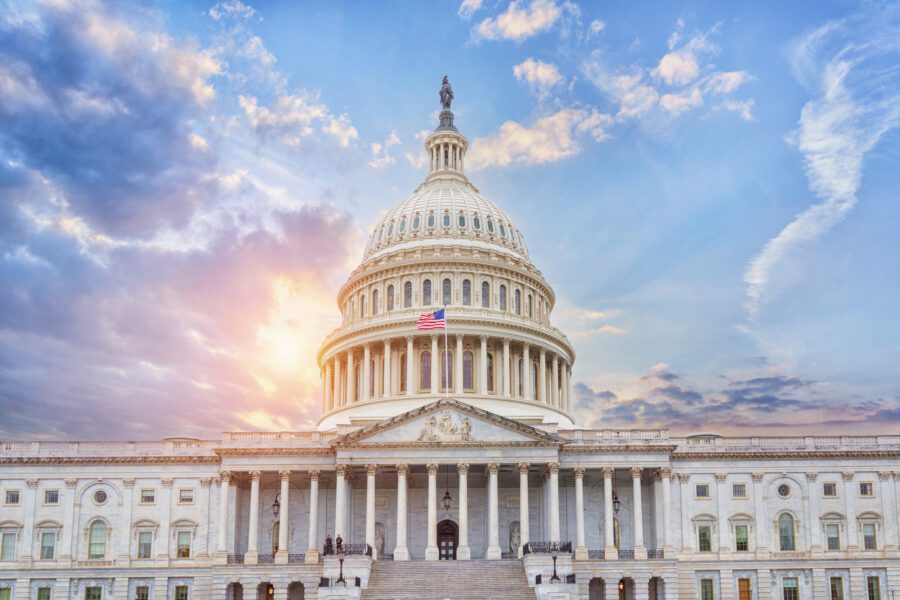

On Feb. 3, President Trump signed into law a funding package to end the most recent government shutdown, meaning the Fiscal Year 2026 government funding process, also known as appropriations, is coming to a close. There are several Southern Baptist wins in the final package related to the sanctity of life, religious liberty, marriage and family, and human dignity.
How the ERLC advocated for Southern Baptists in the Fiscal Year 2026 appropriations process
A country’s spending shows what it values.
Our nation’s federal dollars should be allocated in a way that affirms the value of life, protects religious liberty, safeguards the family, and honors the dignity of all humans, who are made in the image of God. This is where the rubber meets the road on the issues that matter most to Southern Baptists.
Each year, the ERLC seeks to advocate for the interests of Southern Baptists in government funding negotiations. Beginning each spring, the policy team thoroughly reviews every funding bill and works alongside staff and members on Capitol Hill to advocate for items that reflect God’s Word and the consensus of Southern Baptists.
Fiscal Year 2025 provisions and spending levels—set by the Biden administration—were due for fiscal and moral examination, and this guided our advocacy for Fiscal Year 2026.
In November, following months of advocacy, ERLC interim president, Dr. Gary Hollingsworth, sent a letter to U.S. House and Senate Appropriations leadership. This letter summarized areas of concern and support in government funding bills, urging Congress to:
- Preserve long-standing pro-life protections like the Hyde Amendment,
- Oppose taxpayer funding for abortion and harmful practices such as certain Assisted Reproductive Technologies (ART) and gender transition procedures, and
- Strengthen conscience protections and protections for religious liberty.
Hollingsworth’s letter conveyed the priorities of the ERLC, detailing distinctly Southern Baptist positions on life, religious liberty, marriage and family, and human dignity, and included a high-level list of items of concern and support.
Southern Baptist wins in Fiscal Year 2026 appropriations
Most significantly, the final spending bills once again included the long-standing “Hyde-family” of appropriations riders. After several years of Democratic-led opposition to these riders, their continued presence is significant. This includes:
- The Hyde Amendment, which prevents Medicaid from covering the cost of abortion and protecting the consciences of American taxpayers. It saves an estimated 60,000 preborn lives each year.
- The Weldon Amendment, which protects the rights of conscience for healthcare professionals and institutions by preventing HHS from denying funding to recipients that refuse to provide, pay for, or refer for abortion.
- The Helms Amendment, which prevents foreign aid from directly paying for an abortion.
Other significant wins in this year’s appropriations bills include:
- Bars funding for “gender transition” procedures and “gender-affirming” care for minors under certain military health plans.
- Prohibits the use of foreign assistance funding to pay for abortions or abortion counseling as a method of family planning.
- Prevents federal funds from being used to reschedule marijuana.
- Protects against the use of taxpayer dollars to discriminate against people of faith.
- Provides robust funding for the office of International Religious Freedom at the Department of State, including set-aside allocations for those experiencing religious persecution around the world.
What happened in Fiscal Year 2026 appropriations deliberations?
Due to disagreements about topline funding and debates about policy provisions, this year’s appropriations process has not been traditional.
- On Sept. 30, 2025, the federal fiscal year ended. Congress did not pass all 12 bills by this deadline, which resulted in a 43-day government shutdown—the longest in our nation’s history. This federal funding hiatus was the result of a stalemate between chambers and political parties and had ripple effects that greatly impacted the American people.
- The record-breaking shutdown ended on Nov. 12, 2025, when Congress passed a stopgap bill (called a “continuing resolution”). A continuing resolution funds the government at the prior year’s spending levels until a new date in the near future, which Congress set as Jan. 30, 2026. By no means is a continuing resolution the ideal outcome in the appropriations process, given the often negative impact on Americans. Often, it is a short-term tool employed to give lawmakers time to deliberate consequential funding decisions.
As part of November’s deal, lawmakers passed a package that advanced three out of 12 Fiscal Year 2026 appropriations bills (Agriculture, Mil-Con-VA, and Legislative Branch), which President Trump swiftly signed into law. This meant that for the other nine bills, Fiscal Year 2025 provisions and funding levels—initially agreed to during the Biden administration—remained in place through the holiday season. - On Jan. 23, Congress passed a three-bill funding package, funding the agencies governed by these three subcommittees: Energy and Water, Commerce, Justice and Science, and Interior. While six appropriations bills were signed into law in advance of the Jan. 30 deadline, six remained unaddressed, leading to a partial government shutdown at the end of January.
- On Feb. 3, Congress passed legislation that finalized funding for five of the six remaining appropriations subcommittee bills (Labor, Health and Human Services, Education, Transportation, Housing And Urban Development, National Security, Department Of State, And Related Programs, Financial Services And General Government, Defense) The President swiftly signed this package into law. This deal included a 10-day continuing resolution for Homeland Security, sustaining the Department’s work at Fiscal Year 2025 levels through Feb. 13.
What happens next with Fiscal Year 2026 appropriations?
Now that 11 out of 12 appropriations bills have been signed into law, the majority of the government is fully funded for Fiscal Year 2026. This week’s $1.2 trillion deal gives lawmakers just over a week to come to a final compromise on Homeland Security funding. February’s patch extends current spending levels for the Department of Homeland Security while lawmakers deliberate funding considerations. This patch may continue to be extended, pending a Homeland Security deal that both parties find acceptable.