


What is the role of the church in political discourse? How can artists lead in the church? What is racial reconciliation on a tangible level?
Speakers and panelists like Russell Moore, Andy Stanley, Trip Lee and Gabe Lyons tackled questions like these during the first day of the third annual Ethics and Religious Liberty Commission’s National Conference in Nashville.
Hosted at the Gaylord Opryland Hotel, the conference attracted around 1,000 pastors and cultural leaders to discuss how the gospel and Scripture apply to the role of Christians and the church in the public square.
Racial reconciliation
Leaving little time for shallow homilies, opening speaker Bryan Loritts immediately confronted what he called “evangelical passivity” among the church – especially the white church – in dealing with racial injustice. His keynote session that kicked off the conference springboarded off of Paul’s discussion of being “all things to all people” in 1 Corinthians 9.
“There will be color in heaven,” Loritts said. “So we cannot dismiss that now. It must be something that we incarnate and that we live.”
He added that a colorblind ethic is to have a low view of the imago dei – that the theology of a “fearfully and wonderfully made” person includes every aspect of him or her. Everyone in the church should intentionally have friends from diverse cultures and backgrounds, he said, with a posture of listening.
“Oh dear friend, let’s go to war with evangelical passivity,” Loritts concluded. “Let’s have Paul’s redemptive impatience.”
Love this! We so often complicate racial reconciliation and @bcloritts is simply saying get to know someone who is not like you. #erlc2016
— Trillia Newbell (@trillianewbell) August 25, 2016
Los Angeles pastor and community leader D.A. Horton solidified that message, agreeing that racial issues “are thorns in the side of the American church.”
His message was succinct: the church needs intellectual equipping – such as reading the works of minorities and women in seminary.
“It’s one thing to have a multiethnic church, but another to have multiethnic leadership,” Horton said.
The church also needs interpersonal engagement and dialogue, and as disagreements arise in those discussions – interdependent endurance.
Conflict is the litmus test of our relationships – are we led to love or abandonment. @da_horton #ERLC2016
— Herbie Newell (@Hmnewell) August 26, 2016
During his session, rapper-pastor Trip Lee had similar practical advice for Christians who want to engage culture, drilling in on the theme of simple faithfulness.
“There is another way to engage culture, and that is to be faithful in public,” he preached. “We should more deeply embrace the simple. Innovation is fine, but not at the cost of the simple.”
Refusing to engage culture b/c the world is broken is like a contractor refusing to remodel a house b/c it’s messed up. @Triplee #erlc2016
— Kerri Weems (@KerriWeems) August 25, 2016
Church and the arts
Often, when the word “culture” is tossed around among thought leaders, the first implication is cultural artifacts like music, art and film.
People “still long for transcendence,” worship and arts pastor Mike Cosper said during his session, and look for greater hope and greater meaning in the stories those mediums tell.
“They’re telling stories that are telling about the good life and power, money, sex,” he said. The church has “an enormous opportunity” through this, he added – “to tell the world that there is more to life than money, power, and sex. That message has always been at the heart of the church’s message and witness.”
Cosper also moderated a panel including film critic and The King’s College professor Alissa Wilkinson, Liberty University English professor Karen Swallow Prior, and pastor-storyteller Steven Bush. Bush pushed for pastors to utilize artists in their congregations, not only to use their talents but also to empower them to leadership.
Preaching cultural application
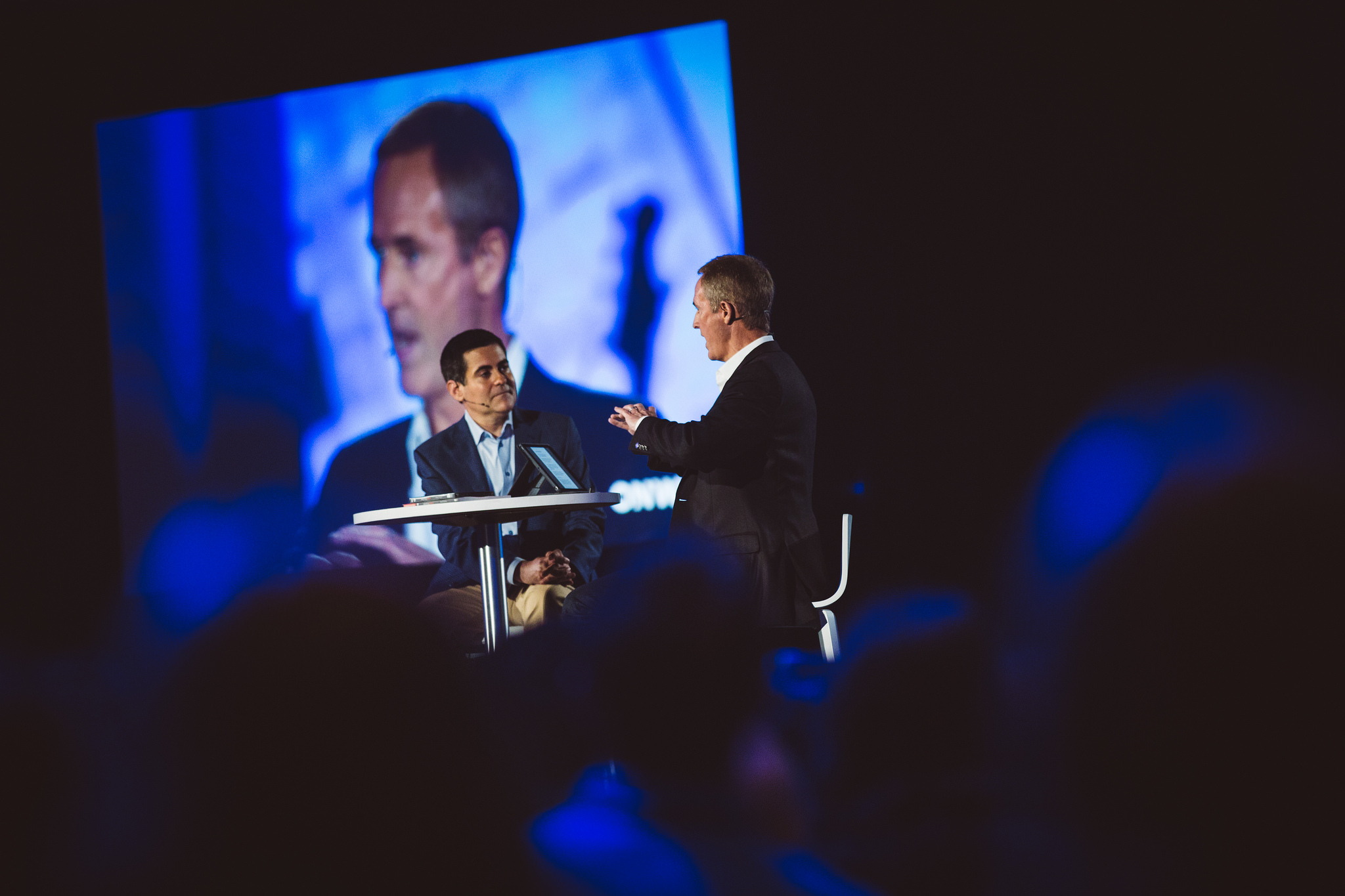
During the evening session, Russell Moore and Andy Stanley took the roundtable approach to debate how preachers can engage non-Christians who might walk through their front door, disagreeing respectfully over which subjects are appropriate for the pulpit for a mixed audience. Stanley, for example, has never preached on abortion, he said.
This conversation at #ERLC2016 between @drmoore and @AndyStanley on the appeal to scripture with nonbelievers is important and needed.
— Brad Bartlett (@bradleebartlett) August 26, 2016
Later, pastors Dan Darling, Robby Gallaty, Bryan Lorrits, David Prince and Jimmy Scroggins disseminated further ideas on local contextualization and application, sharing stories from their diverse church bodies.
“You don’t lead with your politics,” Scroggins said. “You lead with the gospel.”
What about offending their congregations?
“I’ve got to remind myself, the Bible works,” Lorrits said.