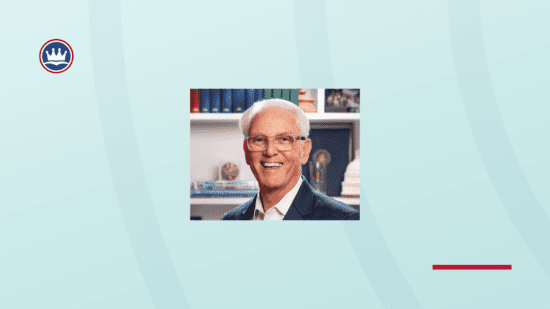
Today we’re featuring a special interview with Congressman Nathaniel Moran. Welcome to The ERLC Podcast where our goal is to help you think biblically about today’s cultural issues.
May 22nd marked a significant milestone in the ongoing work to protect the dignity of every human life. The United States House of Representatives voted to defund Planned Parenthood — a major victory for life and for the countless voices who have tirelessly advocated for this outcome. Planned Parenthood’s predatory, deceptive, and destructive practices are destroying preborn lives at the expense of the American taxpayer.
Today, we’re talking Congressman Nathaniel Moran about this victory and other pro-life priorities. Congressman Moran proudly serves the First District of Texas in the U.S. House of Representatives. He attended West Point, then Texas Tech, where he earned a BA, MBA, and a law degree.
Congressman Moran began his elected public service on the Tyler City Council, and in 2016, he became Smith County Judge, a role he continued in until his election to Congress in 2022. In the House, Congressman Moran serves on the Ways and Means Committee, the oldest Committee in Congress and the chief tax-writing Committee in the House.
He resides in Texas with his wife of 25 years, Kyna, and their four children.
Episode Transcript: Congressman Moran on Defunding Planned Parenthood
Narration:
Welcome to the ERLC podcast, where our goal is to help you think biblically about today’s cultural issues. I’m Lindsay Nicolet, and today we’re featuring a special interview with Congressman Nathaniel Moran.
Narration:
May 22nd marked a significant milestone in the ongoing work to protect the dignity of every human life. The United States House of Representatives voted to defund Planned Parenthood, a major victory for life and for the countless voices who have tirelessly advocated for this outcome. Planned Parenthood’s predatory, deceptive, and destructive practices are destroying pre-born lives at the expense of the American taxpayer. Today, we’re talking with Congressman Nathaniel Moran about this victory and other pro-life priorities. Congressman Moran proudly serves the first district of Texas in the United States House of Representatives. He attended West Point, then Texas Tech, where he earned a BA, MBA, and a law degree. Congressman Moran began his elected public service on the Tyler City Council, and in 2016, he became Smith County Judge, a role he continued in until his election to Congress in 2022. In the house, Congressman Moran serves on the Ways and Means committee – the oldest committee in Congress – and the Chief Tax Writing Committee in the house. He resides in Texas with his wife of 25 years and their four children. Now, let’s turn to ERLC president Brent Leatherwood’s conversation with Congressman Moran.
Brent Leatherwood:
Congressman Nathaniel Moran, thank you so much for taking time out of what is a very busy schedule on Capitol Hill to sit with me here in our Leland house office in Washington, DC. And sir, how are you? First and foremost, are you doing okay?
Nathaniel Moran:
I’m doing great, Brent. It’s a pleasure to be here with you, although I love being in East Texas just a tad more than I do in Washington, DC. But thanks for having me. This is a really important conversation, and for those of us that are rooted and founded in our faith, it’s an important conversation to remind us that we have a responsibility, frankly, to be involved in the political and the cultural battles of this world.
Brent Leatherwood:
Yes, sir. And so you represent proudly Texas’s first Congressional district. How long have you been elected to represent that district, sir?
Nathaniel Moran:
I’m in my third year, my second term. So I started just in 2023. Before that, I was a county judge for a while. I practiced law, owned a business, and did a few things back in East Texas. But most importantly, I’m married to my wife, Kena, have been for now 26 years. And we’re raising four wonderful children, two boys and two girls.
Brent Leatherwood:
And there’s a bit of a gap there, right? Between two and the…
Nathaniel Moran:
Other two, right? Yeah. A little bit of a gap. We had the boy and the girl – now 20 and 18 – and we took a nine year break, and then we voluntarily stepped back into that realm and said, “You know what? Let’s have some more kiddos.” And we had another girl, another boy. And we’re just blessed. Our quiver is full.
Brent Leatherwood:
That’s right. Well, as it tells us in Scripture, children are a heritage and a blessing from the Lord. And so, you are certainly well blessed, alright. Well, listen, before we get into, you know, matters of public policy, I just want to talk a little bit about you personally. So, share a little bit with our Southern Baptists, our Christian audience, about your faith journey personally, to give us a little bit of a sense of your testimony.
Nathaniel Moran:
Yeah, I’m glad we’re starting with this question because I’m so proud of being able to live out the call that God has on my life. I knew from a very early age that he’d call me into public service, but even before that, it started with my parents instilling in me that great commandment to love God and to love others. That means to serve God and to serve others. And for me, my heritage and faith goes back many, many generations, because my dad and my mom met at a tent revival. My dad was actually preaching a tent revival. My mom was playing the accordion and singing in a little trio. And that was the first interaction they had together. And out of that sprung four boys years later. And it also then led them on a journey to go to Bible college in Arizona and then come to East Texas to help start a Bible college in the mid-70’s.
Nathaniel Moran:
And I was just two years old when we moved to East Texas to help start that Bible college and to work in the R.W. Schambach Ministries at the time. And I got to live on that Bible college campus till I was the age of 10 years old. And most of my time was spent either hanging around Bible college students in that small East Texas college or going to tent revivals or going to church on Sunday night or Sunday morning or Wednesday night. And it was a real wonderful upbringing where not only did we hear the Word of God, but we saw that lived out in my parents. My parents never had very much money, but they were always givers and they were always servers. And so, I learned how to serve other people and to serve God through their example.
Nathaniel Moran:
And then at the age of seven, I gave my life to Christ at a VBS summer fun time, which was wonderful. I still remember that moment sitting in the back of the church when the altar call was given and walking what seemed to be an eternity down that aisle, down to the altar, to give my life to Christ. And I was blessed this last week: I was telling you before we got on on Friday, this last week, the youngest of my kids, the last of the kids that had not accepted Christ – he’s age eight on Friday night – we were kneeling at his bedside when I was tucking him in back in East Texas. And he gave his life to Christ. And I remember that moment as a young child, how it transformed me. And I talked to him about that same thing, about, “Hey buddy, you’re a new creation now. You’re a new creature in Christ and you’ve given your life to Him. Let Him take control of it. Let Him lead you in the way that He needs to lead you so that you can do great things in this life for Him and His King.”
Brent Leatherwood:
What a great story. I just, you could feel the emotion well enough in you, that fatherly pride, and to be there for that – what a special moment. And to know that that’s the fruit of your shepherding efforts as a father, and pointing him to his true Father. I mean that. Gosh. That’s great. Alright, so you’ve talked a little bit about the roles that you spoke about, this sense of a calling in public service. And so, you’ve served at the local level, city council; you became county judge, which for our non-Texans, that means you were county executive; and now here you are: you’re serving on the national stage. Talk about the role that the local church played and the background of all that. Did it play a supportive role? Was it a place of refuge for you, a place of encouragement? Talk a little bit about that because so many of our listeners, they’re pastors themselves and they may have community leaders in their own congregations.
Nathaniel Moran:
Yeah, it’s an absolutely critical role. I can start most recently with the decision to run for Congress. I will tell you, I don’t know that I could have made that decision as appropriately as I did without the help of our pastor. We attend South Spring Baptist Church in Tyler, Texas. And our pastor, when we as a married couple decided, “Hey, this is probably something we need to look at seriously,” we went to my pastor and his wife and we began to seek counsel and say, “Is this something we could do or should do? How does this mold in with the Word of God?” Because I know that we have a vocational calling in this world, but I also know we have the highest calling of a faith calling. We have a faith calling, then below that a family calling, and below that a vocational calling.
Nathaniel Moran:
And those things should never come into dissonance, and they won’t come into dissonance so long as we are following Christ in everything that we do. So our question was, “Okay, is this vocational opportunity, is it the right calling to mesh with the faith calling and the family calling?” Because we certainly don’t want to subvert those callings below. And so, we met with our pastor and his wife for many, many months to talk through this and to make sure that this was appropriate. But even going before that, I’ll tell you spiritually how this came about for me was in September of 2020. I had a three day prayer retreat. I had been through COVID as a county judge and really a tough time. And I came out of that and I told my wife, “I just need some time of prayer and solitude.”
Nathaniel Moran:
And so, I spent time by myself, but I had others that were around me: brothers in Christ that knew what I was doing, and they were praying for me. And some of them came down to interact with me. And I came out of that retreat and said to my wife, “I feel the direct call of Christ to prepare for a run for Congress.” This was a year before we knew that there might even be an opportunity for it. And so, I try to instill that in some of the folks that are coming along that I get to shepherd and mentor to say, “You’ve got to spiritually prepare for the next opportunity long before it gets there.” Because we needed, as a family, we needed a long runway to talk about that and pray about that, and then seek counsel and guidance before the opportunity actually got there.
Nathaniel Moran:
Making that decision in a moment would’ve been impossible for us. But because we were prayed up and had that relationship with Christ, and because we were surrounded in our church family with people that would support us, we were able to make that step. And the last thing I’ll say about church support is this: when we did that, one of the things our pastor said was, “Hey, look, you gotta have people in the church that know both you and your wife that can reach out to you, Nathaniel, and can tell you, ‘Hey, this is not working back at home. You may not know this, but this is causing too much stress or too much interference on the family.’” We’re gonna have to hit the exit button and have the freedom for those folks to keep me accountable during this time to make sure that we keep that faith and family in order above the vocation.
Nathaniel Moran:
And so, we do. We’ve got those people in our church that are great friends of ours that wrap around us and have the ability to call me anytime and say, “You need to focus more on your family,” the church support, and all this is just critical. When we first started out, one of the things we determined as a family was we are not going to give away Sunday, no matter what. We’re gonna save Sunday to make sure that we have it as a day of rest and a day of family and a day of church. So we’re in church together every weekend. I fly home at the end of the week and then in church on Sunday morning. And that has really sustained us through this time period. Were it not for the opportunity to make sure to be in church together with the body of Christ, with the encouragement that we get during that time, with the ability to worship Christ and to receive the word and to stay true to the values that got us there. And that’s the Judeo-Christian ethic, the national law of God that never changes, that Holy Scripture, that never changes. Well, if you’re not in church regularly, you’re gonna start finding yourself separated from that. And so, we’re thankful that we have a church body that surrounds us and welcomes us every Sunday and allows us to worship freely.
Brent Leatherwood:
I love how you are describing the church really as your anchor that you return to each week. And I’m so encouraged to hear that you make that a purposeful thing because I do think members of Congress, you all are pulled in so many different directions and so many things are asked of you – whether you’re here in Washington or you’re back home, to make that a concrete thing that your family is gonna hold onto in this season while you were serving. That’s such an encouragement to hear, so springing forth from that, is the work that you do each and every week. And again, you spoke about your service as, really, a “calling.” And I’m interested: flesh that out a little bit more. I think a lot of our listeners, they’ll say, “Oh, I was called to ministry.”
Brent Leatherwood:
Well, our former governor in Tennessee – someone I greatly admire – governor Bill Haslam, he talked about how he felt called to run for office. He said, “Now, that didn’t necessarily mean I felt called like I was gonna win. But I did feel this call to serve and put my name forth.” And as the Lord would have it, he won and became a very successful governor. And I feel like maybe the Lord is working through you in that way. So, talk through your obedience in that calling and how your kind of Baptist principles, you’re able to put those in action as a member of Congress and living out that calling.
Nathaniel Moran:
Yeah. When I talk to young people about callings, I ask them the question, “What is the highest calling in this life?” And a lot of ’em will say, “Oh, it’s a pastor or it’s missionary.” And I kind of grew up in that same kind of realm where that was the thought process. And I say, “No, no, no, no. The highest calling that there is in this life is your calling.” Because each of us were created uniquely. We were known, we were set apart, we were appointed, just like Jeremiah says, we were known and set apart and appointed for a specific thing in this life. And each one of us were created for that unique purpose. And so, the highest calling that we could ever achieve in this life is the one that God has for us. And I learned that early on in my twenties because I was just about to finish my master’s degree at Texas Tech, and I wasn’t quite sure what I was gonna do next.
Nathaniel Moran:
And I did some missions work in Alaska, and I came back, and the pastor up there called me, the missions director, and said, “When you graduate in December, I’d love for you to come back and be the missionary pastor in Alaska.” Well, that’s in the middle of nowhere, Alaska. I mean, it’s way Western Alaska. Wow. But immediately in my mind, I’m thinking, “Oh, that’s a great calling. It’s a missionary pastor calling: I’ve gotta go do this.” And so, I told him yes, but over the next week I couldn’t sleep. And the Holy Spirit was dealing with my heart because I knew this wasn’t my calling in life. And so, I called my friend back the next week and I said, “Jim, I’ve made a mistake. I’ve committed to you to come, but I’ve known since the fourth grade my calling is public service, and I cannot come to Alaska to be your missionary pastor.”
Nathaniel Moran:
And he said, to his credit, he said, “Nathaniel, then don’t come if this is not your calling. We don’t want you up here, because that would be horrible for the church if the wrong person came, and it would be horrible for your life if the wrong person came.” And I was so grateful that I had that wisdom in my life because when I got elected to Congress, he and I were still in contact. And he said, “Nathaniel, aren’t you glad you followed your call?” Now, I hope this would inspire young folks to remember that yes, indeed, every calling has equal and eternal value. And the question is, “Lord, what’s my calling and what should I be doing today to prepare to be successful in the calling for the Kingdom, for His glory, not for our own glory?” It’s not about power, position, or prominence.
Nathaniel Moran:
It’s about living out what Christ has for us. Why? To point others to him and to get them in the kingdom. And when you talk about the intersection of what we do here, now, that was part B of your question, and the answer is simple in my mind: look, the institution of government is there, appropriately set there, to support and to empower other institutions in this world like the family institution, faith institutions, institutions of commerce, but it’s not to supplant them. And this is where I think we get in trouble, is when we ask the government to now be “loco parentis” – maybe start substituting in as a family or start substituting in for what the church should be doing, then we get in problems. What I should be doing as a member of Congress is ultimately increasing liberty and giving people the opportunity for the abundance of life – that abundance of life that Christ talks about – and to empower those other institutions like our churches, to do the work that God calls him to do. God has not called government as an institution to do the same thing and to fill the same role as the church or the family, or commerce hasn’t done it. So let’s empower those individuals and those families and those institutions to do that thing that God called them to do and stay out of the way.
Brent Leatherwood:
Yeah. Oh, that’s great. I mean, you can just hear the conviction that comes through your voice. And, maybe, you know, let’s pivot a little bit now to actually talking about Congress. What’s it like to be a Christian who lives with convictions in serving in this Congress in this moment right now?
Nathaniel Moran:
It’s a proud thing. I’ll tell you, I’m proud to be able to, every day, stand for the Lord in the halls of Congress. And I’m part of a Bible study of a close group of guys that we meet on Thursday morning, and they do the same thing. And as dysfunctional as Congress is, and it is dysfunctional, there are glimmers of hope because you still see the thread of faith and the thread of biblical principles throughout what we’re doing. Our Constitution was founded on it. I mean, it was absolutely founded on the principles that Christ enunciated in the Holy Scripture. And we can’t get away from that. So we’re the outlier. I’m not gonna shade that at all. There’s no question. I think there’s even folks that have been down the road of faith and given their life to Christ.
Nathaniel Moran:
I think sometimes they forget some of the things we’ve been talking about today. And they expect the government to fill those other roles, or they divorce their biblical principles from their political way. I was talking to my group of interns today, and I reminded them of the mission statement that we have in our office. And then I went further to explain, I said, “Look, I’m a guy that believes the Bible.” The Bible has set rules for our conduct, principles for our conduct, and our speech. Those principles do not change when you get into politics. There’s no comma about, “Hey, you need to treat people kindly and treat people with love,” comma, “except when you’re in politics.” It doesn’t say that. And so, there’s not a separate set of rules for when you’re in politics and when you’re outta politics. But unfortunately, I think actually a lot of Christians forget that. And we think, “Oh, we’re in the political world now. We can say and do whatever we want to do, even though it’s not consistent with the word of the Lord.” And that’s not true.
Brent Leatherwood:
Well, I mentioned that this is a busy season for you, you know, for our listeners. In fact, you’ve just come out of a busy moment because the house has already passed reconciliation, which, you know, kudos to you, to fellow Southern Baptist Speaker Mike Johnson, and ushering that through, and particularly our top legislative priority, which is defunding Planned Parenthood. Now it’s over on the other side of the hill with the senators, and we’ll see what they do with it. But I’m curious, can you speak to that just real quickly? What is reconciliation? Why is this such an important moment? If we actually do want to do something like defunding Planned Parenthood, why does it need to be a part of this process?
Nathaniel Moran:
Yeah, it has to be because reconciliation process, in short, allows us to circumvent the 60 vote threshold in the Senate. And right now, if you’re pressing conservative values, you’re not gonna get 60 votes in the Senate. You’re just not gonna do it. So we’ve gotta find a process that, by law, allows us to only have to get 50-plus-one votes in the Senate. And this is reconciliation. It means you’re reconciling your expenditures and your revenues according to a budget resolution that gives instructions to different committees. In 2017, it was just three committees involved. Now, it’s 11 committees involved, which is why there’s such a breadth of things that are addressed in this bill. It’s a great bill, by the way, but I remind people that even though you get a great bill, there’s still gonna be some things in there you don’t like.
Nathaniel Moran:
The analogy I give is my mom’s beef vegetable stew. I mean, she made great beef vegetable stew, but she’s from the Midwest. She’s from Illinois. My dad is, too. And you know what, my dad would be in that kitchen telling her he liked lima beans in that Stew. Uh-uh, I don’t like lima beans at all. I like potatoes and corn and okra, and you can put a lot of tomatoes in there if you want. I love it to go along with that. But I was begging her not to put lima beans in, but most of the time, when we sat down to the dinner table, there were lima beans in that beef vegetable stew. And I had a decision to make, and it was either one of two decisions: it was either I could eat that bowl of soup or I could go to bed hungry.
Nathaniel Moran:
There was no in between. And she had made clear to me, my mom had, as a little tyke, she was not a short order cook, and she was not making something else. It was this, and that was it. So the same is the truth with big legislation. If you’re gonna get something big like that, you’re gonna get a few lima beans in there. And the decision then becomes “Are there too many lima beans for me to support this bill, or are there not?” And you know that government works in incremental ways. That’s the way our founding fathers set it up. We would like perfection, we would like everything the way we want it to, but there’s 435 people out there with different opinions and different constituencies, and we gotta get at least 218 normally – this time just 217 – votes on this bill.
Nathaniel Moran:
But if you can’t get the votes, you can’t get anything done. And part of our problem over time, as I think Christian conservatives have been, we demand perfection. And if we don’t get perfection in a bill, then we’re gonna oppose it. And the Democrats have figured out over time that if they will incrementally move things more towards moral relativism and more towards avenues that are away from Christ, then over 40 or 50 years, they’ve actually taken us a long way. We need to get smart and incrementally start moving that back to something that aligns with Holy Scripture.
Brent Leatherwood:
Yeah. And I think we also know the reality, right? We’re not gonna attain perfection this side of glory. And so, we need to move the ball forward as we can and take the steps that we can. Some critics out there will say, “Ah, you know, this is just symbolic.” You know, they’ll say, “Oh, you know, president Trump, he already signed an executive order.” Just kind of reaffirming that, you know, we have the Hyde Amendment and that Hyde is gonna control things that the executive branch is doing. And, I guess, speak to that a little bit. Why is it important for you all as members of Congress to attach things like Hyde to our spending bills or to, in reconciliation, push forward with defunding Planned Parenthood? Why is that an important thing, and it’s more than just symbolic?
Nathaniel Moran:
Yeah, it’s more than symbolic because I believe that life begins at conception. And I told you guys before, I quoted Jeremiah for you, that Jeremiah says, “Before you were born, I knew you,” you know, “While you’re in your mother’s womb, I set you apart and I appointed you.” Well, that means it was pre-birth. And so, those calls on those little kiddos’ lives happened, I think, at conception. And so, we’ve gotta do all that we can to protect that. The Hyde Amendment, I mean, it’s great, it’s been great, and it prohibits us from directly funding abortions, but there’s a lot of indirect funding that happens. And here in particular, what we’re doing in reconciliation is saying, “Hey, Medicaid funding that’s going to organizations that are getting a large amount of money, that then if those organizations also do abortions, you’re no longer gonna get those.”
Nathaniel Moran:
Well, we know that we’re talking about Planned Parenthood there. That’s really what we’re talking about. And so, this is getting at the heart of indirect funding. We don’t wanna be part of crushing any of these lives. The creation of these lives is so precious. We need to protect them at every turn. We also need to protect ’em, not just pre-birth, but post-birth. And I think this bill does a whole lot of that, that it incentivizes people that are faced with that choice to have hope. Sometimes, I think there’s that missing element. And we as conservatives forget that we need to provide hope for people to say, “Even though I do have the choice in some states, I’m gonna choose life, and I’m gonna choose life because I have hope.” And we need to provide elements of support for that hope.”
Nathaniel Moran:
So the child tax credit is going to stay at $2000 permanently and then have a $500 addition for the next four or five years. And so, that’s an increase in the child tax credit. You’re gonna have the ability for additional expanded HSA provisions for families to choose additional options for their health savings accounts. And that supports families. You’re gonna have a permanency of the family, the paid family, and medical leave, provisions and deductions for the companies that are providing those for adoptions. I love this one: one of the things that’s in there that I love so much is, you know, you got a big adoption credit in there, but most people can’t use it because it’s called what? Non-refundable. That’s the term. It’s about $17,000 right now, but it’s non-refundable. So, if you don’t have a tax bill that’s $17,000, you’re not gonna get all of that as an incentive to engage in the very expensive process of adoption.
Nathaniel Moran:
Well, this bill will give at least $5,000 of that as refundable, which means even if you don’t have a tax bill at that level, you’re gonna be able to get back $5,000 of those adoption expenses. And that’s important too, because we want both supply and demand in that process to feel like, “Hey, we want to choose hope and have our child,” but we also want families out there to say, even if they’re not wealthy, “We’re gonna take this step of faith and we’re gonna go out and we’re gonna adopt a child.” I love one of the churches in our district, actually, was the subject of a great film in the last year, talking about 80 adoptions that came out of one, single church. My wife and I and our family went down and visited that church, and it’s just a small African American church in the middle of nowhere that decided they were gonna make a difference in the lives of kids. None of them were wealthy, I can assure you. Not one of those people were wealthy in that community, but they changed the lives of so many kids because they were willing to step out and say, “We’re gonna adopt these kids that are seemingly hard to adopt, and we’re gonna inject the teachings of Jesus Christ, and we’re gonna love on ’em, and we’re gonna provide them a future.” And it really changed their life.
Brent Leatherwood:
I loved your explanation of reconciliation and what that means. And it just reminds me of something, even my local pastor often reminds us of this: show me your bank account. Show me what you’re spending money on, and I’ll tell you what’s important to you. And I think our nation, our fiscal policy, it should reflect – Southern Baptists have long called for this – a culture of life, a culture that supports families, a culture of flourishing. And I think, you know, the work that you’re doing, sir, you’re helping us to do that. As we close, let me ask you this question. You are one of several Southern Baptists that are serving in the public square and here on Capitol Hill. What would you say, I guess, encourages you in your service? And why is it important for Southern Baptists to engage in the public square?
Nathaniel Moran:
I would say to all my fellow Southern Baptists that you only need to look at somebody like Esther in the Bible to understand why we have to be engaged. I once was posed with the question, “If you’re a Christian, how can you get involved in politics? Because it’s so dirty.” But the truth is that Esther gives us a great example because she changed the heart of a king. She changed laws. She saved the nation. She did all the things that we’re wanting to do now in our country. And why? Because she simply stepped out in faith and did what was required of her in that moment, in that very special moment. And she followed great advice from Mordecai. I mean, she was certainly putting her life in peril. I don’t think any one of us is putting our life in peril these days like she did.
Nathaniel Moran:
But she took on the political and the cultural battle of the day and saved a nation as a result of that, as a result of just one person stepping out and saying, “I’m gonna do this.” And that’s because God had called her to do that. And so, I would say every person that’s listening to this podcast, you play a role. You have the ability to affect some political or cultural matter that’s going on in the local school board, city, county – it doesn’t matter. You can get involved in some way. What you gotta do is you gotta figure out in what way, when, where, and how should I serve? That’s been the question I’ve always asked the Lord. And how can my skillset best be used? We all have different skill sets we can all plug in in some way. Never believe that you cannot make a difference, because the Lord will meet your effort and he will give the increase.
Nathaniel Moran:
That’s what the Scripture says, right? I mean, it’s our job just to step out and to do what He’s asking us to do. He’s gonna take care of the rest. He’s gonna take care of the results. We don’t have to worry about that when we get caught up in the grand scheme of, “Oh Lord, it’s too big of a task for me to take on.” I don’t think that’s the faith God asked us to put in Him. If He’s called us to do it, put our faith in Him and let’s put our feet and our hands to work, and He will get it done.
Brent Leatherwood:
Well, Congressman Nathaniel Moran, thank you so much for, first and foremost, being anchored in the Word, being anchored in the local church, and for living out these convictions in Congress, and for just being faithful and being obedient to the call. I really do think that you are making a difference. And it’s been such a pleasure to just chat with you for a brief few moments today, sir.
Nathaniel Moran:
Thanks, Brent. Appreciate it.
Narration:
As Southern Baptist, we affirm the sanctity of every human life, including the preborn. Scripture declares that every person is made in the image of God and that life begins at conception. In addition, the Baptist Faith and Message proclaims that children from the moment of conception are a blessing and heritage from the Lord. We must continue to advocate boldly for the protection of vulnerable pre-born lives, and oppose organizations and practices that seek to undermine the value of life. The ERLC will continue to serve our churches in the public square to this end as we bring the gospel to the halls of Congress and our wider culture. Thanks for listening to this episode of the ERLC podcast. Join us next time as we talk about a crucial Supreme Court case involving the future of transgender procedures on minors.