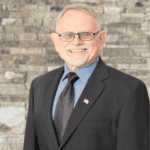
Don Currence has become a staple at SBC annual meetings over the years in his service as registration secretary and assisting his predecessor. Don has a unique insight into ministry and public service. In addition to his responsibilities within the SBC, Don has also served as mayor of Ozark, Missouri since 2023 and as the administrative pastor at First Baptist Church of Ozark since 1993. He also volunteers his time as an Ozark Police Department chaplain and the interim fire district chaplain.
On today’s episode, you’ll hear from ERLC President Dr. Evan Lenow as he speaks with Don about his role in the public square and how his faith shapes his public service. He’ll also share why it matters for Christians to serve their communities, and he’ll offer encouragement for believers who are seeking to live out their convictions in their culture.
Episode Transcript: Don Currence on Christians serving in the public square
Don Currence:
Several people have asked me this question, “Why are you called mayor?” I really am a mayor. Three years ago, God opened the door for me to become bivocational and become mayor in my city of Ozark. I’ve been at my church now 33 years, and I’ve now been mayor for three years for the city of Ozark. Now what’s funny is this: My city’s 23,000 people. There’s more people in this room that know I’m the mayor than my own city. I have a serious statement now. I never in my life thought I would be doing public service, but God opened the door. I realize now, we need Christians to be serving in public service. We need Christians to be teaching. It is not easy, but the thing is, we need Christians to take the lead in our government and our city and be involved, so please consider that.
Narration:
Welcome to The ERLC podcast, where our goal is to help you think biblically about today’s cultural issues. I’m Lindsey Nicolet, and today we’re talking with Don Currence, registration secretary of the Southern Baptist Convention.
Don Currence has become a staple at SBC annual meetings over the years in his service as registration secretary and assisting his predecessor. Don has a unique insight into ministry and public service. In addition to his responsibilities within the SBC, Don has also served as mayor of Ozark, Missouri since 2023 and as the administrative pastor at First Baptist Church of Ozark since 1993. He also volunteers his time as an Ozark Police Department chaplain and the interim fire district chaplain. On today’s episode, you’ll hear from ERLC President Dr. Evan Lenow as he speaks with Don about his role in the public square and how his faith shapes his public service. He’ll also share why it matters for Christians to serve their communities, and he’ll offer encouragement for believers who are seeking to live out their convictions in their culture. Now, let’s turn to Dr. Evan Lenow’s conversation with Don Currence.
Dr. Evan Lenow:
Welcome to our ERLC Podcast. I’m excited today because I think we have one of the most famous people in the Southern Baptist Convention joining us today. That is none other than the mayor himself, Don Currence, who also serves as registration secretary for the SBC. And I’m just grateful to have you on today, Don. So thanks for joining us.
Don Currence:
Hey, it’s a privilege to be here, and I just laugh when what you just said because as I told you earlier, I’m just Don, Don Currence, but God has opened the door for me to serve me in this way so uniquely to use my gifts.
Dr. Evan Lenow:
Well, we’re grateful for you joining the podcast, but even more grateful for the way that you have allowed God to use your gifts both in your church, in your community, and at the SBC.
So I want to start off with today, at the our most recent annual meeting, just a couple of weeks ago, you made some comments from the platform related to believers serving in various roles in public service like you do as mayor of Ozark. And so can you repeat some of what you said or at least the spirit of what you said there that day at the annual meeting?
Don Currence:
Well, I’ve been mayor now for three years. In the city of Ozark, we’ve got 23,000 people, and I’m on my second term because it is a two-year term. Probably the fall of ’22, if you had asked me, “Hey what do you think about being mayor one day?” I would just have laughed at you because I’ve now lived here in Ozark 33 years. I say, “Guys, I’m not political; it’s never been on my agenda.” But God opened the door for me to do this. What happened was in the fall of ’22, our current mayor, then Brad Jackson, was going to be appointed to be a commissioner, and they were looking for a new mayor. And people started coming up to me saying, “Hey, you need to think about running for mayor. And, again, I went, “What?” I mean, I’m an administrative pastor of this church. I mean, I’m involved in the community, yes.
Our church is involved in chamber. I’m a Kiwanian, which is a service organization. I’ve been on school committees. I mean, I’ve been involved, and plus, I’m a chaplain now for the last five years for the police department. But I said, “That’s never been on my agenda.” And they say, “Look, you need to consider it because,” they said, “we know you. We know you love this city. You’re a man of integrity, you make good decisions, and we just think you can make a great mayor.” I said to my wife, “We need to start praying about this.” Because it wasn’t one person. I said, “Is there like a committee or what’s going on here?” But people just said they felt like they wanted to talk to me. And so we started praying about it, and I thought, man, the hurdles, I mean I’m full-time at my church, and all of the sudden I had to talk to my pastor.
I said, “What do you think about this?” And of course I thought if I get elected, I can’t be full-time. It worked out where my social security, I could start taking at that time if I got elected because I didn’t want my church people saying, “Why are we paying you to be mayor?” And so my pastor told me to pray about it, and he supported this because I didn’t know. Plus, there were other hurdles. I was told since I was police chaplain, I would have to give that up by the former city administrator. And I said, that’s not happening. Anyway, God opened the door, and I had two great guys running against me in the election. They both were city aldermen. One had been planning zoning, and they all had tons of political experience, and the Republican party didn’t know who I was. But again, when it came down, God opened the door for me to be mayor. And I am very thankful for that.
But again, I didn’t realize how God prepared me because I asked the former mayors, “What does it take to be mayor?” I mean, I started in November for the election in April, going to the city council meetings, different ones just to get up to speed on what was involved, talking to people. But I didn’t realize how God had prepared because I had been a church business administrator my whole life. It’s the same skills as being mayor. I mean you’re running committees, you’ve got audits, finances, insurance, hiring, firing. I mean, everything I did at the church, I did for the city. And also I did not realize my first year, I lost five directors, after I got elected, and two aldermen. I was just hiring my first year. But I’d done that my whole life, and I was able because of that, we lost our city administrator, they actually made me the acting. We had an interim, but I was over the staff. I was over the finances, and all again because it’s what I did my whole life. And so like I said, it was something God opened the door. And like I said, when I told people when I was younger, how many times did I say, “I hope one day I become mayor of Ozark.” Never. I’m here to glorify God, make disciples, and be obedient. And God opened the door of ministry I never dreamed in my life for me to be mayor.
Dr. Evan Lenow:
Well, that’s fantastic. So I mean really this path from administrative pastor into city government really worked for you. It trained you. It gave you the skills that you needed. But let’s dig in a little bit deeper as far as your Christian convictions. So how does your identity as a Christian shape the way you approach your role as mayor and your understanding of public service?
Don Currence:
Well, I’m a Christian 24/7. Whether I am a husband, a father, a pastor, a chaplain, a mayor, or an SBC officer. I mean, I’m 24/7. Everything I say and do, my mindset leans toward that. I mean, I pray about my decisions as mayor. People I appointed, I mean I asked for discernment and prayer for that. So I mean do we pray in our meetings? No. There are certain events like chamber Christmas time, we pray. Am I praying? Yes. Because I say, “God give me wisdom. Give me discernment. Help me understand people.” Because that’s the hardest thing as mayor is you have to learn who can you trust or how much can you trust because people have agendas and things like that. And so, I mean, it’s no different as being a pastor. Like I said, God is my author, and I want to look for him for wisdom.
Dr. Evan Lenow:
So, how do you think that then connects to your role in the SBC? You’ve served as registration secretary now for a number of years. Is there anything that connects the dots between both your church service and your community service that then connects to your role within the SBC at large?
Don Currence:
Well, the thing is the SBC helped prepare me to be mayor. You have to understand, for 12 years, starting in 2005, I was Jim Wells’ assistant, who was the secretary, and he was my director of mission. Jim is a great visionary, but he’s not detailed. And he asked me, “Can you come?” And I served in Nashville helping him because there’s so many aspects behind the SBC that you have to do that people don’t realize. I mean we had no notebook or anything. I followed him. I was writing down everything he was saying as for the agenda trainings and all that. Now I have a large notebook that created over the years. Then when Jim unfortunately with cancer passed away, I was strongly encouraged to run. I didn’t want to. I didn’t want to be up on the platform. Seriously, I’m a behind-the-scenes guy. I’m the pastor’s right-hand man.
That has been my calling I’ve done. I still remember that first year in Dallas, the pulpit was large because I was shaking. Now people laugh now and think, “Oh yeah, right.” I mean, it was such a different experience for me. But, you know, I just learned to be me and be who I am. And that did help me prepare me for what I’m doing as mayor for public speaking and all of course, I mean, I always joke that there’s more people at the SBC who know I’m mayor than my own city. But of course as mayor I see myself, I’m the face of the city. I go to lots of public events and do a lot speaking all the time. Now that’s just part of it. It’s not something I feel like I was gifted with, but God has allowed me to develop that skill to what I need to do today.
Dr. Evan Lenow:
I can attest. I’m there with you. The first time to step to the big podium there at the convention on the platform during our report, we had a microphone issue, and so I had to move over to the big podium, and it’s quite a place, but it does give you a place to kind of hide a little bit behind such a big podium. So I’m here to tell you now, I don’t know how many years it took you to get used to it, but now you look like a natural up there, and you look like you belong. You know, we kind of laugh a little bit. You’re one of the few people that are so recognizable. Be honest with us for a second, Don, does it feel good a little bit to know that people know who you are, and you know, you pass them in the hallway or something like that at the convention, and people know your name.
Don Currence:
I’m very humbled about that because I want people to see Jesus. But I’m very humbled by that. I don’t understand why God’s plan has happened because I was never the popular guy in school and things like that. That was never me, and for God to do this and all. I realized some things we’ve done because we deal with really tough issues at times at the SBC during business meetings. And if I can bring a little bit of levity, whatever, you know, I’m glad we can use that. But no, I’m very honored by the recognition people give in the hallway wanting to talk to me and everything. But again, I’m just Don Currence. That’s just part of my life for that week.
Dr. Evan Lenow:
Yeah, I think honestly, you know, looking at it and having watched you from a distance for several years now, I think one of the reasons people are drawn to you is because of your humility. They feel like who you are on stage, the platform, is the same guy that would be sitting in the mayor’s office in Ozark and the same guy who would be serving in his local church. And I think there’s something to be said for that and one of the reasons why we’re all drawn to you. I heard you make the comments, and I immediately said “We’ve got to have Don on the podcast to talk about what he’s doing.”
Don Currence:
Yeah. When I got back, I don’t get on Twitter, well X, and all that. I don’t make social comments and all. My people who do when I got back said, “You’re a hit.” “What do you mean?” They explained because of the comments I made and all and they said, people were asking who is this Don Currence. Because again, I’m not on social media. I’m on Facebook, yes. But as for comments and things like that, I don’t do that.
Dr. Evan Lenow:
Well, let’s keep moving along from the standpoint of thinking about public service. Why do you believe that it matters for Christians to be invested in the wellbeing of their communities? Whether that’s through some type of public office that you hold, volunteer service, or other forms of civic engagement?
Don Currence:
Well, because if we don’t, who’s going to be the people who’s going to take the role in the leadership and all? I mean our country was founded on Christian principles, and so, therefore, if we as Christians sit back and don’t get involved, who’s going to be the ones making the decisions that will impact our local government, our state government, and federal government. And so I just believe it’s very important, that of course when I say local government, I’m talking about school boards, fire department districts, the health department, the city alderman. There’s so many different aspects of ways you can serve. We need people. And plus it’s like this, when I had to hire five directors my first year, I hired people who were qualified for their jobs. They were hired because they were qualified. But of the five people of seven, five were Christians. I could not hire them because of that. But I can defend the people I hired and why I hired them. But again, I was praying and God opened, people who send their resumes in things like that. I just feel like we can make an impact. And if you are willing to take that risk and take the responsibility and also be willing to take the hits at times because trust me, you do get hits.
Dr. Evan Lenow:
What advice would you give? Let’s say there’s a Christian who wants to engage in the public square, but they’re not really sure where to begin. What are some practical steps that they can take in their own communities to begin that process?
Don Currence:
Very good question. Well, attend meetings, city council. We meet the first and the third Monday night at 6:30. They’re open to the public. Our planning zoning meets the fourth Monday night at 6:30. And that’s a new development. They’re open to the public. We have a working session on the third Thursday at 11:30. These types of meetings are open. You can attend. We have a forum coming up on July 16. We have two people running for our new presiding commissioner. It’s going to be on the square. So be aware of what’s taking place and come. That way, you could hear these two candidates who are running to get to know them. Plus, it’s time for questions and answers. And I also have several committees that I have to appoint people for. Now, city alderman, that’s a position you have to run for. And there are three main meetings plus a secondary one every month. I have committees where you may meet twice a year, but I need people for that. And you have to live in the city of Ozark. So that means there’s also the school board. But again, there’s opportunities where you can be as involved as much as you want or how heavily you want to be involved.
Dr. Evan Lenow:
If you were to kind of walk us through what you did, I mean, you didn’t just wake up one day and decide I’m going to be mayor today. There was a process. What were the things that you were doing? Were you going to these meetings at the board of aldermen? Were you engaged with the school board or even honestly, you know, a volunteer in the school system maybe in an earlier time?
Don Currence:
Well, like I said, I was the police chaplain. I still am. I’ve been on several committees for the school. Before I was mayor again, I was very involved in chamber. My church is a chamber member, very involved with that. Kiwanis, my service organization. But me as for politically, no, not really, until when I realized, “Okay, I’m going to make the decision to run.” So, November of ’22, I started going to all the council meetings, planning zoning meetings, the working session on the third Thursday because I thought if I’m going to run and get elected, I’ve got to get up to speed on what’s going on. Plus, I talked to people like the city administrator, the city attorney, I mean former mayors. I mean, I’ll start talking, “Okay, help me out. What does this really mean?” And all just to, you know, try to get part of the learning curve covered.
Dr. Evan Lenow:
Now, there’s a famous little statue of you. My understanding is the head is not quite stable on it. So people may remember the famous Don Currence bobblehead. So where do you keep your bobblehead?
Don Currence:
It’s right behind me. It’s on my shelf.
Dr. Evan Lenow:
Now, did you know, I discovered this as I was getting ready for this podcast. Did you know that there is one being preserved at the SBC Historical Library and Archives?
Don Currence:
Yes. I gave them one.
Dr. Evan Lenow:
So for all of SBC posterity, there’s going to be a Don Currence bobblehead. I’m not sure there’s anybody else who has a bobblehead in the Historical Library and Archives.
Don Currence:
Probably not. But again, I mean, hey, the next generation, they’ll go, “Don who?” I mean, I know how it works.
Dr. Evan Lenow:
Well, but you know, here’s the deal, though. I mean, I think this is where you have the right attitude and mentality. Most Southern Baptist pastors are laboring in relative obscurity outside of their own community. They’re faithful. They’re doing what God has called them to do. They’re investing in their local church. They’re investing in their communities. But for the most part, nobody’s going to know who they are outside of their church and outside of their community. And honestly, that’s probably how you felt several years ago before you had this opportunity. But as you were faithfully serving there in Ozark, you’re just doing what God has called you to do. And so I think that’s where you kind of serve as an inspiration for so many of our pastors around the Southern Baptist Convention who are just being faithful. And so speak to that a little bit. What encouragement can you give to these pastors and administrative pastors or whatever role these folks are serving in small towns around the country and thinking, you know what, nobody’s ever going to remember who I am. What encouragement can you give to folks like that?
Don Currence:
God has called us to be obedient. Now, what he’s called each of us to is totally different. My lifting coach, he is an associate pastor. It’s a small church of about 75, and he has about maybe eight youth, and he knows what I do and everything. And I said, “Chance, there’s no difference between what you’re doing and I’m doing. We’re both being obedient to what God’s called us. He’s not to question the picture. It’s what God’s called us to do and be faithful to that. What you do is just as important as what I’m doing. There’s not a difference.” Now, man, unfortunately, we do, we label, “Oh this is more important than this. This church is bigger than this one and all that.” But in God’s eyes, he’s called us to be obedient to what he’s called us to do. And that’s what’s important, and that’s what’s going to happen one day in heaven.
Dr. Evan Lenow:
Yeah, I don’t see anything in the Book of Revelation about God putting us in line based on the size of our church or anything like that. It’s good encouragement. Well, you just mentioned something that reminded me of something. You talked about your lifting coach. This sounds like an interesting get to know Don Currence story real quick.
Don Currence:
Well, before I came mayor, I mean I’ve been with a coach for personal training for about 20 years because of my health and all and plus because of my knee. I have a fused right knee and all, it was a challenge. And so I worked with Paul for 11 years and then Chance for nine years. And he is a power lifter. And first, I was just doing the lifts and all just to do it because that’s part of my Monday, Wednesday, Friday routine because his federation would not allow me because I consider adapted. I found one that did. And so I had competed in two competitions for deadlift and squat and then the bench. I was doing my third competition when I started running for mayor. But I just, I didn’t have the time because it’s several months in preparation for the competition what you have to do.
And with my campaign and everything I was having to do for my first election, I just, I didn’t finish it. But I still, I’m doing the lifts and everything. I mean, I just, I’m not doing my max like I did in competition. I’m just doing it for my health because, like I said, you know how the convention is. I mean, I got there on June 3, got home on June 11. I walked 70 miles during that time. And so I do it for my endurance. That’s why I do it. I like doing it. I like working out, but I want to be able to serve God as long as I can and not be going, “Well, I just can’t do that anymore.” Now, how I serve God, it’s going to change. I know that. But that’s why I exercise.
Dr. Evan Lenow:
Keeping your body strong so that you can continue serving. We may have to set up a power lifting competition. I’m not going to be part of it, but we’re going to invite our Director of Research RaShan Frost. He played football. He was a defensive lineman for Auburn. We’ll let y’all set up a competition and, honestly, I think I’m going to be on Team Don on that one.
Don Currence:
At the convention, I was making fun of Clint. Clint works out. He has a home gym. I’m just going to say it. As for all the SBC presidents I’ve worked with, he’s the strongest. I mean, he really does have arms. When Daniel made that comment that Richie, “If I had one desire, I would have arms like Clint.” I mean, he really does. I made the comment that, well, Clint does lift more than I can. I’ve seen his videos and all. And he’s, like I said, he’s not faking it.
Dr. Evan Lenow:
I bet you pound for pound, you can out lift Clint, though.
Don Currence:
Well, as for age too, he always says, “I look up because of my age because I mean, I’m 70 now. I mean, like I said, I just do it because I enjoy doing it.
Dr. Evan Lenow:
Well, good. Don, it’s been great to get to know you and get to hear you and your passion for public service and also service in the church. And so as we wrap up here, I just want to ask, how can our listeners be praying for you and the work that you do there as mayor of Ozark and then also in your church?
Don Currence:
Well, I want to add one more thing. God opened a mission field for me, just like the police department as a chaplain. But as mayor, there’ve been opportunities. I’ve been able to share with people because they know I’m a pastor. I don’t hide that, but I’ve been able to minister to people, pray with them, and as a pastor, people in my city, people on my staff in the city and things like that. And that’s, like I said, I didn’t think about that, but that’s something that God has allowed me to continue as a pastor in that field. But I always tell people, please pray for me for wisdom and discernment and decisions in my leadership and what I have to do. And then for courage that I see it through, and that God would be honored in all that I say and do.
Dr. Evan Lenow:
Well, thank you, Don, and we appreciate spending this time with us and getting to know you a little bit better and hearing about your work both at the church and there with the City of Ozark. So thank you for being a part of this podcast today, and we look forward to seeing you again at the annual meeting next June, and we’ll see you there in Indianapolis.
Narration:
Don Currence is a wonderful example of how Christians can be public servants. His example serving faithfully in the public square and applying the truth of God’s Word to current cultural issues facing his community is one to emulate.
Whether in an official public office or through volunteering in our communities, we pray the Lord would raise up more Southern Baptists to be light in the darkness. As always, the ERLC is here to walk alongside you so you can address complex ethical and moral questions with confidence and biblical fidelity.
Thank you for listening to this episode of The ERLC Podcast. Join us next time as we hear special event audio from SBC26 about being faithful Christian citizens.