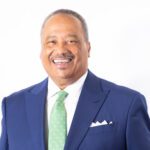
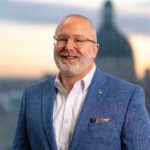
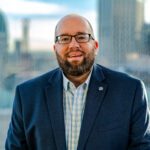
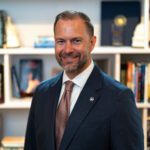
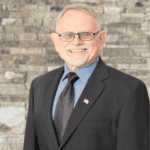
In this episode of the ERLC Podcast, Interim President Dr. Gary Hollingsworth sits down with Dr. Fred Luter, senior pastor of Franklin Avenue Baptist Church and former president of the Southern Baptist Convention, to discuss racial reconciliation in the life of the church. Together, they reflect on the power of the gospel to break down dividing walls, share encouraging stories of progress within the SBC, and offer practical guidance for pastors seeking to lead their congregations toward greater unity. As Southern Baptists observe Racial Reconciliation Sunday, this conversation reminds us that a free and faithful church should reflect the diverse, redeemed multitude we will one day worship alongside in heaven.
Episode Trancript: Dr. Fred Luter on racial unity in the SBC
Narration:
Welcome to the ERLC podcast, where our goal is to help you think biblically about today’s cultural issues. I’m Lindsay Nicolet, and today we’re talking to Dr. Fred Luter, former president of the Southern Baptist Convention about racial reconciliation.
Narration:
February 22nd marks the SBC’s Racial Reconciliation Sunday, where we consider what the Bible teaches about race, the dignity of every person, and how the gospel changes how we relate to one another. On today’s episode, you’ll hear from ERLC Interim President Dr. Gary Hollingsworth, as he speaks with Dr. Luter about how churches can seek to reflect the kingdom of God across the many differences that often divide us, including ethnicity, race, economic status, and more. Dr. Luter also shares how Southern Baptists have continued making progress toward racial unity and offers practical steps for pastors seeking to lead their congregations toward greater gospel centered unity and mission. Dr. Luter serves as senior pastor of the Franklin Avenue Baptist Church in New Orleans, Louisiana, and was elected in 2012 as the SBC’s first African American president. Dr. Luter is married to Elizabeth and they have two children. Now let’s turn to Dr. Hollingsworth’s conversation with Dr. Fred Luter.
Dr. Gary Hollingsworth:
Well, it is my joy, honor to be here today with Dr. Fred Luter, senior pastor of the great historic Franklin Avenue Baptist Church down in New Orleans since 1986. Dr. Luter has been, yes, pastor. And, and if my math serves me correct, that’s a pretty big anniversary this year.
Dr. Fred Luter:
Yeah, man. Uh, this coming October, Lord willing, it will be 40 years.
Dr. Gary Hollingsworth:
40 Years. Unbelievable. You’re not that old. Yeah, you’re not that old.
Dr. Fred Luter:
<laugh>. Well, I tell you, you know, I’ll be 70 in November, I’ll be 40 years at the church, and so those are two good round numbers, and I don’t know if you heard yet, but I plan on retiring in October at 40 years, and the church has already voted, but my son is my successor in my transition plan. So the church has already voted for him, so I’ll be decreasing in October. He’ll be increasing, man. But it’s been a great, great ride.
Dr. Gary Hollingsworth:
Well, I have heard that your son Chip is stepping into that role, and I have a sneaky feeling, Fred. You know, I retired about two and a half years ago, and I’m failing miserably.
Dr. Fred Luter:
<laugh>. I I remember that man. I remember that <laugh>.
Dr. Gary Hollingsworth:
You’ll probably fail about like me, but God’s not through with Fred Luter yet. I can assure you.
Dr. Fred Luter:
I appreciate that, man. No doubt about it.
Dr. Gary Hollingsworth:
Well, listen, Dr. Luter, thank you for taking time. The reason we’re having this podcast today is because Southern Baptist, as you well know, we have long held on our Southern Baptist calendar in the month of February, a Racial Reconciliation Sunday, and you have been so kind over the years to weigh in, and to write articles, and to do podcasts. And since I’ve stepped in as the interim president of the ERLC just a few months ago, our staff and team discussed and said, Hey, we want to do something, what do you think? And I said, let’s get Dr. Luter, if he will, and said Thank you, my brother. Thank you.
Dr. Fred Luter:
Gary. I’m honored, man. I know you know a lot of people across this nation and particularly in SBC, so for you to ask me to do this brother, the honor, is, is really mine honesty.
Dr. Gary Hollingsworth:
Well, we’re overwhelmed and overjoyed that you would do it. And, and let me say in advance, just thank you for your, not only your leadership Franklin Avenue, but twice of, of course, elected president of our Southern Baptist Convention and, really a statesman and leader in our convention. And man, we just love and thank God for you. So today, just for the sake of time, I wanted to just throw some questions at you and let you just respond. You know, I know one thing about Fred Luter. You are absolutely Bible centered, gospel centered. You know, when you think about the heart of the gospel, Dr. Luter, how it really should fundamentally relate to believers as we deal with each other across ethnic lines, racial lines, cultural lines, and particularly in light of so much division going on. Just speak to us for a few moments about your point of view on that.
Dr. Fred Luter:
Gary. I believe that the gospel changes everything. Everything. We’re saved through the gospel. We become brand new people through the gospel. Paul says in 2nd Corinthians, therefore, if any man is in Christ, he is a new creation. Old things are passed away, all things become new. And that scripture says all things become new. And that includes once you become a believer through the gospel of Jesus Christ, our thinking becomes new. Our thinking about culture, our thinking about race, our thinking about backgrounds, and our thinking about secular society, all those things become new because of the gospel. I like the way Romans 1:16 said, “I’m not ashamed of the gospel of Jesus Christ, but it is the power of God to salvation, to everyone that believed, to the Jew first and also to the Greek.” Meaning that when you are saved and changed by the gospel, your mindset changes, the gospel changes your mindset.
Dr. Fred Luter:
I often say like this, the gospel is the only thing I know that can penetrate years of prejudice and save the racist. The gospel is the only thing I know that can penetrate years of drinking and save an alcoholic The gospel is the only thing I know that can penetrate years of addiction and save a drug addict. The gospel is the only thing I know that can penetrate years of criminal activity and save the heart of a criminal. So the gospel, Gary, is crucial and critical on how we relate to each other, particularly in the area of racial reconciliation.
Dr. Gary Hollingsworth:
Man, I could not agree with you more and uh, as we like to say, that’s good preaching right there, brother <laugh>.
Dr. Gary Hollingsworth:
And that is so true. The gospel is the leveling field, if you will. But kind of a follow up question on that. I don’t know many people who might be listening to this who would disagree with that. I certainly agree with that. However, you know, it’s one thing to talk about something, it’s another to do it. It’s one thing to have a want to and another to step across the line to make it happen. So my follow up question is this. When you think about churches of course, we’re talking to Southern Baptists primarily today, but really any, any church that calls the name of Christ as their Savior. So when you think about ways that churches can and really should pursue racial unity as a visible witness of what you just shared, talk with us a little bit about maybe some practical things. And I know you’ve been deeply involved in some practical things right there in New Orleans and around the country. Talk with us about how the church can and really should respond and make this actually happen.
Dr. Fred Luter:
Well, brother, I believe that the churches should lead the way in racial unity from the top of my head to the bottom of my feet. I believe in America today, in our society today, that’s so divided that the churches should lead the way in racial unity. The churches should be exhibit A if we were in a court of law when it comes to racial unity, the New Testament church should be a living example. If we should be a visible witness to society and to our divided culture on how we could and should live out racial reconciliation, that does not mean that every church in America is equally multicultural. However, it does mean that every church in America, particularly in the Southern Baptist Convention, our doors should be welcome to everybody. Our doors should be open to any culture, any color, any background, any race should be welcome to the doors of our churches.
Dr. Fred Luter:
We should be the example of that. To put it another way, Gary, the church should be on earth a picture of what heaven’s going to be like. And I plan on being there one day. And when I get there, I know it’s not gonna be all black folk, all white folk, all Hispanic folk. It’s going to be a gumbo pot as we sit here in New Orleans, of different races the way God could, God intended us to be that way. Now, in order for that to happen, Gary, for churches to make a difference, number one, the pastor and the leadership of those churches have to agree how important our churches are in the area of racial reconciliation, of inviting people and accepting people of all nations and all backgrounds. It has to start with the pastor. I’ll give you a perfect example.
Dr. Fred Luter:
Won’t call the church or the pastor. Years ago when Franklin Avenue started making an impact in the state of Louisiana and, uh, we started growing and growing and growing, I got a call from a SBC pastor in North Louisiana. He said, brother Fred, man, I love what you’re doing down there in New Orleans. Uh, our church, ’cause you know, many people don’t know. Franklin Avenue at one time was an all white Southern Baptist church. In the late 1970s, whites moved out the neighborhoods, blacks moved in. So since 1980, we became a predominantly black church. And so we started, you know, doing things in the community that would reach all people. Well, this pastor called me, he said his neighborhood was changing like Franklin Avenue here. This was a predominantly white church, and he wanted to impact the changing neighborhood around him. So he called me, he said, I would love for you to come up and just talk to our leadership or maybe preach two or three times and let people know how critical it is for us to reach our community where we live at.
Dr. Fred Luter:
And I agreed to it, man. I said, okay, we got a date together. And Gary, God is my witness, three months before that date, he called me and said, Hey, Fred, I’m in New Orleans. Can we meet over for lunch at New Orleans Baptist Theological Seminary? I said, yeah, but let’s do that. And I’m thinking, we’ll go in there to talk about what the plans are for this crusade where he’s trying to reach the community. And when I met with him, Gary, he started crying and tears in his eyes. I said, man, is everything all right? I’m thinking somebody in this family died or some personal tragedy. And this is what he told me. He said, brother Fred, I’ve gotta uninvite you. He said, what you mean you gotta uninvite me? He said, well, when my deacons and leadership found out that I was bringing a black preacher from New Orleans to the church that I was at, a black preacher had never ever preached in that pulpit.
Dr. Fred Luter:
And they told him, the deacons and leadership told him, no way is a black preacher coming to preach in the pulpit of this church. He thought his church was ready. He thought his church was ready for change. And I told him, Hey, partner, listen. Just put it on me. Tell the church, tell the leadership something came up in my schedule that I cannot make it. Don’t take that responsibility on your own. So he thought the church was ready to move in that direction. So I’m saying all that to say this, if racial reconciliation was going to happen and that the church is going to lead it, the pastor and the leadership of that church have to embrace accepting all races into their churches and then to their congregation. So it’s gotta start with us. And if it doesn’t start with us, we’re in trouble.
Dr. Gary Hollingsworth:
No, Dr. Luter, I, that grieves me. ’cause I’m assuming the story you just told isn’t a story from 40 years ago. I must admit that grieves my heart to hear that. However you’re spot on. It has to happen one heart at a time. ’cause you’ve kind of brought up something, and again, you have been at this a long time, as have I, and in 40 years just there in one church. And of course serving our convention not only as our president, but serving so many other ways, we’ve come a long way. We’ve got a long way to go. And I’d love for you to speak to kind of those two. Number one on the positive side, while that was a, that’s a tragic story you just told, but on the positive side, take a moment and just from your perspective, when we say that we have come a long way, tell some things that you know of where we have made some advances as Southern Baptists in this area. And then I’ll come back and ask the second part of that question. When we think about how far we’ve come, tell some good stories, where we have made some stride.,
Dr. Fred Luter:
One of the things that, uh, there’s a follow up to that story in about a year that pastor, because he was so hurt, he thought his church was ready, he left the church and took on another assignment in another state. And man, I went to preach for him in that state, church was booming, all different races and cultures there and, but he, he really thought that that church was ready. So that’s, it’s gotta come from the top. Now, give me some positive things about that. I give you one particular story that really, again, was a personal story. When Hurricane Katrina hit Gary, our city was devastated. Uh, uh, I lost not only Franklin Avenue, but other churches lost thousands of members, man were relocated all across the country. And after the hurricane and the city was coming back, our church was flooded. We had nine feet of water in our church.
Dr. Fred Luter:
And so our church was flooded, but some of the members had come back and they were calling me. I was living in Birmingham, Alabama. My daughter had just finished Samford University. So I was living in Birmingham, Alabama, deciding what I needed to do. And members start texting me and emailing me, said, pastor, some of us are back. Are we going to start church again? So I told her, I need to find somewhere to have a service. So I called First Baptist Church in New Orleans, but my friend and brother, pastor David Crosby was the pastor and knowing David throughout our association, and I said, David, we’re trying to come back to New Orleans, but we don’t have a place to worship now. First Baptist New Orleans, predominant Anglo church. And he said, Fred, what time do y’all wanna come? I said, what time your service for?
Dr. Fred Luter:
He said, our service for 9:30. I said, well, if you can allow us to have a 7:30 service, which we’re used to having, because back then, Gary, we were having three services 7:30 AM, 10:30 AM and 12:30 PM every Sunday. And when I told him 7:30, he said, 7:30. I said, yeah, man, we used to have 7:30 AM And Gary, I tell you, it was one of the sweetest times that we have. Our congregation start meeting at First Baptist Church every Sunday morning at 7:30. They were meeting at 9: 30, and the congregations got so much involved that before you knew it, members from First Baptist Church started worshiping with us at 7:30, and members from Franklin Avenue started worshiping with First Baptist at 9:30. But not only that, our women’s ministry started working with their women’s ministry and doing Bible studies together.
Dr. Fred Luter:
Our men’s ministry started doing prayer breakfast with their men’s ministry and was just an incredible, incredible way that these churches came together. So much so that the local newspaper, the Times Picayune in New Orleans did an article on us, how a predominantly Anglo church and predominantly African-American church came together as one and made an impact on the community. So much so that this past August of last year when we celebrated 21 years, uh, Hurricane Katrina, the mayor of the city came to that event and presented to me and David Crosby a key to the city because our efforts and racial reconciliation back then made an impact on the city of New Orleans. And even to this day, we are still keeping that relationship together. Uh, our staff at Franklin Avenue, we’ll do a Christmas luncheon at First Baptist, then the next year they’ll come and have a luncheon here at Franklin Avenue.
Dr. Fred Luter:
And then we’ll periodically we still have members go worship with them and still have members come to worship with us. They have a new pastor now by the name of Chad Gilbert with a wonderful brother. And, uh, he and my son Chip are very good friends. And so Gary, I see that relationship continuing for years and years. So, but it started because two pastors who had a relationship with each other said, you know, this can make a difference in our city. And we said, let’s make it happen. And we still see the positive results of that.
Dr. Gary Hollingsworth:
Oh man, listen, I’m so glad to hear the rest of that story, if you will, about the pastor. And also thank you for just sharing that positive, encouraging note, which is kind of, and I’m gonna let this be our last question. I know, I know you’re still a busy pastor, even though you’re preparing to retire, but it, there’s a pastor out there and I think you hit on a key word a moment ago when you talked about the relationship because man, I’ve always believed that ministry runs along the rail of relationship anyway. But if you have a moment to speak, just face to face, person to person with every Southern Baptist pastor or every pastor, period, take a moment and just speak a word of encouragement that pastor who wants to do something but their church isn’t quite yet there perhaps. Take a moment, if you will, and just give something practical and encouraging that from the heart of Dr. Fred Luter to the heart of another pastor, as we think about race relations, not just on one Sunday a year, this is something really that needs to be our heart every day. But give us a challenge as a pastor and give that pastor a challenge about a step they might can take in a practical way to just make this happen in their church and community.
Dr. Fred Luter:
That’s a great question, Gary. There’s something, and that’s a great challenge to me to speak to the audience. And my challenge would be this is the will of God. Racial reconciliation is the will of God. When God created us in the Book of Genesis, he did create black Christians and white Christians, uh, brown Christians. God created one race, and that race is the human race that we all are part of. We are made in his image and his likeness. So my challenge to pastors who wanna see this happening in their churches, in their community is first to have to start with you as a pastor, just spending time in prayer, maybe in fasting, asking God for direction on which way to go and how we can pull this off. Secondly, you need to meet first of all with some key leaders, not the entire church.
Dr. Fred Luter:
Meet with some key leaders of the church and share with those key leaders what your heart is, what your passion is, what your vision is for this church and your heart and your passion, vision. We need to reach everybody. We are a church. We’re the body of Christ. And because of that, we need to start reaching people who may not look like us or, uh, may have a different skin color, maybe in a different neighborhood than us, but we still need to reach those people because that’s the great commission and the great commandment, God told us to go and reach those who don’t have a relationship with them. So meet with the key leaders, share with them your heart and your vision, and hopefully get their support of what it is pastor that you want to do. Then after you get their support, that’s when I will start teaching or preaching Bible study lessons or sermons on the importance of us coming together as a congregation and also inviting others to be a part of our congregation.
Dr. Fred Luter:
Listen, everybody may not join your church, but every church doors should be open to everybody. And I believe that’s how it starts. I also would encourage pastors, if you yourself, would develop a personal relationship with maybe another pastor in the community, in the neighborhood of a different race. That’s how it happened with David Crosby and I, we just knew each other through the association, but we started getting to know each other, having lunch together, coffee together. And because of our relationship one-on-one, then it was easier for us to share our hearts were our members and that our members were then open to it. So, so number one, fast and pray pastor about what direction that God would have you to lead. And God wants us to be a church that leads the body of Christ. Secondly, get with your key leaders. Share with them your heart and your passion to let them know that God is calling us to reach everybody, not just a certain race, but everybody.
Dr. Fred Luter:
And then thirdly, once you get the support of your leaders, start teaching and preaching, uh, lessons and sermons on, uh, racial reconciliation and how everybody is important to God, you can use that illustration I love so much in the gospel where Jesus, uh, with the Samaritan woman at the well, he sent his, uh, disciples away and he had a one-on-one relationship with this woman who was coming for water. But Jesus realized her real need was not that physical water, but spiritual water. And here was a barrier that he broke down between Jesus and Samaria. And as a result of that, this woman had a relationship with Jesus Christ. She went back, ran through the city and told people, come see a man who told me all that I’ve ever done. So my friend is that when you as a pastor share with those things of the church and your members get excited about that, they’ll go throughout the community, go throughout the neighborhood and say, come to our church and see the body of Christ in action. Our churches should understand that one day all of us are going to be in heaven. If we are believers and heaven is going to be comprised of all different races, well, why not start it in our local church?
Narration:
Revelation 7:9 provides a beautiful image of unity, a great multitude from every nation, tribe, people, and language standing before the throne and worshiping the Lord. As we continue to strive toward racial unity in our churches, let’s ask God to break down the dividing walls of hostility that still exist today. Thanks for listening to this episode of the ERLC podcast. Join us next time as we speak with the Alliance Defending Freedom about chemical abortion from a legislative perspective.