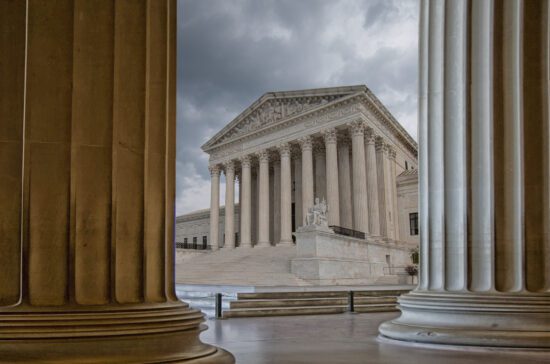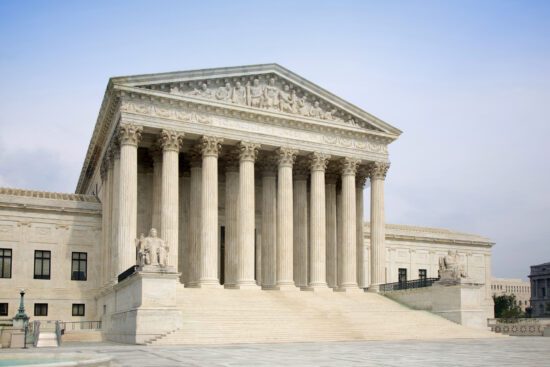




On April 22, the Supreme Court heard oral arguments regarding gender ideology indoctrination in the case Mahmoud v. Taylor. This case will determine whether public schools infringe on parents’ religious freedom by requiring elementary school children to participate in instruction on gender and sexuality without parental notice or the ability to opt out, despite religious objections.
The Ethics & Religious Liberty Commission filed an amicus brief supporting the petitioners in October 2024. The brief highlights:
- The fundamental right of parents to direct the upbringing and education of their children,
- The importance of religious liberty in ensuring that parents are not forced to choose between their faith and their children’s schooling,
- The role of the Free Exercise Clause in protecting parents from government-compelled ideological indoctrination.
- The necessity of ensuring that public schools respect the diverse religious beliefs of families in their communities.
What is the gender ideology indoctrination case about?
The background: In 2022, the Montgomery County Board of Education in Maryland introduced a new policy requiring the use of storybooks and discussion guides that promote radical gender ideology in elementary school classrooms, including children as young as 3 years old.
The issue: Initially, the school board indicated that parents could opt their children out of the curriculum based on religious or moral objections. However, the board later reversed its position, deciding that parents would no longer be notified when these materials were used in class and would not be allowed to opt their children out because it was too burdensome for the schools.
The legal challenge: A multifaith coalition of more than 300 religious parents, including Muslims, Catholics, Protestants, and Orthodox Christians, challenged this policy in court with the help of the Becket Fund for Religious Liberty. The parents argued that the policy violated their First Amendment rights by mandating that public school teachers use materials promoting radical sexuality ideology meant to indoctrinate their children, in direct contradiction of the parent’s deeply held religious beliefs.
The lower court ruling: Lower courts sided with Montgomery County, ruling that parents do not have the right to opt their children out of public school curricula they find objectionable and burdensome to their religious exercise.
What happened during arguments in the gender ideology indoctrination case?
During the April 22 arguments, the justices questioned Becket attorney Eric Baxter on whether requiring young children to participate in classroom instruction featuring books that affirm same-sex marriage and radical gender ideology constitutes a burden on religious exercise. Baxter argued that parents do not object to the existence of books in school libraries but to their mandated use in classroom instruction without prior notice or an opt-out option, as provided for many other curricula in Montgomery County. He emphasized, “Parents, not school boards, should have the final say on such religious matters.”
Several justices focused on whether exposure to conflicting moral views constitutes coercion or a constitutionally protected burden on religion. Justice Sotomayor repeatedly questioned whether mere exposure to classroom materials could be considered coercion. Similarly, Justice Alito asked whether the classroom reading is merely “telling children that there are occasions when men marry other men,” or if it crosses into moral instruction. Baxter responded that requiring attendance for those readings is a substantial burden, especially for children as young as 3 years old. When pressed to give a definition of what would constitute a substantial burden, Baxter outlined three tests:
- “Is there substantial interference with the parents’ ability to direct the religious upbringing of their children?”
- “Are the parents being pressured to abandon or modify their religious beliefs in order to access a public benefit, like public education?”
- “If there’s straight-up discrimination, where some religious students are opted out and others aren’t, then that itself would also be a burden.”
Montgomery County’s counsel, Alan Schoenfeld, defends the policy as neutral and non-coercive, arguing that exposure to inclusive ideas in public education does not burden religious exercise. However, the conservative justices repeatedly asked whether mandated classroom readings, especially with accompanying teacher discussion guides, blurred the line between exposure and indoctrination.
When questioning Schoenfeld, Justice Barrett read from the instructional guidance to teachers on these gender ideology materials, giving the example: “this is an instruction to the teacher, ‘If a student observes that a girl can only like boys because she’s a girl, the Board suggested that the teacher disrupt the student’s either/or thinking by saying something like: Actually, people of any gender can like whoever they like.’” She then proceeded to ask how this is only “exposing” these ideas to children and not “influencing” them.
Justice Jackson took a different angle, focusing on procedural concerns and arguing that the documented record was too underdeveloped to support the sweeping constitutional claims being made. She warned against resolving complex religious liberty issues without concrete facts showing actual harm or compulsion to violate one’s faith. Baxter rightly affirmed that relief for these parents does not require that the harm has occurred but that it is imminent.
What happens next in the gender ideology indoctrination case?
Now that there have been oral arguments, the justices will deliberate and draft an opinion. A decision is expected by the end of the court’s term in June 2025.
Why does this gender ideology indoctrination case matter to Southern Baptists?
At the 2024 Southern Baptist Convention Annual Meeting, messengers passed a resolution “On the God-Given Rights and Responsibilities of Parents.” A ruling in favor of the petitioners would align with Southern Baptists’ call for the state to ensure “that parents have the freedom to make decisions regarding the upbringing, education, and healthcare of their children without undue interference, recognizing that parents are the primary arbiters of a child’s moral and spiritual formation.” A favorable ruling in Mahmoud v. Taylor would reflect these convictions by affirming that public education must accommodate the sincere religious beliefs of families, not overrule them.
The ERLC has continued to provide resources on parental rights and religious liberty in public education. Our white paper, “Parental Rights, Public Education, and Religious Liberty,” offers a theological understanding of why parents, not the state, hold the primary responsibility for their children’s moral and spiritual formation.