Welcome to The ERLC Podcast where our goal is to help you think biblically about today’s cultural issues. Today, we’re continuing to answer frequently asked questions about the ERLC.
For over a century, the ERLC has upheld its dual mandate to speak into the public square and equip our pastors and churches with resources to engage the culture on moral and ethical issues in areas such as life, religious liberty, marriage and family, and human dignity. Whether serving churches or advocating for Southern Baptist convictions before the halls of Congress, we stand in the gap for and alongside the churches of the Southern Baptist Convention.
While we work on policy issues in our nation’s capital, much of our ministry centers around supporting churches like yours by providing practical and theological resources, many of them available for free on our website. Our aim is to carry out our mission with the utmost integrity, which is why we’re answering some of your most frequently asked questions on our podcast. In addition, we’ve provided a more extensive list at erlc.com/faqs.
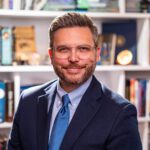
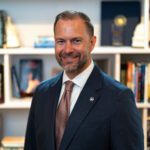
On today’s episode, you’ll hear from Brent Leatherwood, president of the ERLC; Miles Mullin, vice president and chief of staff at the ERLC; and Bobby Reed, chief financial officer of the ERLC, as we answer questions about the ERLC Research Institute, our stance on immigration policies, and our work on pro-life legislation. Listen for answers to these questions and more:
- What is the Research Institute and what is the function of our fellows?
- What is the ERLC’s stance on U.S. immigration and the safety of our borders?
- Did the ERLC support pro-choice legislation in Louisiana?
- Where does the ERLC stand on the criminalization of women who receive abortions?
- What is the Psalm 139 Project and how many ultrasounds have been placed?
Episode Transcript: Your Questions Answered: Part 2
Narration:
Welcome to the ERLC podcast, where our goal is to help you think biblically about today’s cultural issues. I’m Lindsay Nicolet, and today we’re continuing to answer frequently asked questions about the ERLC.
Narration:
For over a century, the ERLC has upheld its dual mandate to speak into the public square and equip our pastors and churches with resources to engage the culture on moral and ethical issues in areas such as life, religious liberty, marriage and family, and human dignity. Whether serving churches or advocating for Southern Baptist convictions before the halls of Congress, we stand in the gap for and alongside the churches of the Southern Baptist Convention. While we work on policy issues in our nation’s capital, much of our ministry centers around supporting churches like yours by providing practical and theological resources, many of them available for free on our website. Our aim is to carry out our mission with the utmost integrity, which is why we’re answering some of your most frequently asked questions on our podcast. In addition, we’ve provided a more extensive list at erlc.com/faqs. On today’s episode, you’ll hear from Brent Leatherwood, president of the ERLC; Miles Mullin, vice president and chief of staff at the ERLC; and Bobby Reed, chief financial officer of the ERLC, as we answer questions about the ERLC Research Institute, our stance on immigration policies, and our work on pro-life legislation. Now, let’s turn to my conversation with Brent, Miles, and Bobby.
Lindsay Nicolet:
So, under the Leatherwood administration, we have revamped the Research Institute. What is the Research Institute and what is the function of our fellows?
Miles Mullin:
That’s a great question, Lindsay. The Research Institute has been around for a long time. It started back under the Richard Land era, and it is a way to bring together some really great thinkers on various topics that relate to the work of the ERLC. And so, under Brent’s leadership, as you know, Brent wanted to be much more intentionally Baptist about what we’re doing. Generally, these are scholars drawn from around the convention that have an expertise in, say, life or religious liberty or some specific aspect of the things that the ERLC works on. We see them as a “think tank” of sorts. They affirm the Baptist Faith and Message, they’re members in good standing of their local Baptist church, and they have an expertise in an area that is important for the work that we do at the ERLC. As you know, the staff of the ERLC is very small, but the Southern Baptist Convention is large, and God has given us very talented people across the convention.
Miles Mullin:
Some are at seminaries, some are at Baptist colleges, some are practicing attorneys at ADF. So the Research Institute then has two functions. It provides a collaborative space for these scholars to get together to talk about things that Southern Baptist care about at a very deep level. They also, these fellows, function as a resource for us to draw upon if we have questions or we need an article written on something to produce a white paper, even one of our church guides. So, for instance, our church guide on artificial reproductive technologies was produced by one of our senior fellows, Jason Thacker, and one of our other research fellows, Kevin Leno, who teaches at Mississippi College. Now, that brings up an important distinction. Our research fellows are not paid: they’re not paid by the ERLC, and their views do not necessarily represent the views of the ELC except on things that we’ve asked them to contribute that then are vetted by our full-time staff. The exception to that is that we do have four senior fellows. We have a senior fellow in life, a senior fellow in religious liberty, a senior fellow in marriage and family, and a senior fellow in human dignity. And they are contracted experts in those fields who are more closely aligned with us, and they speak for the ERLC in certain capacities.
Brent Leatherwood:
The Research Institute, in my mind, is one of those institutions that have been created by the ERLC that really just serves an incredible purpose, and it has done so for many years. And I think one of the reasons we wanted to re-engineer it slightly for this era is because I like to use the analogy of when the ELC takes a public stance on something, it’s kind of like an iceberg. So what you are seeing publicly really just represents a small portion of the work that has gone into taking that stance. So I think most folks, they might be familiar by now, right? We’ve got a decision matrix for issues that we engage, proposals that we support, where we make sure that, first and foremost, it’s rooted in Scripture. Secondly, that it is reflective of what is contained within our statement of faith, the Baptist Faith and Message, and that it is also responsive to actions taken by our messengers, which generally means resolutions, right?
Brent Leatherwood:
So it goes through that rubric, and once we make a determination like that, we’re going to engage an issue. We want to make sure that, undergirding that public stance, what we take is rich research and done both from a scholarly and academic perspective, but also a theological perspective, because we want to make sure that there are resources that are accessible to pastors, to folks in academia, to folks in the pews to understand, “Okay, this is why the ERLC is weighing in on this issue.” And so, that’s the purpose now of the Research Institute. And Miles has done a phenomenal job with it, Rashaan and our team are doing an incredible job with research. And so, we’re really utilizing it, I think, in ways that are far more conducive to the main part of our ministry assignment, which is to come alongside and serve our churches.
Lindsay Nicolet:
Some of the questions we receive most frequently are about immigration, the US immigration system, and the safety of our borders. So what is the ERLC’s stance on these things?
Brent Leatherwood:
The ERLC’s stance is the stance of Southern Baptists. That’s what our stance is as it relates to the immigration system for our country. And Southern Baptists have, for years now consistently, called for a comprehensive approach to reforming our immigration system. And we all have felt the strains and seen the chaos at various points at our southern border, and also the chaos that reigns overseas for individuals who legitimately are trying to come here because our system is so fraught with dead ends and information that’s just hard to understand and requirements. And so, we have asked for a simple equation as it relates to public policy in this area: give us strong, secure borders, and then at the same time, create pathways that are understandable and achievable for individuals who are fleeing terrible situations abroad, where they’re either being persecuted for their faith or they are fleeing war torn situations, or they wanna come here and make a better life for themselves and their family.
Brent Leatherwood:
That’s what we’ve asked for. Those things should not be pitted against one another as too often happens in our modern politics from the left and from the right: they want to lean towards one portion or the other. But since the beginning, the Southern Baptist Convention has been adamant in this being the solution in terms of public policy. Obviously, that’s at a very high level. People will use the phrase “The devil is in the details.” I admit that. But I think if we can continually put in front of lawmakers that they have a duty to make the system better than it is, that actually will cause things, such as the unacceptable flows of illegal immigrants coming into the southern border, that will actually stop that because people will understand, “Okay, this is the process that the American system has for me if I choose to come here,” and right now they just don’t have that clarity.
Brent Leatherwood:
And so, this is why we actually, I tell this to folks all the time, pastors that I’m speaking with, different groups I’m speaking with, I think the ERLC actually pays more attention, closer attention, to the resolutions that are passed at each annual meeting. And if you look back over the last 30 years or so, it is very clear that the SBC has continually and consistently called for the same sort of roadmap as it relates to comprehensive immigration reform. And that’s been true under Dr. Richard Land, under Dr. Russell Moore, and now this era, and the SBC hasn’t changed in that. And I think that’s a good thing because again, our politics right now are so divisive, that it wants to pit those two objectives against one another. And it’s a difficult problem to solve. I mean, there’s a reason that there hasn’t been any sort of reform in this area for decades.
Brent Leatherwood:
It is a very tough issue. So I am thankful when leaders, including Southern Baptist leaders, are weighing in and trying to come up with thoughtful proposals that at least are reflective in many ways of what Southern Baptists have long said. And this is important because there are so many of our local churches that are engaged with ministering to refugees that are here through the Refugee Resettlement Program, or helping migrants who have come help get them assimilated into their local communities and to serve their needs. And obviously there’s a Scriptural basis for that. And I think, you know, even above all that, individuals who are encountered in our system, whether they’re coming here illegally or they’re encountered at the border and they’re trying illegal entry, we simply ask that they all be treated as image bearers because we know we’re all made in the image of God. And so, there should be a level of decency as these individuals are dealt with, either as they’re moving through the system legally or, as they are being asked to return, facilitating a return back to their original country. Those are principles that have long been articulated by the Southern Baptist Convention. And so, therefore, that is the stance of the ERLC.
Lindsay Nicolet:
Many people are worried about criminals who are able to get into our country illegally, like drug smugglers and gang members. What would you say to those people?
Brent Leatherwood:
I’m worried about those people getting into our country, too. That’s precisely why we call for comprehensive immigration reform because those sorts of individuals should not be able to gain access to this country. And what studies have revealed is, far too often, they are getting access because they’re coming through illegal channels. And that speaks to the side of what the SBC is called for in terms of secure borders and strong enforcement at the borders. We don’t want those sorts of individuals gaining access to this country. Instead, the types of people that we want are, again, those people who want to contribute, those people who are fleeing situations not of their own, maybe people who are being persecuted. So that’s precisely why programs like, I don’t know, take for example, the Refugee Resettlement Program. Individuals who come into this country through the Refugee Resettlement Program are highly vetted.
Brent Leatherwood:
They’re vetted through all of our national security apparatus. We understand more about them than we probably do of our own citizens who were born here. And they are coming here for legitimate reasons. Those are not the individuals that you might hear about in the news or read about online who are committing heinous acts. No, we want those individuals found and removed, but at the same time, we want to continue to be a welcoming country for those folks who have a legitimate reason to be here. And again, that’s why strong borders, strong enforcement of our immigration laws, need to be paired with achievable pathways so that those folks can come into this country and be vetted as they are done. So, and again, that’s what the SBC has long called for, and that’s what the ERLC advocates for.
Lindsay Nicolet:
Another one of our most frequently asked questions is about the depth of our pro-life commitment and is about whether or not we supported pro-choice legislation in Louisiana. How would you answer those questions?
Brent Leatherwood:
Well, let me answer this question by starting with this: we recently were able to meet with a senior advisor for majority leader, John Thune, for the US Senate. And what she pointed out is that the ERLC over the years has been the consistent voice on life issues. And in particular, she pointed to our recent efforts to highlight an initiative to defund Planned Parenthood. She pointed out other groups, they’re doing great work on it, and we proudly call those other groups partners, but she said it is the ERLC that has been continually reminding lawmakers about the dignity of preborn children and why we need to do more to protect them. I don’t think when it comes to the depth of our pro-life commitment, really, that we have anyone to compare it to, because the depth of our pro-life commitment isn’t some political stand that we’re making.
Brent Leatherwood:
It is a commitment from our faith to continually advocate for the least of these, and that is vulnerable preborn children. So we are proudly pro-life, and we are going to do everything we can to advance the ball, take the very next step to save one additional life in any sort of legislation or proposal that’s out there. You know, you asked about Louisiana. No, I can confidently say we have never supported any pro-choice legislation. That’s a mischaracterization. The reality is, in the immediate aftermath of the Dobbs Supreme Court decision, which folks will remember, that is what tore down the Roe pro-abortion framework at the federal level. And it said states now are at the table for deciding abortion laws in this country. It doesn’t mean that the federal government has no role to play, that’s a misreading. But it did elevate, without a doubt, states in the ability to either prohibit abortions or highly regulate them.
Brent Leatherwood:
And other pro-life leaders at that time thought, “You know what? Our efforts for 50 years now have been focused almost entirely on Washington. It may be that we take this opportunity with the downfall of Roe to send a letter to legislative leaders across the country at all state capitals.” And so, they sent us, in the summer of 2022, they sent us this letter articulating what have been the traditionally long held viewpoints of the pro-life community, and I would say the Southern Baptist Convention, and certainly the ERLC. And so, I added my name to that letter, and it was sent to every legislative leader and state level leader across the country because those pro-life leaders knew, okay, this is gonna come up now in legislative debates, during the legislative sessions, in state houses across the country. And this pro-life letter, I would add, had nearly every national pro-life group that was a part of it.
Brent Leatherwood:
So that’s Susan B. Anthony List, that’s Americans United for Life, that’s March for Life that hosts the annual March for Life. I mean, all sorts of groups. Ralph Reed, a household name for many Southern Baptists, he added his name. In total, there were over 70 groups that signed this. And again, I would submit, it’s actually a very good representation of the broad consensus of the pro-life movement. And it just so happened that the first state that really had something meaningfully moving was down in Louisiana where there was pro-life legislation, but there was also legislation that would have criminalized mothers. And that second bill failed. But a pro-life bill moved in its stead. And folks like to say, “Oh, but there were Southern Baptist leaders wanting the criminalization of mothers’ bill.” Well, that’s true. There were also Southern Baptists that were on the pro-life side of the legislative debate and ones that were sponsoring that particular bill to move forward. Which, to be clear, abortion in Louisiana is done away with. Like, elective abortion in Louisiana does not happen.
Brent Leatherwood:
And so, Louisiana is one of those states that has a very strong pro-life bend in its laws now. And we praise God for that. We need more states to be like Louisiana and like Tennessee and like Texas in terms of the default position being that we are going to protect the life of a preborn child, and it’s the direction that we should be taking laws at the state level and also at the federal level. So that’s the way that that timeframe has been sort of characterized out there by some folks. But that’s just not the reality. The ERLC continues to be one of, if not the strongest pro-life voice in the public square. And again, that’s not because that’s some politically convenient stand or something that we have on a checklist. No, it’s because of something far deeper than that. And that’s because of the commitments of our faith.
Lindsay Nicolet:
You mentioned the criminalization of women when it comes to pro-life legislation. Where does the ERLC stand on that?
Brent Leatherwood:
We are pro-life, and we do not believe that the best way to save lives is to criminalize women. And the reason for that, it comes down to a couple of different things. One, culturally, I don’t think it reflects the fact that we are coming out of a 50 year era where women were essentially open targets for a predatory abortion industry to come at them with some of the most heinous lies imaginable. Telling them that if they just got rid of this child that is growing within them, they’ll live great lives without any sort of regrets. And that’s just heinous because we essentially had an official position as a country that allowed this. And so, culturally, we are moving from one era to the other. Secondly, holding out for this criminalization of mothers: one, politically, you’re going to drive individuals that might be ambivalent about this or not really paying attention.
Brent Leatherwood:
You’re actually gonna drive them in the opposite direction. You’re not gonna bring them closer to a pro-life view. And that could have real repercussions at the ballot box. And effectively, that will put us back closer to a Roe era policy. In fact, it may even take us further than that where abortion is even more permissive than it was for 50 years. And so, that’s not a place that I want to take us. And then lastly, if you’re just thinking about it along ethical lines, doing it to say, like, “Well, I think a pro-life policy has to include this, and anything less than that is insufficient.” Well, obviously that’s taking issue with the incrementalist approach that has for years actually made gains. That’s actually what led to the Dobbs decision. So it’s attacking that incrementalist perspective, which has actually saved lives. Furthermore, by holding out this criminalization of mothers saying, “This is the only way to go and refusing to support anything that doesn’t include that,” that is tantamount to saying, “Well, because I can’t rescue everyone in a burning building, I’m not gonna rush in and save anyone.” That’s nonsensical.
Brent Leatherwood:
That’s certainly not a pro-life perspective. If anything, that is creating space for the abortion industry to continue taking lives until you get to whatever you think is the best objective. That’s just not the way to approach this. I mentioned it earlier: we take the position that we will support proposals that even if they only make a difference in saving one additional life, we’ll support that because that’s one additional life that is saved and that is protected. That doesn’t mean that we are satisfied with certainly the directions that several of these states have taken. I mean, just this last fall, there were ten states that had abortion ballot questions that were put before voters. Seven of those went in a pro-abortion direction. That is tragic, that is lamentable, and it shows that we’ve got real work to do.
Brent Leatherwood:
So we’re not satisfied with that. If anything, that reinforces the fact we’ve gotta get out there with a pro-life message that helps these mothers that are being targeted by the abortion industry still, and in particular, in abortion destination states like Illinois or California or Vermont, right? We’ve gotta get out there and help these mothers and other individuals in the community see the humanity of this preborn child. And laws need to respect that preborn life and protect that preborn life. So we’ve got our work to do there. And again, that refers back to something else I mentioned: we don’t believe that the federal government has no role to play here. There’s a lot of legislators, you know, in our meetings up on Capitol Hill, there are federal lawmakers who say, “Well, you know, this is really just at the state level.” And we will politely and respectfully say, “No, that’s actually not what the Dobbs decision did.”
Brent Leatherwood:
That is abdicating your roles here. So we’re for an all of the above approach. So whether it is a constitutional amendment, a national right to life amendment to the cons, we would support that. Or something that I think is a little more achievable, because it’s already in law, is working through the 14th Amendment, right? It calls for the equal protection of laws at the federal level and at the state level. So if we can ensure that a right to life is recognized at the federal level through the 14th Amendment, that will equally apply at the state level, and it will equally protect those children in the womb. And so, that’s what we’re advocating for. And so, this is something that we’re very passionate about. I mean, members of our team are constantly thinking through pro-life proposals, ways that we can help people see the dignity of the humanity of that preborn child.
Brent Leatherwood:
We’re constantly touting our Psalm 139 Project, which places those lifesaving ultrasound machines and clinics around the country. So I mean, this is something that obviously animates our team. It’s core for who we are. It’s not the only thing that we’re about, but gosh, it certainly is something that we are very proud of. So in saying all of this, we are not in any way saying that mothers are not culpable for ending the life of their preborn child. Look, we don’t have any caveats here. We know abortion is murder. We just don’t believe that the criminalization of mothers, again, who oftentimes are trafficked into these situations, they are put there without the support of the father. There’s no one there to support them. And that’s what’s so good about our churches and pro-life ministries: they’re willing to come alongside these mothers, and that’s why we need to continue to bolster efforts in that area.
Brent Leatherwood:
But again, we don’t have any doubt in saying that abortion is murder. It absolutely is. This is why we want to defund Planned Parenthood. We wanna make sure that it is the abortionist that is held accountable. It is the abortion clinic that houses and funds the abortionist that is held accountable. We want to go after the drug manufacturers that make these toxic chemicals that are pedaled to scared mothers. We want to make sure that they are held accountable because it’s their drugs that are killing the child. So, let’s figure out ways, pro-life laws, wraparound care, community support efforts that could come around these mothers to support them and say, “We’re gonna walk alongside you as you raise this child that’s going to immeasurably bless your life.” Like, that’s the reality and the ways that we need to be talking about this issue. And that’s the way that our advocacy works.
Lindsay Nicolet:
One of the joys of the work of the ERLC is being able to be involved in the Psalm 139 Project. So can you explain what that is and how many ultrasounds we’ve been able to place?
Bobby Reed:
The Psalm 139 Project was an initiative that began back in the early 2000s when we were focused on the idea that we were going to educate Southern Baptists on the importance of the pro-life issue, but give them also a tangible way to implement their convictions. They could do that through giving to what we developed as the Psalm 139 Project, which every dollar that’s given to the Psalm 139 Project, goes to either pay for an ultrasound machine or to pay for the very necessary training that the sonographers and nurses need in order to use those machines. Those machines are then placed in pregnancy care clinics across the country and now around the world. Since the beginning of the Psalm 1 39 Project, we’ve placed over 90 machines, and they are some of the greatest joys that we have in being able to do the work that we do.
Bobby Reed:
One of the catch lines that Dr. Land used when we first started the initiative was that the sonogram machine, which at that time was of a fairly new technology, was that it was “a window to the womb.” Because the reality is when a young mom sees their baby on the screen of an ultrasound machine, when they see that baby, a large percentage, we hear upwards of 80% or 90% of the young ladies who see their baby on the screen choose life. And that makes it very important. One of the very interesting things that I’ve also found in talking to them, when I’ve had the joy of being able to go to a dedication of one of these machines, is that not only when the moms see the babies do they choose life, if they’re able to convince the dad when the father sees their baby on the sonogram machine, they are even more passionately pro-life and choose life because they have an instinct to protect the child that they know is theirs.
Lindsay Nicolet:
So a term that’s thrown around a lot today is the word “woke.” And it seems to be synonymous with progressive, a progressive agenda. Is the ERLC “woke”?
Miles Mullin:
Is the ERLC progressive? The emphatic answer to that is absolutely not. There is nobody in our cultural context that could look at the work that we do and the stances we take on a Biblical understanding of marriage, a Biblical approach to sexuality, etc., and legitimately think that we are progressive. In fact, during the most aggressive progressive administration, well, basically ever, that being the Biden-Harris administration, we stood up against countless efforts of that administration to put into practice regulations that furthered a progressive gender ideology, that advanced abortion, etc. There’s nothing that could be further from the truth. All someone has to do is pick up our public policy agenda, our federal public policy agenda, read through that, and it’s very clear that we are not a progressive organization. But we are one that stands firmly upon what the Scripture teaches. We’re firmly committed as an organization, as individuals, to the infallible authority of Scripture. We operate within the boundaries of the Baptist Faith and Message, not because the convention says so, but because we believe in what the Baptist Faith and Message teaches. And there’s no way that you can do those things and be what would be defined as progressive in our culture.
Brent Leatherwood:
Yeah, I mean, this is one of those manufactured online outrage things, and that’s just the reality of it. Miles is right. The proof is in our work. If you go and look at our work and you weigh it against Scripture, you weigh it against the Baptist Faith and Message, or you compare it to actions our messengers have taken at the annual meeting each year, you will find that it is entirely consistent, because that is where we get our marching orders for the work that we do, either because that tells us this is what our churches are wrestling with, or it tells us it is because our churches are speaking about this or dealing with this, we then need to go speak from that experience into the public square. So the reality is, we are folks who are seeking to be servants of the Southern Baptist Convention.
Brent Leatherwood:
And I think even more important than that, we’re trying to be, 2 Corinthians 5, “ambassadors for Christ.” We are going into the public square with a message that is not of this world. And so, many lawmakers, so many staff officials within the administration career, civil servants, they need to hear that message desperately. And that’s why we like to remind people that we view Capitol Hill, we view the courts, we view the wider culture as our mission field. That’s what motivates this staff. So no, we’re not “woke.” We’re not progressive. Instead, we are servants and we are seeking to serve our churches. We’re seeking to serve those in authority by letting them know this is what Scripture has to say about this issue.
Narration:
From its beginning, the ERLC has been devoted to serving Southern Baptists across the nation, both in the church and in the public square, from ensuring financial transparency to carrying out the will of SBC Messengers through our advocacy on Capitol Hill. Our work supports the gospel mission of our churches through a thoroughly Baptist witness in the public square. May this ministry continue far into the future for the good of our convention and the glory of God. Thanks for listening to this episode of the ERLC podcast. Join us next time as we talk with the chairman of the ERLC Board of Trustees, Scott Foshie.