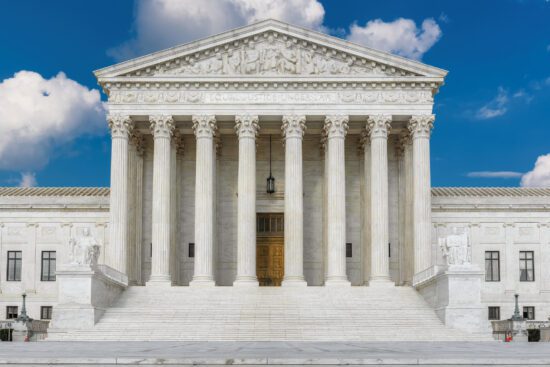



In a historic 6-3 decision, the Supreme Court ruled today that states have the ability to defund Planned Parenthood by preventing state Medicaid dollars from going toward abortion providers. Specifically, the Court declared the “any-qualified-provider” provision in the Medicaid Act does not give individual Medicaid beneficiaries the right to sue the state when it excludes certain providers. Today’s decision will make it easier for states to strip Planned Parenthood and other abortion providers of taxpayer funding.
The Ethics & Religious Liberty Commission (ERLC) filed an amicus brief supporting the petitioners. The brief highlights:
- The importance of protecting taxpayer funds from being used by organizations that provide or promote abortion;
- The state’s authority to determine the qualifications of Medicaid providers; and
- The ERLC’s commitment to defending the sanctity of life and ensuring Medicaid dollars are not directed to abortion providers.
Today’s decision will make it easier for states to strip Planned Parenthood and other abortion providers of taxpayer funding.
What is the defund Planned Parenthood case about?
Executive order: This case arose when South Carolina Gov. Henry McMaster issued an executive order in 2018 that disqualified abortion providers, including Planned Parenthood, from participating in the state’s Medicaid program. In addition to the federal government’s Hyde Amendment, South Carolina has its own law barring taxpayer funding of abortions. In compliance with both laws, the state argued that Medicaid dollars should not indirectly subsidize organizations that perform abortions, even if those funds are not specifically used for abortion procedures.
Lawsuit filed: Planned Parenthood recruited an individual Medicaid beneficiary to file a lawsuit challenging this policy, arguing that federal law gives individuals the right to choose any qualified provider under Medicaid and that Gov. McMaster’s order violated this federal guarantee. Lower courts sided with the plaintiffs, ruling that South Carolina’s policy unlawfully restricted Medicaid recipients’ rights.
Central question: The central question before the Supreme Court was whether individual Medicaid beneficiaries have a private right of action, or right to sue, under federal law in order to challenge a state’s decision to exclude certain providers from its Medicaid program.
What did the Supreme Court decide about states defunding Planned Parenthood?
Writing for the majority, Justice Gorsuch explains that the “any-qualified-provider” provision in the Medicaid Act fails to grant individual beneficiaries a private right to file a lawsuit against states for excluding certain providers—in this case, Planned Parenthood.
Justice Gorsuch explains that, in order for a law to provide an enforceable right or privilege and not merely a benefit, “a plaintiff must show that the law in question ‘clear[ly] and unambiguous[ly]’ uses ‘rights-creating terms.’” (6) The Court then ruled that the statute at hand did not clearly and unambiguously create such a right for an individual.
Rather, Justice Gorsuch clarifies that when states violate conditions of their federal Medicaid agreements, “‘the typical remedy’ is not a private enforcement suit ‘but rather action by the Federal Government to terminate funds to the State.’” (4)
The majority went on to explain that a spending agreement between the federal government and a state, like the Medicaid program, is similar to a treaty between sovereign nations. Justice Gorsuch reflected on the Court’s precedents and wrote:
In many respects, the Court suggested, federal-state agreements are really more like treaties “between two sovereignties.” … And, while treaties may seek to benefit the citizens of the compacting nations, they generally do not confer individually enforceable rights against a sovereign, but “depen[d] for the enforcement of [their] provisions on . . . the governments which are parties to” them. Adapting this logic to the context of federal grants, the Court concluded that, as a rule, “Congress alone has the power to enforce” the conditions it attaches to its grants. (10)
This is an important distinction, since “whether a private party may sue to enforce the terms of a federal grant depends on ‘whether the State voluntarily and knowingly’ consented to answer private claims as part of its bargain with the federal government.” (11-12) In other words, a federal law can only create an individual right if it uses explicit and unambiguous language to do so, thereby clearly signaling its creation to the states.
Since the Medicaid Act does not implement such unmistakable rights-creating language, individual citizens do not have the right to sue. Only the federal government, the exclusive party with whom the states contract to provide Medicaid, can sue over an alleged violation of the “any-qualified-provider” provision.
The three liberal justices, dissenting from the majority, lambasted the ruling, arguing that today’s ruling thwarts Congressional intent in the Medicaid Act and denies a “deeply personal freedom.” (22) While Justice Jackson claims that an individual right was, in fact, created by the Act, Justice Gorsuch notes that the dissent would “invite courts to revive their long-abandoned approach of usurping Congress’s role in creating rights and remedies.” (22)
Why does this state’s defunding Planned Parenthood case matter to Southern Baptists?
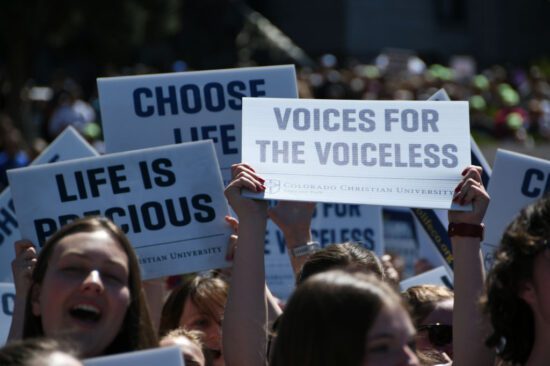
This case underscores Southern Baptists’ faithful commitment to the sanctity of life and the conviction that taxpayer dollars should never fund abortion or support groups that perform abortions. Through this ruling and federal protections like the Hyde Amendment, Planned Parenthood’s access to taxpayer dollars narrows even further as we work to sever all taxpayer subsidizing of this depraved organization.
This case underscores Southern Baptists’ faithful commitment to the sanctity of life and the conviction that taxpayer dollars should never fund abortion or support groups that perform abortions.
Furthermore, Congress is considering a provision in the budget reconciliation bill that will restrict Medicaid dollars from going to abortion providers like Planned Parenthood. This would eliminate all federal Medicaid funding to Planned Parenthood, a top priority for the ERLC and Southern Baptists. We continue to pray and advocate for Planned Parenthood to be defunded at both the federal and state levels.
At the 2021 Southern Baptist Convention Annual Meeting, messengers passed a resolution “On Taxpayer Complicity In Abortion And The Hyde Amendment,” affirming the biblical mandate to protect the preborn and urging lawmakers to put an end to all federal funding for abortion providers.