Planned Parenthood is the largest abortion provider in the United States, responsible for nearly 400,000 abortions annually. This Supreme Court term, there is an important case called Medina vs. Planned Parenthood that will determine whether individual Medicaid beneficiaries have the legal right to challenge a state’s decision to exclude certain healthcare providers, such as Planned Parenthood, from Medicaid programs.
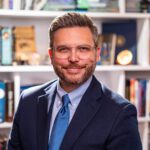
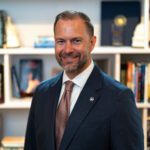
Welcome to The ERLC Podcast where our goal is to help you think biblically about today’s cultural issues. On today’s episode, you’ll hear from Christopher Mills, founder of Spero Law in Charleston, S.C., who partnered with the ERLC to write an amicus brief that we submitted to the Supreme Court in the Medina case. Mills will discuss his work on the amicus brief and why this case matters to Southern Baptist churches and ministries across the nation.
Mills previously served as a Constitutional Law Fellow at the Becket Fund for Religious Liberty and a law clerk to Justice Clarence Thomas. He’s currently an Adjunct Professor at Charleston School of Law. He has authored many briefs and motions in the Supreme Court. He graduated summa cum laude from Furman University in 2009 and magna cum laude from Harvard Law School in 2012.
You’ll also hear from Brent Leatherwood, president of the ERLC, about the ERLC’s ongoing campaign to defund Planned Parenthood. Southern Baptists affirm the sanctity of every human life and believe that Scripture testifies that all people are made in the image of God. It is from this belief that the ERLC has led this campaign calling on Congress to defund Planned Parenthood through the budget reconciliation process.
Episode Transcript: Defunding Planned Parenthood
Narration:
Welcome to the ERLC podcast, where our goal is to help you think biblically about today’s cultural issues. I’m Lindsay Nicolet, and on today’s episode we’re talking about defunding Planned Parenthood.
Planned Parenthood is the largest abortion provider in the United States responsible for nearly 400,000 abortions annually. This Supreme Court term, there’s an important case called Medina versus Planned Parenthood that will determine whether individual Medicaid beneficiaries have the legal right to challenge a state’s decision to exclude certain healthcare providers such as Planned Parenthood from Medicaid programs.
On today’s episode, you’ll hear from Christopher Mills, founder of Sparrow Law in Charleston, South Carolina, who partnered with the ERLC to write an amicus brief that we submitted to the Supreme Court in the Medina case. Mills will discuss his work on the amicus brief and why this case matters to Southern Baptist churches and ministries across the nation. Mills previously served as a constitutional law fellow at the Beckett Fund for Religious Liberty and a law clerk to Justice Clarence Thomas. He’s currently an adjunct professor at Charleston School of Law and has authored many briefs and motions in the Supreme Court. He graduated summa cum laude from Furman University in 2009 and magna cum laude from Harvard Law School in 2012. You’ll also hear from Brent Leatherwood, president of the ERLC about the ERLC’s ongoing campaign to defund Planned Parenthood.
Southern Baptists affirm the sanctity of every human life and believe that scripture testifies that all people are made in the image of God. It’s from this belief that the ERLC has led this campaign calling on Congress to defund Planned Parenthood through the budget reconciliation process.
Now let’s turn to the conversation between Christopher Mills and Miles Mullin, vice president of the ERLC.
Miles Mullin:
Well, I’m here with Christopher Mills of Sparrow Law and the ERLC was privileged to partner with Christopher on a brief that he wrote in the Medina versus Planned Parenthood case, that’s just been argued in front of the Supreme Court, but we were part of this amicus brief with a couple other coalition partners. But what is an amicus brief and why does it matter that these get written and filed with the court?
Christopher Mills:
Yeah, so the Supreme Court gets thousands and thousands of requests to hear a case each year. They’re called petitions for certiorari, I think sometimes up to 10,000 in a year. Of those, they pick maybe 50 to 70 cases to actually hear. It’s obviously a very small number. And those cases tend to be cases that raise issues that have divided the lower courts where there’s some legal disagreement between courts in different parts of the country about what the legal rule should be at that stage from going to 10,000 to 55, having briefs not just by the parties, but by other people. And the Latin is amicus. So friend of the court saying, hey, this is really important. You should hear this case. This has big implications for, you know, particular industries or particular groups. It is really important to get the court’s attention and say, hey, this is actually something we should spend our time on.
And then once they decide to hear those 50 to 60 cases, there’s another round of briefing as the parties argue who’s right on the legal issue that’s raised. And that’s where we filed the brief that we’re talking about today. And again, the point of the amicus brief is to come in and provide additional context or other arguments or facts that the parties may not have the space to go into, but that would be relevant to the court’s full consideration of the issues. And so, you know, for the legal side, you go start reading cases and, and putting together an argument for the factual side. And I would say the brief we did here is more factual because basically we’re responding to this idea that Planned Parenthood is actually this omnibus medical provider and performs all these other important medical services beyond abortion. And so, you know, trying to rebut that notion, we’re gonna go look at the facts.
And so we, you know, looked at a bunch of Planned Parenthood’s own annual reports, financial documents, anything we could get our hands on to say, hey, that narrative is not quite right. You know, Planned Parenthood is really all about abortion. And so I would say in that sort of brief finding the facts is the trickiest part, especially for a case like this, when Planned Parenthood has every incentive to sort of distort what’s going on here. And I would say you see this in other areas of the law too. You know, I’ve done a number of cases in the gender transition of minors sphere, and there too, you see sort of the experts, elites of our society doing their best to obscure what the actual facts are, what the actual studies say, what the actual evidence is, what the actual basically facts show. So here you see Planned Parenthood saying things like 3% of our services are abortion.
But so the most time consuming part is finding the facts to say, hey, here’s good evidence that actually this narrative is wrong. And then you wanna put it in a compelling argument that the Supreme Court will actually read. You obviously have word limits and that sort of thing, but you also want it to be something that if a justice picks up the brief, they actually want to read it rather than just sort of being a dry recitation of the facts. And so to me that’s sort of the most fun part is putting together a compelling argument based on the facts in a way that’s actually readable and hopefully somewhat moving to somebody who reads it.
Miles Mullin:
Yeah, that’s great. The burden of this brief was the fourth circuit’s misunderstanding of who Planned Parenthood really is. Is that accurate?
Christopher Mills:
That’s right. So underlying the case is a pretty technical legal issue about when individuals can sue under Section 1983 estate for taking Planned Parenthood out of Medicaid. And again, the legal question is fairly esoteric and sort of involves, did Congress clearly confer a right on individuals in the context of Medicaid to bring a federal lawsuit? But part of what the Fourth Circuit said, which was the court below this, was they sort of treated Planned Parenthood as an important provider of general medical services. In other words, they said it would harm women for the state to kick Planned Parenthood out of its Medicaid program. And so our brief was kind of designed to say, that’s not really accurate. What Planned Parenthood focuses on their sort of mainstay is abortion. And we shouldn’t pretend like, oh, kicking Planned Parenthood out of Medicaid is gonna deprive people of necessary medical services because that’s not what Planned Parenthood exists to do.
Miles Mullin:
Yeah. Say a little bit more about that. What does the evidence actually show that Planned Parenthood is about?
Christopher Mills:
Yeah, so, you know, in recent years, Planned Parenthood performs anywhere from one third to two thirds of all abortions in the United States. There are a number of other services that have been declining in 2023, which is one of the most recent years for which we have data that they performed 392,000 abortions, which was about 38% of all abortions in the United States that same year. They claim that abortion made up only 4% of their total services. But the way they calculate that is treating every service, pregnancy test, birth control pill equally, even though there are huge differences in how much they cost, how involved they are, and that type of thing. You know, one commentator analyzed it would be like saying Major League baseball teams could say that they sell about 20 million hot dogs and play 2000 games in a season. So baseball is only 0.01% of what they do. I think that was Rich Lowry in the National Review, and we quoted in the brief, but that’s the gerrymandering game that’s going on. And as we talk about in the brief that even the number of other medical services is declining greatly, the Planned Parenthood centers in South Carolina have stopped providing pretty much any prenatal care for women who want to keep their unborn children. And so the only care they’re providing for those women is abortion.
Miles Mullin:
Are there other options for women in South Carolina where they can get prenatal care and good healthcare that’s specific to women? Because that’s been the accusation. If Medicaid dollars don’t go to these clinics, women who use Medicaid won’t be able to get healthcare.
Christopher Mills:
And the answer is yes, of course. There are many other medical providers that would be qualified under Medicaid where women can get care. You have not only, you know, just secular medical clinics, which far outnumber Planned Parenthoods. I mean, planned Parenthood has three or four clinics in the state of South Carolina. You know, obviously that’s not fulfilling the need for South Carolinians for medical service. So you have not only sort of the normal medical clinics that accept Medicaid, but you also have, and we talked about this in the brief, pregnancy centers that actually provide care for prenatal support for women who want to keep their pregnancies, who are just trying to decide about their options, who want an ultrasound, who need classes about how to take care of a baby and how to have a baby and, and then provide support after the woman has the baby. So, you know, you have not only the pregnancy centers providing all that type of support, but you also have medical clinics that easily provide the support that Planned Parenthood supposedly is needed for.
Miles Mullin:
That’s a good answer. And we, the ERLC, we’ve been involved with pregnancy centers for a long time. We’ve placed ultrasounds all over the country and actually internationally now. And we’ve seen where more and more centers are increasing their options and expanding what they can do in terms of care. So what are the major implications? I mean, I know there’s the technical legal discussion, which seems what the oral arguments were all about, but what are the implications of this case for pro-life work and local church ministry engaging abortion minded abortion, vulnerable women?
Christopher Mills:
Yeah, so, you know, I, I think in many respects, especially after Dobbs, this need will always be there, which is to support and help women who are pregnant and are scared through their pregnancies and to provide a better option than Planned Parenthood. The implications of the case directly would be, you know, if Planned Parenthood prevails, they are gonna have more money. And so our brief talks about how money is fungible. And so this idea that, oh, we’re only gonna get money from the state to do other services, it’s just not realistic, you know, at these small clinics where the bulk of the work is abortion, if you give the money to them for administrative services, that helps their abortion practice. And so basically if they win, it sort of increases the need for a response to what Planned Parenthood is doing, a way to reach out to and support women who are or might be considering using Planned Parenthood services. So that’s sort of the implication, I would say, if Planned Parenthood wins. If Planned Parenthood doesn’t win, then it becomes easier for states to say, we’re not gonna subsidize abortions anymore at Planned Parenthood by sending you state money. And that’s obviously gonna make it harder for Planned Parenthood to abort unborn children.
Miles Mullin:
And so then Planned Parenthood could decide, hey, we’re serious enough about other women’s health issues that we’re gonna quit doing abortions in the state so that we can provide these services to women that need them that are not abortion. Right. They could decide that, right?
Christopher Mills:
Yeah, that would be an option. I think we quote something in the brief. There was a directive from sort of the main Planned Parenthood that all affiliates had to continue providing abortions after Dobbs. So, you know, again, that sort of underscores that the reason Planned Parenthood exists today is to perform abortions and not something else. But you’re right, you know, if they were in a position, a clinic in a particular city said, Hey, we really need to provide medical services. They could do that and stop providing abortion, but what they want to do is get state money and keep providing abortions.
Miles Mullin:
Obviously we need to keep pressing in the pro-life movement, keep pressing into the law and, you know, moving forward. But what are some other ways you think that pro-life folks need to be addressing, trying to minister to women who might be thinking about abortion?
Christopher Mills:
Yeah, so I think places like pregnancy centers are really, really important. I think those are maybe the frontline responses to how we can help women in those situations. In those states, they go after pregnancy centers. I mean, they’ve tried to pass laws prohibiting their speech, prohibiting them from raising money, prohibiting them from talking to women outside abortion clinics. I mean, the level of legal hostility toward Bri street centers, especially in those states, has been severe. So I would say there’s a great need for the law in protecting that sphere. I think more broadly, the pro-life movement maybe wasn’t fully prepared for Dobbs and, and what would come after it. I think we haven’t done a great job of articulating the pro-life position in the public sphere. There’s obviously been a number of election constitutional referendums that have not gone well. And I think that being able to articulate and defend the importance of unborn life in the public sphere, even outside the law that sort of, and Justice Scalia talked about this often has a trickle down effect to the law that, you know, you have to kind of start with the culture. The culture, especially since Dobbs, but obviously really for a long time now, has been hostile to the pro-life position. And I think a lot of what we need to do is convince people that unborn life is life, and that we don’t take life just because it’s inconvenient.
Narration:
For Christopher Mills writing this brief meant standing up for his convictions. While we may have a long way to go to ensure that pre-born lives are fully protected, Mills hopes this case will set an example for other states to not back down to the demands of the abortion industry. And this is just one of many examples of how the ERLC is striving to make abortion a thing of the past. Let’s turn to Brent Leatherwood’s conversation with Miles about one of these ways.
Miles Mullin:
I’m here with our President, Brent Leatherwood, and we’re gonna talk a little bit about the Defund Planned Parenthood campaign that the ERLC has leaned into over the last several months. Brent, can you tell us a little bit about what inspired this campaign? Evangelical Southern Baptist have been trying to defund Planned Parenthood for a long time, why the push now, what makes this an especially acute time when we would want to aggressively go after this?
Brent Leatherwood:
Well, to your point, Miles about defunding Planned Parenthood, the commitment to doing that has never waned, whether it’s in the Southern Baptist Convention, the larger pro-life community that’s always been there. As a matter of fact, us leaning in, as you said, that’s actually nothing new for the ERLC or the pro-life community. As a matter of fact, in other eras, we have led the effort to try and get Congress to defund Planned Parenthood. And that’s really what we’re doing now. The ERLC is the leading voice on Capitol Hill at this moment, asking Congress to defund Planned Parenthood. And the reason for right now why this is a unique opportunity is because Republicans control the House of Representatives, the US Senate and the White House. And that’s important because it is the Republican Party that historically has made commitments to the pro-life community, one of them being let’s defund Planned Parenthood.
And so the ERLC, the Southern Baptist Convention we’re asking Republicans to follow through on those long held commitments to defund Planned Parenthood. And our team did some research and found that every year, some years it’s more, but at least every year Planned Parenthood is receiving over $700 million of our taxpayer money resources that you, that me, that so many of our listeners are sending into the federal government through the income tax, over $700 million of those dollars are going to Planned Parenthood. And that needs to stop because not only are they extinguishing innocent preborn lives and preying on vulnerable mothers, but as that process happens, they are violating the consciences of millions of Southern Baptists, of fellow evangelicals, of Christians, of so many folks around the country who don’t wanna support this evil work. And it is time now to take care of that. And structurally, because Republicans do control those three areas of government that allows them procedurally to initiate something called reconciliation. I don’t want to get into the weeds too much, but essentially what it means is that if they pass it through the US Senate, it can’t be filibustered. So now is the time to act and we think they need to get this reconciliation process moving and get a piece of legislation to President Trump to make this a permanent change in law.
Miles Mullin:
Now, I know the ERLC always talks about how we support the Hyde Family of Amendments, which doesn’t allow taxpayer funding for abortion. And we’ve been actually successful in making sure that those get included in legislation in the past. How come there is funding for Planned Parenthood if this Hyde Family of Amendments, which doesn’t allow federal funding to go to abortions, how are they getting this money?
Brent Leatherwood:
It’s because Planned Parenthood and other abortion providers, they like to play word games and they’ll say, oh, well the money that we receive from the government, it doesn’t actually go to the actual procedure that takes the child’s life. It goes to things like keeping the light bill on or making sure that the person at the front desk that greets people is paid. And we all know, obviously, that money is fungible. So by, I don’t know, allowing Planned Parenthood to have the funds to keep the lights on, it obviously makes other funds available to take life. So we just want it all to end. We have been consistent in our advocacy efforts at the ERLC, that that whole structure is heinous and needs to be stopped. So we want to obviously outlaw the procedure nationally of ending the child’s life. We want to stop the abortionists and punish those individuals that are taking life.
We want to shut down the clinics that house the abortionist. And because we now know that so many abortions actually occur through the toxic chemicals that are manufactured by drug makers, we want to stop them from doing that as well. So it’s really a comprehensive approach. But this is an important part because it sends a signal about how our country is now in the aftermath of the down of Roe, we’re serious about truly establishing a culture of life and obviously stopping our taxpayer dollars from going to Planned Parenthood, even if it’s for things like electric bills and water bills or whatever else they want to come up with to try and say that they’re not funding abortions. It’s important for us to say we’re not giving you any additional dime. And look, I think there are some folks that’ll point to the success of President Trump upon taking office, signing an executive order.
We’re really thankful for that. But anyone who thinks that that is permanent, you need to understand they actually don’t know what they’re talking about <laugh>, because executive orders, while they serve an important function, those are short term in nature. As soon as they are signed, a clock starts ticking and they’re only as good as long as that administration lasts. What we are trying to do through Congress is make this a permanent part of the law because we want this to stop no matter who’s in office, whether it’s a Republican, a Democrat, progressive, conservative, whoever is in there, we don’t want any money going to Planned Parenthood or abortion providers at all. And so that’s why this is important and that’s why taking advantage of this situation, the Republican trifecta that you talked about, that’s why it’s important to push this at this moment as reconciliation and those negotiations are underway.
Miles Mullin:
So some folks have said, now that Roe was overturned and we got the Dobbs decision, that the question of abortion is back to the states where it should be. But this is kind of a federal effort, we’re pushing to try to do something at the federal level. Why is that still important? Why is there still, I’ve heard you talk about this a lot, Brent, that there’s still a role for the federal government to play in ending abortion.
Brent Leatherwood:
Right? So if you go back and read the Dobbs decision and the majority opinion given to us by the US Supreme Court and Dobbs is the case that overturned Roe, which let’s stop there and just realize that was the biggest single achievement in the history of the pro-life movement. So we are very thankful that we now are in a world where Roe doesn’t exist for many years. I didn’t know that, you know, I wasn’t sure that we would ever get there, but we did. And it was the culmination of 50 years worth of effort. But if you go back and read that majority opinion, it does say that states are now empowered to regulate and prohibit abortion, but it doesn’t say that the federal government has no role. And so that’s a bit of a fundamental misreading of that opinion, and that’s just proven by the conversation that we’re having right now about Defund Planned Parenthood.
There obviously is still federal action and engagement in this area. So we want to bolster up the states to go after abortion, and we want to continue to remind federal lawmakers that there is a role for the federal government to play in stopping abortion. And one of the chief ways that could be done right now is to defund Planned Parenthood. So let’s do that. But further down the line, I think it’s important for us to continue to work with our pro-life partners, Southern Baptist peers, brothers and sisters, our SBC churches, and continue to carry the flag forward at the state and the local level for the Imago Dei, for the sanctity of life. Those are important and we must continue to do that. But at the same time, I think there will come a day where this question gets all the way back to the federal level, either through action in Congress or through a Supreme Court case where we decide as a nation, are we going to read our law in a way that’s truthful, because we all know that we do have, as Americans an inherent right to life as Christians. We know that each and every person, regardless of their nationality, has a right to life. But specifically if you look at our founding documents, that is there, and so it’s going to have to be resolved at the federal level through Congress, through the US Supreme Court in a way that asserts that that life is precious and that it deserves not just the protection of our law, but the respect of our law. And so I think that day is coming too.
Miles Mullin:
Brent, you mentioned people that we’re working with on this campaign, who are some of the groups that we work with and who are maybe some of the members of Congress that have been especially helpful in this effort right now, but over the years? I mean, who are those folks?
Brent Leatherwood:
Right. Well, so as far as our pro-life partners, you know, you can’t have a conversation like this without pointing out organizations like Susan B. Anthony List, Americans United for Life, the US Conference of Catholic Bishops. I mean, really the the whole pro-life community is united in this effort and they are working through their channels to successfully convince lawmakers that Planned Parenthood needs to be defunded. So it’s not just one of us doing it. But I would say that as we were told in a recent meeting on Capitol Hill, the ERLC has just been consistent in its advocacy for preborn lives and the evils conducted by Planned Parenthood. And I was really thankful that that was, you know, affirmed in that meeting. But it’s true. But ultimately for us to be successful, it’s gonna take the entire pro-life community, the entire Southern Baptist Convention, all of us really leaning in.
And so that’s what we’re trying to do right now. We’re trying to amplify the voices of the 46,000 churches that are part of the Southern Baptist Convention in this effort. And then for lawmakers, look, you started the, with the, the Speaker of the House, Senator Mike Johnson, who’s a fellow Southern Baptist. He’s probably, if not completely one of the most pro-life members of Congress. And we’re thankful that he’s in such a position of authority where he is guiding the US House of Representatives. One of the meetings that we just had recently was with Congressman Kevin Hearn, who also is Southern Baptist. He is from Oklahoma. And Congressman Hearn just came off of leading the Republican Study Committee, which is a highly influential group on the house. He is a hundred percent committed to the defunding of Planned Parenthood. And then over on the Senate side, you look at members of leadership majority leader John Thune.
He has been adamant throughout his career in initiatives supporting the protection of life. And I think of someone like US Senator James Langford, who probably is one of the most articulate voices in the public square today for protecting lives. And so there’s a really good makeup of folks on Capitol Hill that can shepherd this kind of legislation through to the President’s desk. And thankfully, our early efforts with the Trump administration have shown that the President is willing to take actions defending life. And my hope would be that if he actually gets a bill to put this into law, that he would sign that as well. So this is why we’re really operating in a favorable environment to do this. We just need lawmakers to have the courage to follow through with it.
Miles Mullin:
I’ve heard you talk about often that we do our work in three arenas on Capitol Hill, in the courts and in culture. And this is clearly an effort in Capitol Hill, but what are some other ways that the ERLC is advocating on behalf of Southern Baptist and other pro-life folks to try to put an end to abortion? What are some of the other things that we’ve got going on?
Brent Leatherwood:
Sure. Well, we’re supportive, obviously, of our state convention partners in any of the efforts that they’re making at the state level in their state houses to push forward the cause of life. And so we support those efforts as well. So it’s not just at the federal level that we’re looking, but also at the state level. At the same time, we want to provide resources for our pastors. We have two guides that we have released over the last year focusing on the sanctity of life and establishing a culture of life in your churches. And those are free and always available to any of our pastors to order or to download. So we wanna make sure that our pastors are equipped to be able to go into the pulpit and articulate a robust vision of life as is laid out in Scripture. So that is certainly a part of the ministry assignment given to us by our churches that we’re privileged to carry out.
And then of course, we have our own ministry, the Psalm 139 project. This is a ministry that is supported by contributions made by individuals. And what we love about this initiative, every single penny that comes in goes out to one of two things, purchasing a life-saving ultrasound machine and putting it in a pro-life clinic or two equipping and training the staff at that pro-life clinic to effectively operate that machine. Those are the ways that money flows out of that initiative. And we’re so excited about that because <laugh>, it used to be in previous eras at the ERLC, we would do a couple of those a year, and now we are just routinely doing 8, 10, 12 a year as we make sure that these pro-life clinics which support these mothers and help them see the reality of the life that is growing within them, but also using those opportunities to share the hope of the gospel with those mothers. We know that they’re on the front lines of the efforts to combat the predatory abortion industry. And so we wanna be alongside them, pray with them, and provide them the resources that they need, including the life-saving technology represented by ultrasound machines to do their good work. So I would say those are some of the additional ways, not just our advocacy efforts on Capitol Hill, but some of the other avenues that we’re working to push forward our pro-life convictions.
Narration:
Scripture doesn’t shy away from the reality that life begins at conception and that all people are made in the image of God in the same way. Now more than ever, we are called to go forth into the public square and defend the lives of those who cannot defend themselves. While the Supreme Court deliberates the Medina versus Planned Parenthood case, we can remain faithful in prayer and fervent in action. Looking forward to the day when abortion is no more.
Thanks for listening to this episode of the ERLC podcast. Join us next time as we take a deeper look at how the ERLC is addressing sports gambling.