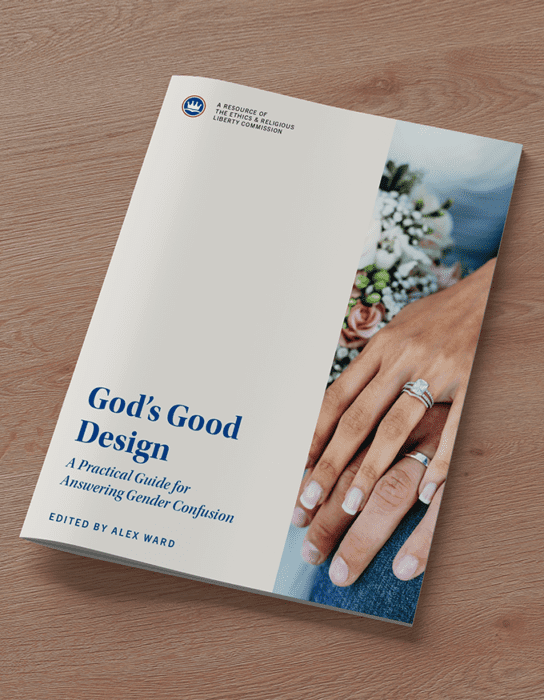
This practical guide for answering gender confusion is a resource for churches to use as they teach God’s good design for marriage and family.
Answering gender confusion among the next generation
The rate of teenagers who identify as transgender has doubled in the United States according to one estimate. Nearly one-third of Generation Z (the youngest generation for which we have statistics) identify on the LGBT spectrum.
It may have (arguably) taken longer for the sexual revolution to reach our churches, but the time is long gone when we could assume it would pass us by completely.
Theological framework and practical scenarios to address gender confusion
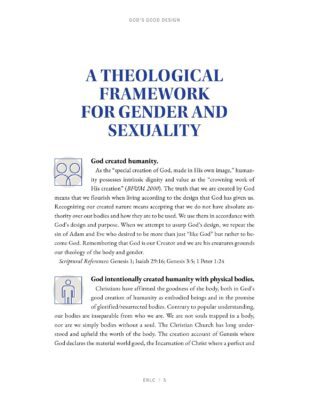
That is why the ERLC gathered together a group of experts in theology, ethics, public policy, and law to think through how best to respond to this moment. Working together, they created a framework grounded in Scripture and shaped by theological categories faithful to the Baptist Faith & Message 2000.
We know that this is not just a thought experiment, so the ERLC also gathered pastors and ministry leaders who helped apply the framework to situations on the ground.
- Most of us will not face a question about our theological anthropology and how it defines our understanding of the categories of male and female.
- But, we may meet an individual who has adopted a new identity and has preferred pronouns.
- So these pastors, ministry leaders, and subject-matter experts considered what to do in a number of scenarios drawn directly from questions posed to actual churches and pastors.
There will inevitably be questions you face that are not contained here, but this will give you a place to begin a conversation with your staff; not out of fear or a need to protect ourselves, but rather to ensure that we are ready to offer others an answer for the hope that is within us (1 Pet. 3:15), pointing them to the one who promises that there is a day when the brokenness of our body, our sense of self, and our own failed attempts to be God will be made right.