



What just happened?
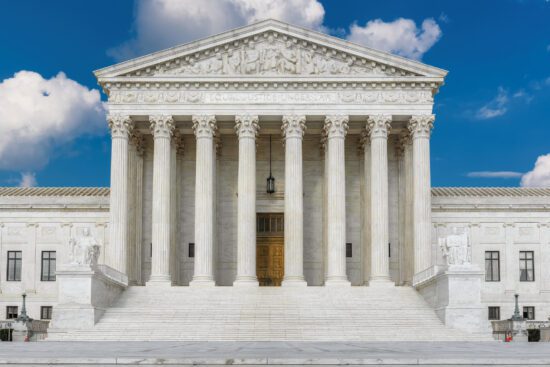
The U.S. Supreme Court agreed to hear a religious liberty case that involves a Philadelphia Catholic agency targeted by the City of Philadelphia regarding its sincere religious beliefs.
At issue in Fulton v. Philadelphia is the question of whether it violates the religion clauses or the equal protection clause of the U.S. Constitution for the city of Philadelphia to end its contractual relationship with Catholic Social Services because of the city’s requirement that CSS endorse or certify same-sex relationships.
A unanimous three-judge panel of the United States Court of Appeals for the Third Circuit, in Philadelphia, ruled against the agency, claiming the city’s nondiscrimination policy is a neutral, generally applicable law, and the religious views of Catholic Social Services do not entitle it to an exception from that policy.
This controversy is difficult to understand because no family has ever filed a complaint against the Philadelphia Catholic agency for following its Catholic mission, according to Becket Law, the nonprofit firm representing the plaintiff. Catholic Social Services’ religious beliefs have never prevented a child from finding a home.
ERLC filed an amicus curiae (friend of the court) brief in the case in support of Catholic Social Services. The Court will hear oral arguments on the case this fall.
What is the case about?
In 2018, a reporter from the Philadelphia Inquirer informed the City of Philadelphia’s Department of Human Services that two of its private foster care agencies would not work with same-sex couples as foster parents. Human Services investigated this allegation, which it considered a violation of the City’s anti-discrimination laws. When the agencies confirmed that, because of their religious views on marriage, they would not work with gay couples, Human Services ceased referring foster children to them.
Sharonell Fulton and Toni Simms-Busch, two Philadelphia foster moms, filed a lawsuit on behalf of Catholic Social Services, claiming the city of Philadelphia had violated their rights under the First Amendment’s Free Exercise, Establishment, and Free Speech Clauses, as well as under Pennsylvania’s Religious Freedom Protection Act. It asked the courts for an order requiring the city governement to renew their contractual relationship while permitting it to turn away same-sex couples who wish to be foster parents.
Why doesn’t the Religious Freedom Restoration Act apply in this case?
The Religious Freedom Restoration Act (RFRA) is a federal law passed in 1993 that is intended to prevent other federal laws from substantially burdening a person's free exercise of religion. RFRA was intended to apply to all branches of government, and both to federal and state law. But in 1997 in the case of City of Boerne v. Flores, the Supreme Court ruled the RFRA exceeded federal power when applied to state laws. In response to this ruling, some individual states passed state-level Religious Freedom Restoration Acts that apply to state governments and local municipalities.
Currently, 21 states have a Religious Freedom Restoration Act, though the state of Pennsylvania does not.
What is the significance of the case?
This case has significant implications for religious freedom in the public square. As Becket Law notes, faith-based organizations serve their neighbors and provide benefits to the community when they are able to operate in the public square. Rather than being a threat to the public square, religion is a natural expression of a natural human impulse.
Religious organizations should therefore be free to follow their faith in all aspects, including in the workplace. The government discriminates against a religious group if it prevents them from providing services based on their religious beliefs. As ERLC president Russell Moore wrote last November in the Wall Street Journal of this case in Philadelphia, “City hall’s use of children as leverage to force a religious institution to change its beliefs was appalling.”