


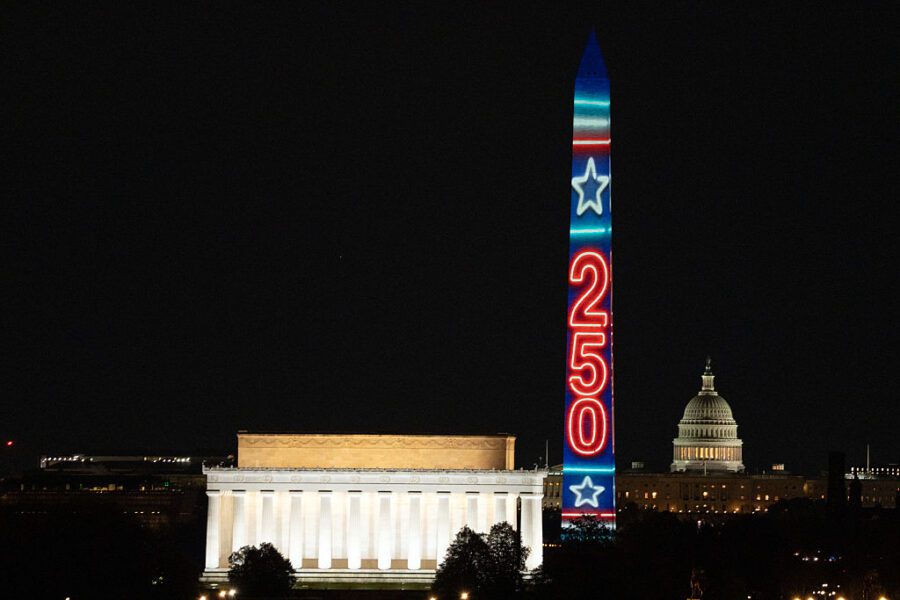

Situated in Washington, D.C., the ERLC’s policy team is sharing in the excitement of our nation’s 250th birthday. Here, the occasion means fairgrounds, military flyovers, and grand fireworks displays. At the heart of these celebrations is a deep appreciation for American history. We commemorate the brave pioneering of our Founding Fathers and their commitment to the success of the American experiment. As Christians, we ought to give special reflection to an eminent component of that experiment: religious liberty.
The history of religious freedom in America
Preceding even the adoption of the Declaration of Independence, religious freedom has been central to American values. In 1765, John Adams published “A Dissertation on the Canon and Feudal Law,” condemning the tyrannical rule of King George III. Seeing education and civic participation as their strongest defense, Adams urged the colonists to such pursuits. Through engaging in the public square and pursuing education, he believed they would protect their inalienable rights, including free religious expression.
Adams encouraged churches to join this endeavor. He wrote, “Let the pulpit resound with the doctrines and sentiments of religious liberty. Let us hear the danger of thraldom to our consciences, […] in short from civil and political slavery.” In other words, Adams declared that intrinsic to our rights is our freedom of conscience and the ability to choose to freely worship. Wrongful interference with that freedom is an act of civic bondage and a denial of man’s full dignity in the eyes of the Lord.
Adams saw freedom of conscience achieved with the establishment of a new, independent nation through the United States Constitution. The significance of this should not be neglected. Now considered America’s “first freedom,” there was little precedent for the national codification of true religious liberty prior to the enactment of the First Amendment. This principle allows Americans to rightly order their duties and affections to God and to their country. Augustine famously articulated this idea of “dual citizenship” in his book The City of God. In a world after the fall (Gen. 3), Christians find ourselves citizens of two cities: the earthly city, where God has placed us on this side of eternity, and the heavenly city. Each holds different, though not necessarily opposing, obligations.
Southern Baptists and religious liberty in America
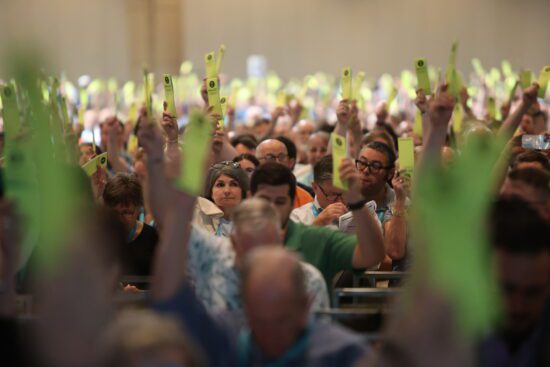
In honor of the Semiquincentennial, the Southern Baptist Convention reaffirmed the Convention’s commitment to religious liberty in the resolution “On the 250th Anniversary of the United States and the Baptist Contribution to Religious Liberty.”
First, messengers resolved that Christians are to pray for our leaders and for spiritual revival across the nation. Second, messengers reasserted Southern Baptists’ commitment to religious liberty for all in accordance with man’s God-given dignity. By this, we can carry out our duty as agents of the Great Commission and proclaim the gospel of Jesus Christ. Finally, messengers committed to national renewal through civic participation, pursuing the enactment and protection of just laws as well as the election of similarly devoted public officials.
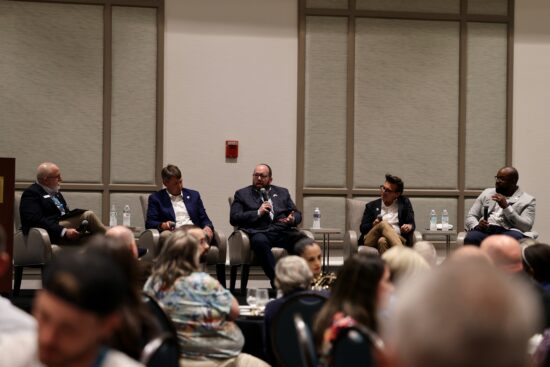
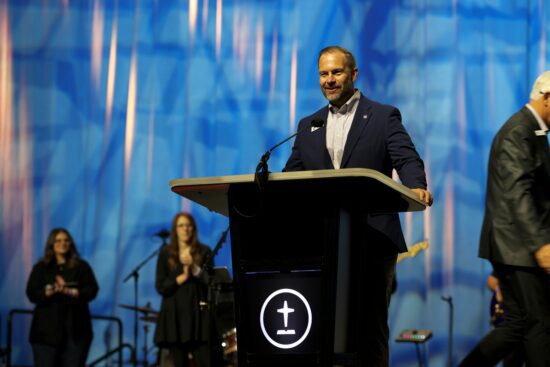
Southern Baptists must continue to steward this gift of religious liberty and choose to participate in the public square for the sake of the gospel. We need strong, Christian voices present, who can articulate biblical truth in modern contexts. We should not let the chaos of the public square deter us. Not when we have the opportunity to speak truth into it. And we should not allow fear to overcome us. Not when the Lord has given us a spirit of power, love, and of sound mind (2 Tim. 1:7). At the ERLC’s SBC26 event, Dr. Adam Groza, president of Gateway Seminary, encouraged us, “One of the most patriotic things we can do is just pursue righteousness. The Baptist Faith and Message, Article 15 talks about Christians and the social order. And it says that we’re to oppose what is evil and to advocate for what is true and what is just and for righteousness and for brotherly love.”
Looking to the future of America
As we reflect on God’s graciousness over the last 250 years, we also look to the future. Brothers and sisters, there is work still to be done in pursuing righteousness and defending religious liberty in this earthly city. The ERLC will continue to come alongside Southern Baptists in that work, advocating for issues of life, marriage and family, human dignity, and religious liberty with love for our country and with an eye toward that heavenly city. On this momentous 4th of July, we are incredibly grateful that God has placed us in a country intent on protecting freedom of religion and conscience where we can seek the Lord’s good for our nation. Let us run this race well until the day when we will declare in one voice, “Thy Kingdom has come.”