



October 10 update
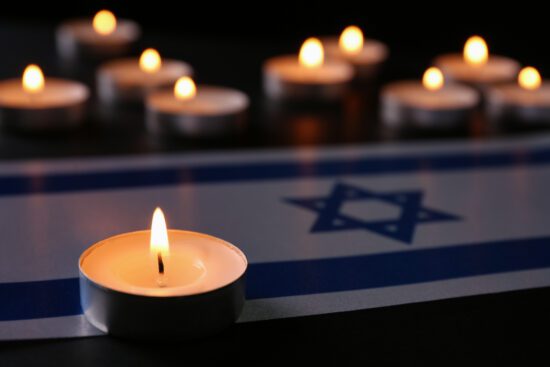
Yesterday, after days of mediated negotiation by the United States, Israel’s government approved the first phase of a ceasefire deal to end the two-year-long war with Hamas. Hamas leadership has also agreed to pursue this deal. This agreement comes just weeks after President Trump announced his 20-point proposal for peace in Gaza.
The ceasefire began on Friday, beginning at noon Israeli time, kicking off a 72-hour clock for Hamas to release all remaining Israeli hostages. As part of the deal outlined by President Trump, Israel will release dozens of prisoners in exchange for the release of the Israeli hostages, and allow the immediate delivery of “full aid” to Gaza, where hosts of people are facing severe food shortages.
Over the last two years, the Israel-Hamas war, sparked by Hamas’ Oct. 7, 2023 terror attack, has escalated to a grinding conflict that extends beyond Gaza’s borders. Here is a description of what Southern Baptists have said about this conflict and an overview of recent events, prior to the ceasefire agreement.
Southern Baptists, ERLC, and the Israel-Hamas conflict
Southern Baptists have strongly supported the people and nation of Israel throughout the decades and have continually condemned Hamas for its terrorist attacks bent on genocide. As stated in the 2024 resolution, “On Justice and Peace in the Aftermath of the October 7 Attack on Israel,”
“RESOLVED, That we deny assertions of moral equivalence between Israel and Hamas;”
“RESOLVED, That we commit to supporting biblical solutions to the conflict, advocating for principles of justice, mercy, and humility in all actions taken by Israel in its pursuit of a just peace (Micah 6:8);”
“RESOLVED, That we call for the international community to redouble its efforts to support the nation of Israel toward a just and lasting peace.”
Furthermore, Southern Baptists affirm the same premise reflected in President Trump’s proposal to pair a ceasefire with immediate release of hostages.
“RESOLVED, That we oppose calls for the nation of Israel to lay down its arms, repudiating any calls for a permanent ceasefire that do not also result in the immediate release of all hostages . . .”
Following the horrific Oct. 7 attack, the ERLC joined in spearheading the Evangelical Statement in Support of Israel, which condemned Hamas’ repugnant atrocities and supported Israel’s right to exist. In October 2024, the ERLC sent letters with SBC President, Clint Pressley, to President Biden and to Congress. These letters urged retention of support for the nation of Israel, and reinforced the historic Southern Baptist commitment to opposing antisemitism in all its forms. Additionally, in April 2024, the ERLC sent a letter calling for House leadership to release additional aid to Israel to help in their defense against Hamas terrorists. Ultimately, this aid passed Congress and was signed into law during the last presidential administration.
Year-in-review prior to October 10: War expands to Gaza and beyond
This second year of war was marked by an increase in geographic scope and worsening humanitarian and human rights implications, necessitating a multi-faceted response from the Church, country governments, and relief organizations.
Push into Rafa
In late 2023, the Israel Defense Forces (IDF) launched a massive ground invasion of Gaza, advancing from the north and steadily pushing Hamas militants south. By May 2024, Israeli forces had entered the city of Rafah on Gaza’s southern tip, aiming to eliminate what Prime Minister Benjamin Netanyahu called “the last bastion” of Hamas.
This push into Rafah indicated the war’s intensifying scope. Within days of the IDF’s advance, more than 800,000 Palestinians evacuated Rafah, drawing international concern over civilian safety.
Confronting Iran-backed groups
At the same time, the conflict threatened to ignite multiple fronts as Israel confronted Iran-backed groups across the region. Skirmishes on Israel’s northern border with Hezbollah, the Iran-aligned militia in Lebanon, escalated into regular exchanges of fire.
- By April 2024, Iranian forces had already launched over 200 drones and missiles toward Israel, on the pretence of avenging an Israeli strike on Iranian officers in Syria
- Over the summer of 2024, Hezbollah rocket attacks killed Israeli civilians—including an attack on the Golan Heights that killed 12 people—and Israel responded with targeted strikes on Hezbollah commanders.
- In a dramatic turn, Israel succeeded in assassinating Hassan Nasrallah, the longtime leader of Hezbollah, in a Sept. 27 airstrike in Beirut.
- On Oct. 1, 2024, Iran, in its first direct attack on Israel, retaliated by firing a barrage of ballistic missiles and drones at Israeli cities, raising the threat of a wider regional war. The incident underscored Iran’s role as a belligerent openly challenging Israel’s actions.
- Then on Oct. 26, 2024, Israel carried out an unprecedented series of airstrikes deep inside Iran. Codenamed Operation Days of Repentance, the strikes hit some 20 targets across Iran, Iraq, and Syria, including Iranian air-defense batteries, drone factories, and missile sites. Israeli officials described this as retaliation for Iran’s direct attacks, and U.S. assessments indicated the operation crippled Iran’s missile production capabilities for at least a year.
These developments highlight how the Israel-Hamas war, initially confined to Gaza, has evolved into a broader conflict with Iran and its proxies—including Hezbollah in Lebanon and even the Houthi militia in Yemen. Throughout these trials, Israeli leaders emphasized their nation’s right to defend itself against a network of extremist forces seeking its destruction.
Push for Ceasefire and Diplomacy
On Sept. 29, 2025, President Trump announced a comprehensive 20-point peace proposal developed in coordination with Prime Minister Netanyahu and receiving unprecedented Arab backing from Qatar, Egypt, Saudi Arabia, Jordan, and the UAE. Trump gave Hamas “three or four days” to respond, warning that rejection would result in full U.S. support for continued Israeli military operations.
The plan’s key provisions include:
- immediate release of all 48 remaining hostages (approximately 20 believed alive) within 72 hours of acceptance;
- Israel releasing 250 life-sentence prisoners plus 1,700 Gazans detained since Oct. 7; cessation of all military operations;
- Hamas’ complete disarmament with no role in future governance;
- temporary administration by a “Board of Peace” chaired by Trump and including former U.K. Prime Minister Tony Blair;
- eventual handover to a reformed Palestinian Authority;
- and progressive IDF withdrawal tied to demilitarization milestones.
Netanyahu publicly accepted the framework while stating Israel would “finish the job by itself” if Hamas rejects the proposal. On Oct. 3, Hamas accepted parts of Trump’s peace plan, including the release of the remaining hostages, but demanded further negotiations of other details. As of Oct. 7, representatives from Israel, Hamas, and the United States are meeting in Egypt with hopes of finalizing a ceasefire deal.
The continued hostage crisis
Many hostages have yet to be released, and the crisis remains an ongoing agonizing reality for families, both in Israel and the U.S. Of the 251 people taken on Oct. 7, 2023, 148 have returned alive through various means, and 58 bodies have been repatriated. The 48 who remain include five U.S. citizens.
Hamas recently claimed it lost contact with two hostages during Israeli operations in Gaza City and released videos showing hostages in distressed conditions. Families have organized massive protests weekly at “Hostage Square” in Tel Aviv after more than 700 days, condemning military escalation they believe endangers their loved ones.
Faith groups respond with relief
The evangelical community’s response has been grounded in both humanitarian compassion and theological conviction. This is particularly important as, during this second year of the war, the humanitarian situation has reached catastrophic levels unprecedented in modern Middle Eastern history.
The Evangelical Statement in Support of Israel
On Oct. 11, 2023—just four days after the Hamas attacks—the Ethics and Religious Liberty Commission released the Evangelical Statement in Support of Israel, initially signed by 60 institutional leaders including former ERLC presidents Brent Leatherwood, Russell Moore, and Richard Land as well as various SBC leaders and all six Southern Baptist seminary presidents. The statement eventually gathered over 2,500 signatures from evangelicals nationwide and was delivered to leaders in the White House, Congress, and the United Nations.
The statement declared,
In the wake of the evil and indefensible atrocities now committed against the people of Israel by Hamas, we, the undersigned, unequivocally condemn the violence against the vulnerable, fully support Israel’s right and duty to defend itself against further attack, and urgently call all Christians to pray for the salvation and peace of the people of Israel and Palestine.” Grounded in Genesis 12:1-3 and Just War tradition from Romans 13, signatories recognized both Israel’s right to defend itself and “the dignity and personhood of all persons living in the Middle East.
Send Relief
Send Relief, the SBC’s compassion ministry arm, has impacted over 22,000 people across Israel, Gaza, the West Bank, and Lebanon. The organization transformed the Baptist Village near Tel Aviv into an emergency refugee center. This center has housed more than 400 individuals, provided bomb shelters for Nazareth Baptist School’’s 1,000 students, and supplied Arab Christians sheltering in Gaza’s churches with food, water, and medicine.
Gaza Baptist Church
In Gaza, the lone evangelical congregation, Gaza Baptist Church, has suffered devastating blows. Its historic building in Gaza City was heavily damaged in the fighting, and the congregation of about 50 Baptist believers was scattered to safer areas.
Remarkably, the church’s witness has not ceased. Led by former pastor Hanna Massad, the church’s relief ministry, Christian Mission to Gaza (CM2G), has been on the front lines providing food and hope to Muslim neighbors caught in the conflict. At improvised soup kitchens in the relatively safer south of Gaza, banners reading “Donated by Gaza Baptist Church” mark the spots where CM2G volunteers serve 1,000 hot meals at a time to displaced families. Dr. Massad, who continues to coordinate aid for Gazans even as he ministers to refugees in neighboring countries, says many of those they help have lost everything. The physical and emotional trauma is so severe “they will never be healed 100%,” he told Baptist Press, “yet they may cling to the hope found in Christ.”
Samaritan’s Purse
Samaritan’s Purse, an evangelical relief organization, has been “actively providing life-saving aid to innocent civilians affected by the war in both Israel and Gaza” since the first days of the conflict. Through an airlift operation that began in mid-2024, Samaritan’s Purse has delivered over a hundred tons of fortified food packets into the region, working with local partners to feed tens of thousands of Gazans in Jesus’s name. The group also deployed medical teams to Gaza, set up emergency clinics, and donated dozens of ambulances (including armored units) to bolster Israel’s rescue services after many ambulances were destroyed on October 7.
Faithful response in the midst of war
Today, we celebrate the initiation of a ceasefire deal and the efforts to pursue peace in the Middle East. The Christian conviction that every person—Israeli or Palestinian—is made in God’s image and worthy of care has led believers to feed the hungry, tend to the wounded, and shelter the homeless in the midst of intense strife and brutal violence. We are thankful for the way the Church has been praying for and pursuing peace, loving her neighbors, and bringing the hope of the gospel, amid the devastating toll of rocket, fire, and rubble.