


On June 1, 2025, Southern Baptists celebrate the 30th anniversary of the passage of the “Resolution on Racial Reconciliation on the 150th Anniversary of the Southern Baptist Convention.” No one who was in the convention hall that day in June 1995, will forget the moment.
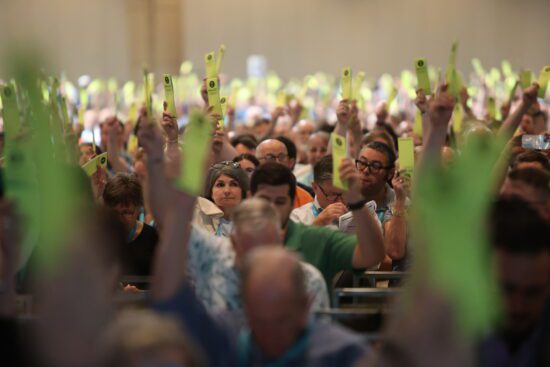
The reconciliation resolution passed overwhelmingly (at least 98%), and there was a tremendous sense of joy and unity on the Convention floor while the world was watching. The next day the Southern Baptist resolution made the front page of The New York Times, and it was a positive story.
The origins of the 1995 resolution
How did the resolution come to be, and why Atlanta in 1995? It was the year we celebrated the 150th anniversary of the Southern Baptist Convention’s (SBC) founding in 1845. While we had many things to celebrate about our heritage, we also had the sins of slavery and segregation to contend with—sins which had permeated our beginnings.
For too much of our history the SBC had intentionally been an overwhelmingly white denomination. It was only in the context of the Civil Rights Revolution of the 1950s and 1960s that some Southern Baptists attempted to seriously confront the grievous sin of racism.
When I was elected as executive director of the then Christian Life Commission (CLC, now the ERLC) in September 1988, I felt led to call Southern Baptists to make racial reconciliation a primary priority. In fact, when I was interviewed by the CLC’s search committee, I expressed my deep appreciation for Foy Valentine’s courageous leadership on the issue during his tenure at the CLC (1960–1987) and the need to reemphasize it.
I felt that Southern Baptists (and the country) had lost focus on the issue since the early victories in the historic civil rights legislation of the 1960s. I expressed my profound disappointment that we had not made more progress on racial reconciliation in the 1970s and 1980s.
After my election, I immediately began to lead the CLC to help Southern Baptists take prophetic leadership on the issue. As the first undeniably “Conservative Resurgence” entity head, I wanted to make it clear that the race issue was not a right versus left issue but a right and wrong issue.
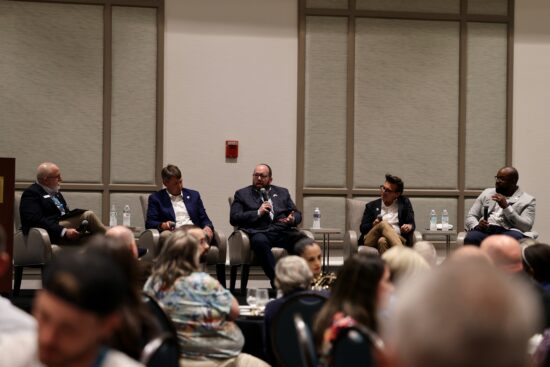
The first official public event under my leadership at the CLC was a conference on racial reconciliation in January 1989. In preparation, I convened a “consultation” of six white and six Black Southern Baptist leaders for an off-the-record discussion on the race issue among Southern Baptists.
The Holy Spirit used candid conversations during that meeting to give unique impetus to what culminated in the 1995 “Resolution on Racial Reconciliation.” We met for dinner and reconvened the next morning. God used our time of honesty to focus many of us in a new way on the issue of racial reconciliation. I believe it was truly the “birth” moment of the 1995 reconciliation resolution.
As we researched the issue, we realized that the SBC had discussed and condemned racism and segregation in various resolutions, but we had always done so in the third person. What we had never done was acknowledge our institutional complicity and culpability in having supported or acquiesced to racism and segregation. We needed to make it personal and empower our Black brothers and sisters by apologizing and asking for their forgiveness.
I have deep appreciation for then-SBC President Dr. Jim Henry and Resolutions Chairman Dr. Charles Carter for suspending Convention rules and allowing the Committee on Resolutions to meet days earlier than normal so we could pass the resolution before we had our sesquicentennial celebration.
The SBC after 1995
In the years since 1995, we have seen explosive growth of Black, Hispanic, and Asian congregations in Southern Baptist institutional life. Research from BaptistResearch.com and other sources reflect much greater participation of Blacks and other ethnic groups in Southern Baptist life. Ethnic minority groups have increased by 1 million members. Almost one-fifth of Southern Baptist churches are predominantly non-Anglo, and their numbers are increasing much more rapidly than among Anglos. (It should always be remembered that the SBC is a convention of churches, not individual members.) While the percentage of Southern Baptists who are white (80+%) still exceeds the United States population average (60%), the ethnic percentage of Southern Baptist churches has increased dramatically.
Of course, there is still much to do. As a denomination we have become much more reflective ethnically of the country in which we live. The reality is that we are much less so at the local congregational level. Racial reconciliation is always an ongoing process, and there is still much to do. Let us draw inspiration from the past as we go forward into the future.
There are multitudes of Southern Baptists, Black and white, who have worked courageously and sacrificially for racial reconciliation over the years, and it would be negligent not to pause and express our profound gratitude to them for their witness and sacrifice.
May we gain courage from them as we seek to move ever closer to the biblical ideal of a Church in which “there is neither Jew nor Greek . . . for you are all one in Christ Jesus.” (Gal. 3:28)