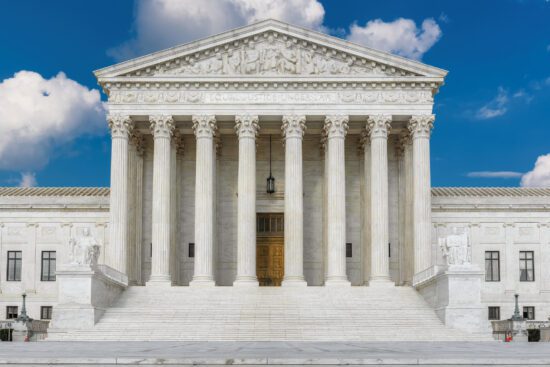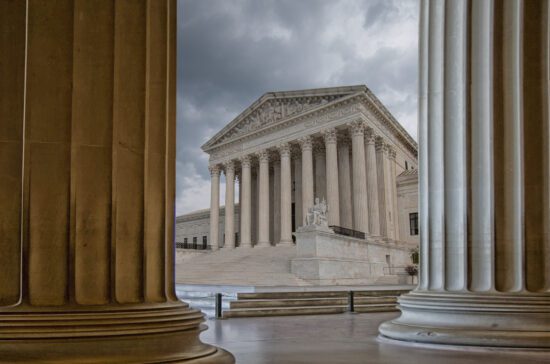


On June 30, the Supreme Court issued its final decisions of the 2025–2026 term, many of which were monumental and established new precedent for American courts. The ERLC engaged five cases within our purview by signing onto amicus briefs, resourcing churches on the implications of these weighty cases with issues of moral importance, and working with coalition partners to support their efforts in safeguarding fundamental rights.
The role of the Supreme Court
The Supreme Court has the unique role to correct and establish judicial precedent which impacts all American courts. The guidance of the Supreme Court is often directed as instruction to lower courts on how to interpret or implement certain laws. The justices stand in between the legislature and the people as a guide toward proper and principled interpretation of our U.S. Constitution, federal legislation, and sometimes state constitutional or legislative issues.
Because of the expansive impact of Supreme Court decisions, a continued, prayerful presence which represents the biblical convictions of Southern Baptists is imperative to ensure our fundamental rights are upheld and that America is a nation governed by constant moral truths, many of which are found in God’s Word. This article details our reflections on the importance of this summer’s cases, why they matter to Southern Baptists, and the ultimate judicial outcomes delivered from the court.
First Choice Women’s Resource Centers, Inc. v. Davenport
In First Choice Women’s Resource Centers, Inc. v. Davenport, the Supreme Court held that First Choice pregnancy centers may challenge a subpoena served by the state of New Jersey in federal court rather than being required to continue in the state court system. The subpoena would have required First Choice to share extensive amounts of internal documents due to state-created, misleading allegations that First Choice was falsely marketing their pregnancy centers as offering abortion services.
This case presented an opportunity to come alongside pregnancy resource centers and ensure that states do not misuse their oversight powers as a way to antagonize or demean the incredible work that First Choice does to champion life and serve mothers. The outcome of the Supreme Court decision serves to strengthen protections of faith-based nonprofits, like First Choice, which stand by the unchangeable truth that abortion is an affront to the image of God bestowed upon every human life.
Chiles v. Salazar
In Chiles v. Salazar, the Supreme Court held that the speech used in talk therapy by a counselor is protected as free speech and is not restricted to state-mandated professional conduct rules. This means that a Christian counselor may utilize their faith-based wisdom and biblical truths to advise patients who desire counseling services which reaffirm Scripture and God’s good design. Not only did the challenged Colorado law threaten Christian beliefs about gender and sexuality but it also threatened the viability of Christians being able to serve and shepherd others as counselors and therapists rooted in biblical truth. The Chiles decision affirmed the right of counselors to bring their faith into the counseling room with them, not having to shed their religious beliefs and convictions at the door of their practice.
Landor v. Louisiana Department of Corrections and Public Safety
In Landor v. Louisiana Department of Corrections and Public Safety, the Supreme Court distinguished that under the Religious Land Use and Institutionalized Persons Act (RLUIPA), an aggrieved party may not sue individuals working on behalf of the government for monetary damages when they violate a prisoner’s religious liberty. While this was a disappointing loss for Mr. Landor, whose religious liberty was irreparably infringed upon, the justices found that government officials in their individual capacity must consent to legal exposure before they can personally be sued for damages. Despite the Supreme Court interpreting RLUIPA in a way which limits remedies for aggrieved parties who sue following the infringement of their religious liberties, RLUIPA still recognizes and protects incarcerated individuals’ essential right to freely practice and hold religious beliefs.
West Virginia v. B.P.J.and Little v. Hecox
The Supreme Court jointly heard and decided West Virginia v. B.P.J. and Little v. Hecox, two women’s sports cases challenging whether state laws that prevent biological men from competing against women violated Title IX and the Equal Protection Clause of the 14th Amendment, respectively. The Supreme Court ultimately decided that the states had a legitimate interest in and right to ensure safety and fairness in women’s sports by restricting team participation to athletes of the same biological sex. This decision was an important win for upholding the biblical truth of sex and gender while also reaffirming the human dignity of every young athlete.
State of Louisiana v. Food & Drug Administration
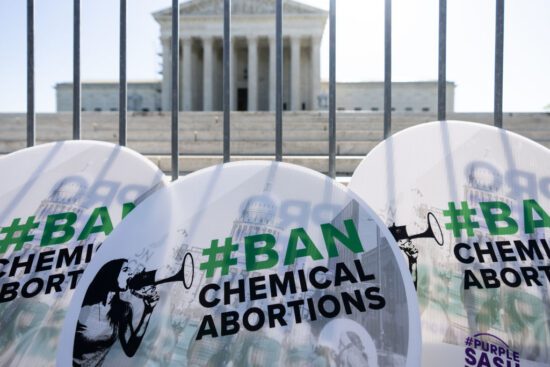
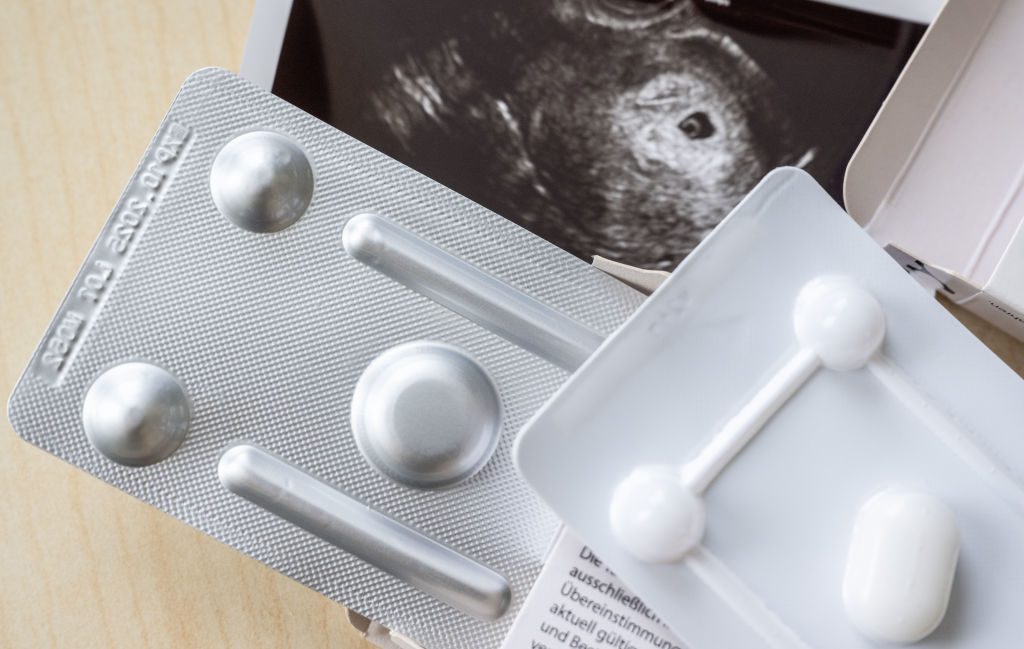
Another important case we engaged with this year was State of Louisiana v. Food & Drug Administration. This case, which deals with abortion pills being mailed nationwide, including into states with laws that restrict the use of abortion pills, was heard in May on the emergency docket, rather than the merits docket. When the Supreme Court hears an emergency docket case, the justices are not making a decision on the merits of the case, but rather only providing temporary relief or guidance while the case is being decided in the lower courts.
The Supreme Court’s binding, interim guidance allows chemical abortion pill manufacturers to continue distributing their products while the lower courts decide whether abortion pills must be prescribed in person. The ERLC will continue to engage with this case, defending life and the human dignity of all human beings while a decision is being made by the 5th Circuit Court of Appeals.
Why Supreme Court engagement matters
The ERLC engages with the Supreme Court as a means to faithfully advocate for life, marriage and family, religious liberty, and human dignity in all sectors of the public square. The Supreme Court proves to be a pivotal forum where our essential liberties are debated and decided by justices whose role is to faithfully and impartially interpret the Constitution, seeking to thoughtfully consider what is moral, right, and good.