



Last week, in the case of Starkey v. Roncalli High School and Archdiocese of Indianapolis, a federal court in Indiana ruled in favor of the Indianapolis Archdiocese, upholding its right to “provide students and families with an authentic Catholic education.” Along with other recent positive rulings, this latest decision is yet another win reaffirming the rights of individuals and institutions seeking to exercise fidelity to their religious beliefs without government infringing on their constitutional rights. This decision is good news for religious schools, the faculty, and families who send their children to those schools.
What was the case about?
In August 2018, Lynn Starkey, a former co-director of guidance at Roncalli High School, informed school leadership that “she was in, and intended to remain in, a same-sex marriage in violation of her contract and of Catholic teaching.” Upon learning of Starkey’s same-sex marriage, Roncalli administration “declined to renew her employment contract on the grounds that her marriage violated Catholic teachings.” Alleging discrimination, along with a list of other infractions, Starkey then sued Roncalli and the Roman Catholic Archdiocese of Indianapolis.
What led to the favorable ruling?
Ultimately, the court made its decision based on an important legal doctrine –– one favorable to the Archidiocese. Luke Goodrich, vice president and senior counsel at the Becket Fund for Religious Liberty, stated that it’s a matter of “common sense: religious groups have a right to hire people who agree with their religious beliefs and practices.” The long-standing consensus of the Supreme Court (and lower courts) has been and, with this ruling, clearly remains that “the Constitution forbids secular courts from interfering in important personnel decisions of churches and religious schools.”
As outlined in a case detail produced by the Becket Fund for Religious Liberty, “As Co-Director of Guidance at Roncalli High School, Lynn Starkey was responsible for communicating the Catholic faith to students and families, and advising students both practically and spiritually as they discerned their vocational path at and after Roncalli,” a fact that necessarily invoked the principle of the ministerial exception.
The ministerial exception was one of the most significant factors at play in this case for several reasons: Roncalli High School is a private religious school; Starkey had a consequential role in advising students according to Catholic orthodoxy; and “Every administrator, teacher, and guidance counselor at Roncalli High School signs an agreement to uphold the teaching of the Catholic Church in both their professional and private lives.”
What is the ministerial exception?
The ministerial exception is a constitutional protection that bars the government from applying employment discrimination laws to religious organizations. To allow the government to control the hiring practices of religious organizations would infringe on the Free Exercise rights of religious organizations to operate independent of government involvement. Though the ministerial exception is not explicitly stated in the Constitution, it is grounded in both religious clauses of the First Amendment.
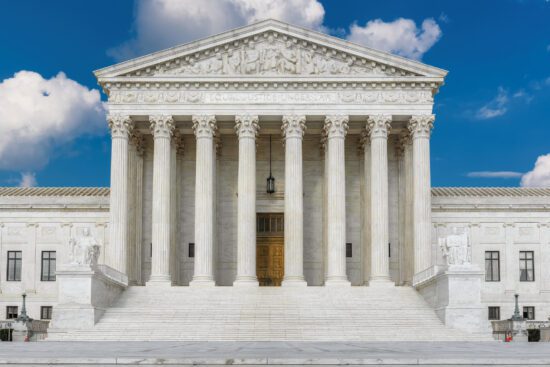
In its June 2020 decision in Our Lady of Guadalupe School v. Morissey Beru (in which the ERLC filed an amicus brief cited in the court’s ruling), the Supreme Court held that there is no rigid formula to determine if the ministerial exception applies. Rather, the court looks at a variety of factors surrounding the individual’s employment including, but not limited to: official title, religious training, religious credentials, a source of religious instruction, and whether the duties played a role in teaching the religious organization’s message and conveying its mission.
In contrast to the recent ruling in DeWeese-Boyd v. Gordon College, in which it was decided that the ministerial exception did not apply, the U.S. District Court Southern District of Indiana concluded, “Starkey qualified as a minister, and that the ministerial exception bars all of Starkey’s claims.”
What’s next?
The ministerial exception has been central to a slate of recent court decisions, a precedent, at this point, that shows no signs of abating. In fact, the Becket Fund for Religious Liberty currently has pending a second, similar case defending Roncalli High School, the same Catholic high school involved in the lawsuit described above.
The ERLC applauds the Indiana court’s decision to reaffirm the Archdiocese of Indianapolis’ constitutional rights and its prerogative to operate according to its deeply held religious beliefs, and the bearing that has on all other religious persons and institutions. Based on the number of recent favorable decisions, we are encouraged by the overwhelming number of rulings that continue to side with the cause of religious liberty.
As always, the ERLC remains committed to promoting and defending the religious liberty and conscience rights of all people and religious organizations.