

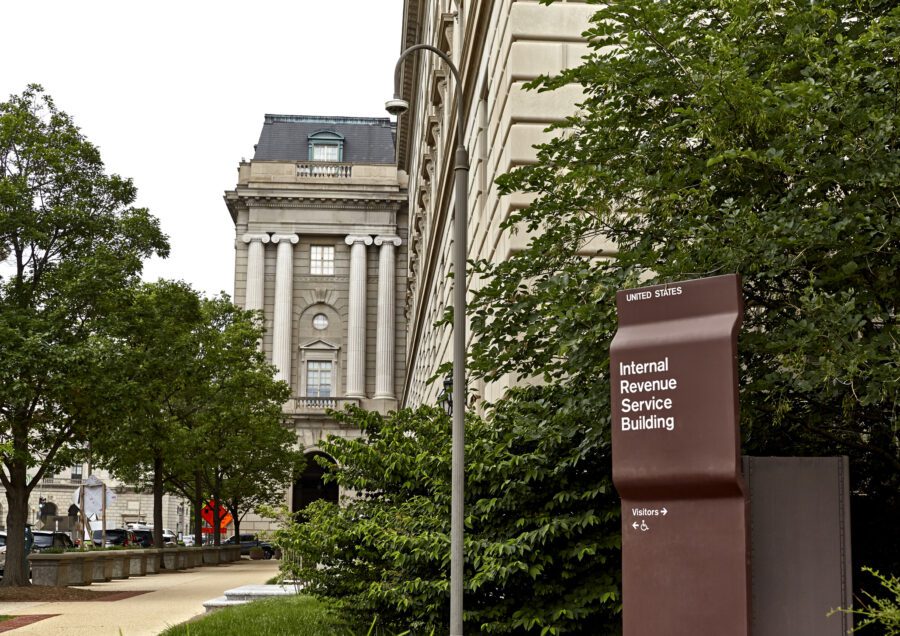

On July 7, the Internal Revenue Service (IRS) reached an agreement with plaintiffs in a pending lawsuit concerning free speech for churches. In a joint motion, the parties asked the court to settle the dispute, reinterpreting the Johnson Amendment and clarifying that churches are no longer restricted from speaking about political issues or candidates.
In August 2024, the National Religious Broadcasters Association and two Texas churches sued the IRS, arguing that what’s known as the Johnson Amendment infringed upon their First Amendment rights of freedom of speech and free exercise of religion.
The proposed agreement to settle the case articulates that conversations “between the house of worship and its congregation, in connection with religious services” did not constitute participation or intervention in politics, which the Johnson Amendment prohibits. Instead, the court filing clarified that speaking to a congregation about a political issue or candidate would not be viewed as campaigning, but rather, as a family matter internal to the church body.
What is the Johnson Amendment?
The Johnson Amendment, named after then-Sen. Lyndon B. Johnson, is a provision passed in the 1954 tax code that prohibits tax-exempt organizations, including religious nonprofits and churches, from engaging in political campaign activity. As enacted, this prohibition includes monetary donations to political candidates as well as speech that specifically endorses or opposes a political candidate.
How has the Johnson Amendment affected churches?
The prior interpretation of the Johnson Amendment forced Americans to give up their right to free speech when working for a church or nonprofit. It also put the IRS in the position to scrutinize sermons and the public remarks of church and nonprofit employees.
Though it was intended to prevent the politicization of nonprofits, the Johnson Amendment has pressured preachers to consider compromising their speech for fear of losing their tax-exempt status and harming their pastoral work.
Why does this ruling matter for Southern Baptists?
This court filing reinforces First Amendment rights of free speech and freedom of religious exercise, allowing pastors and religious leaders to minister more effectively to their congregations. If pastors cannot speak to the culture, they abandon a key component of their ministry assignment, which is to shepherd their churches through the real moral and ethical issues they might face as they seek to live like Christ in a complex and fallen world.
For decades, Southern Baptists have consistently championed freedom of speech and religious practice in the public square through resolutions. They spoke to this specific issue in a 2001 resolution, citing “that we reject any campaign finance legislation that hinders or abridges free speech.”
As a matter of law, pastors and other ministry leaders should be free to speak to cultural, social, and political issues without fear of the government’s retribution. Southern Baptists, as a group, have consistently defended this right. How a particular pastor or congregation chooses to deploy that right properly falls within the purview of local churches, whose leaders are called to minister out of devotion to Christ, submission to the Holy Spirit, and faithfulness to God’s Word.