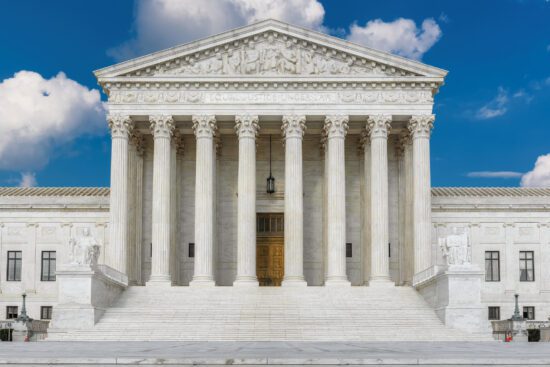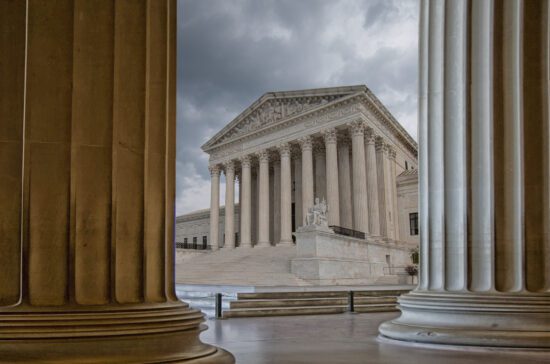




As the Supreme Court’s current term unfolds, several high-profile cases will be decided which touch on issues of importance to Southern Baptists. These cases could have far-reaching implications for how faith communities navigate an increasingly complex cultural landscape in the areas of parental rights, gender and sexuality, life, and religious liberty. Here’s what you need to know about five significant Supreme Court cases before the court that the ERLC is actively engaged in.
Parental rights and gender ideology (Mahmoud v. Taylor)
In April 2025, the Supreme Court heard arguments in Mahmoud v. Taylor, a case challenging Montgomery County, Maryland’s policy requiring elementary schools to teach gender ideology concepts without allowing parents to opt their children out based on religious beliefs.
Case details: The case began when Montgomery County began mandating classroom instruction from storybooks about same-sex weddings and pride parades to children as young as 3 years old. Originally, Montgomery County permitted parents to opt their children out from this instruction, but the opt-out was later rescinded because the county argues it became too burdensome.
A multifaith coalition of over 300 parents—including Muslims, Catholics, Protestants, and Orthodox Christians—brought the challenge, arguing the policy violates their First Amendment rights by forcing their children to receive instruction that coercively contradicts their deeply held religious beliefs.
Oral arguments: During oral arguments, the justices explored whether classroom instruction featuring books affirming same-sex marriage and gender ideology constitutes a burden on religious exercise. Conservative justices questioned whether mandatory readings crossed the line from mere exposure to indoctrination, particularly given the young age of the children involved.
What Southern Baptists have said: For Christians, this case strikes at the heart of biblical teachings about parental authority. The 2024 Southern Baptist Convention resolution “On the God-Given Rights and Responsibilities of Parents” affirms that parents should remain “the primary arbiters of a child’s moral and spiritual formation.”
What the ERLC has done: The ERLC signed onto an amcius brief in support of parental rights. A ruling affirming parental rights would strengthen religious liberty protections for families navigating public education.
Case implications: At issue is whether public schools violate parents’ religious freedom when they mandate that young children participate in instruction on gender and sexuality without parental notification or opt-out provisions.
States’ authority to defund abortion providers (Medina v. Planned Parenthood South Atlantic)
In Medina v. Planned Parenthood South Atlantic, the court will determine whether states can exclude abortion providers from their Medicaid programs.
Case details: The case originated in 2018 when South Carolina Gov. Henry McMaster issued an executive order disqualifying abortion providers, including Planned Parenthood, from the state’s Medicaid program. Planned Parenthood and several Medicaid beneficiaries challenged this policy, arguing that federal law gives recipients the right to choose any qualified provider.
Central to the case is whether the Medicaid Act’s “any qualified provider” provision grants individual beneficiaries a private right to sue when their preferred provider is excluded. South Carolina contends the law contains no “clear, rights-creating language” giving individuals this authority.
What Southern Baptists have said: For pro-life Christians, this case represents an opportunity to ensure taxpayer dollars aren’t directed to organizations performing abortions. As outlined in the 2021 SBC resolution “On Taxpayer Complicity In Abortion And The Hyde Amendment,” Southern Baptists have consistently affirmed the biblical mandate to protect unborn life and oppose public funding for abortion providers.
What the ERLC has done: The ERLC filed an amicus brief in favor of excluding abortion providers.
Case implications: A ruling in South Carolina’s favor would empower states to redirect healthcare funding away from abortion providers toward comprehensive women’s healthcare alternatives that don’t take the lives of preborn children.
Religious autonomy (Catholic Charities Bureau v. Wisconsin Labor & Review Industry Commission)
In Catholic Charities Bureau v. Wisconsin Labor & Industry Review Commission, the Court is considering whether state governments can determine which activities of religious organizations qualify as “religious enough” to merit certain exemptions.
Case details: The case arose when Catholic Charities Bureau, a ministry arm of the Diocese of Superior, requested a religious exemption from Wisconsin’s Unemployment Insurance Program tax. Despite being under direct Catholic Church supervision, Wisconsin officials denied this request, determining the organization’s activities weren’t “typical” religious activity. The Wisconsin Supreme Court upheld this determination by fashioning a problematic legal test to examine the religiosity of ministerial activities.
Oral arguments: During oral arguments, justices across the ideological spectrum appeared skeptical of Wisconsin’s test. As Justice Kagan said, “I thought it was pretty fundamental that we don’t treat some religions better than other religions, and we certainly don’t do it based on the content of religious doctrine.”
What Southern Baptists have said: For Southern Baptists, who affirm in the Baptist Faith and Message that “a free church in a free state” as the Christian ideal, protecting religious organizations from government interference in their structure and ministry approaches is essential. Churches and religious organizations must remain free to organize their work according to their theological convictions without fear of government penalties.
What the ERLC has done: The ERLC joined an amicus brief in defense of our First Amendment liberties.
Case implications: This case holds significant implications for religious liberty. If Wisconsin’s test stands, government officials could gain unprecedented authority to evaluate which activities of faith-based organizations are sufficiently “religious” to qualify for legal protections and exemptions.
Protecting children from pornography (Free Speech Coalition, Inc. v. Paxton)
In Free Speech Coalition, Inc. v. Paxton, the Court is evaluating Texas’s law requiring pornographic websites to verify users are 18 or older before granting access.
Case details: The 2023 Texas law applies to websites with at least one-third “sexual material harmful to minors,” requiring age verification through government ID or biometric data. Twenty other states have passed similar protections.
The pornography industry has challenged these laws, arguing they violate free speech rights and should be subject to “strict scrutiny”—the highest standard of judicial review. Texas maintains its law represents the least restrictive means to accomplish the compelling government interest of protecting children from known harms.
Oral arguments: During arguments, justices across the ideological spectrum acknowledged pornography’s harmful effects on children and recognized previous attempts through content filtering and parental controls have proven insufficient.
What the ERLC has done: For Christians concerned about children’s spiritual and psychological well being, this case represents an important opportunity to protect the next generation from harmful content. The ERLC’s amicus brief, joined by both Texas Baptist conventions, highlighted Southern Baptists’ opposition to pornography and belief that government has a responsibility to protect children from such material.
Protecting children from gender transitions (United States v. Skrmetti)
In December 2024, the court heard arguments in United States v. Skrmetti, a challenge to Tennessee’s law prohibiting medical interventions intended to “affirm” a gender identity inconsistent with a minor’s biological sex.
Case details: Tennessee’s Senate Bill 1, passed in March 2023, prevents healthcare providers from offering prescriptions or performing procedures on minors with the purpose of enabling them to identify with an identity inconsistent with their biological sex or treating distress from such discordance. The law required doctors to cease all ongoing gender procedures on minors by March 31, 2024.
Oral arguments: During oral arguments, Tennessee Solicitor General J. Matthew Rice defended the state’s authority to determine which medical treatments are appropriate for minors, arguing the law protects children from irreversible harm. The Biden administration’s Solicitor General Elizabeth Prelogar and ACLU attorney Chase Strangio challenged the law as unconstitutional “sex-based” discrimination.
What Southern Baptists have said: Southern Baptists have been clear about the dangers of gender ideology for children. The 2023 SBC resolution “On Opposing ‘Gender Transitions’” explicitly condemned “harmful and often irreversible ‘gender transition’ experiments on vulnerable minors” and called for legislative protections like Tennessee’s law.
What the ERLC has done: The ERLC, together with the Tennessee Baptist Mission Board, signed onto an amicus brief in defense of the protection of minors from these devastating “gender transition” interventions.
Case implications: This case holds significant implications for the 25 states with similar laws protecting minors from these procedures. It may also provide the Court an opportunity to clarify or limit its 2020 Bostock v. Clayton County ruling, which expanded the definition of “sex” under federal civil rights law.
Why these rulings matter for Southern Baptists
These five cases highlight the complex intersection of faith, family, and freedom in modern America. As Christians, we recognize that Supreme Court decisions have profound implications not just for legal doctrine but for how we live out our faith in the public square.
While we await these rulings—expected by the end of the court’s term in June 2025—we remain committed to biblical principles that affirm parental rights, protect the sanctity of preborn life, preserve religious autonomy, and safeguard children from harmful influences.
The ERLC will continue monitoring these important cases and will provide analysis of the court’s decisions when they are issued before the court’s term ends in late June.