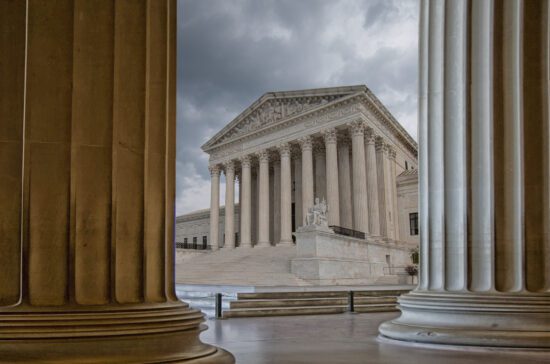



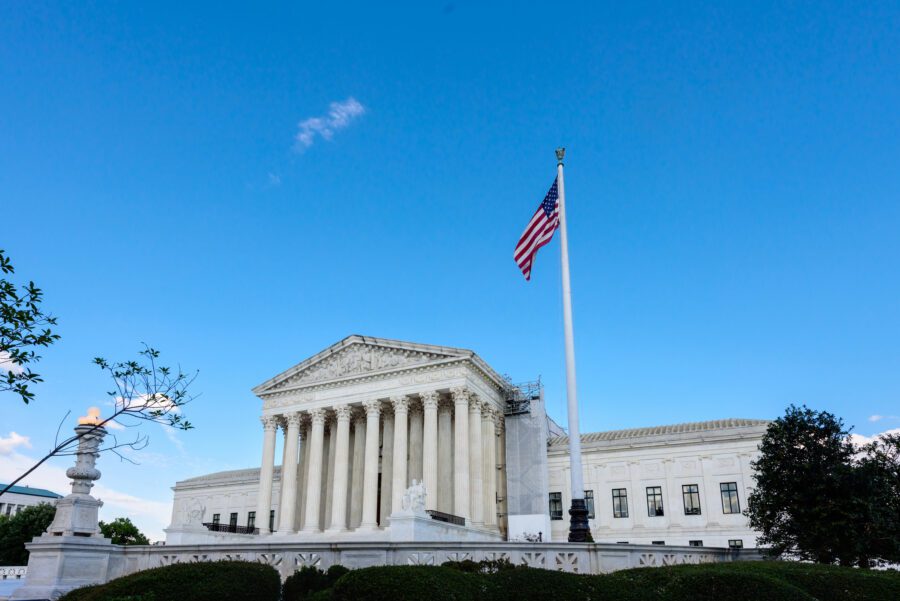

June 2025 marks 10 years since the U.S. Supreme Court’s Obergefell v. Hodges decision required all 50 states to license and recognize same-sex marriages. For many Americans, the decade since has been one of profound change in how our society views marriage, family, and even what it means to be male or female. About 61% of Americans now say same-sex marriage’s legalization has been good for society.
Christians, however, recognize that from a biblical perspective, Obergefell represents a departure from God’s good design for marriage and sexuality (Gen. 2:24; Matt. 19:4–6). It has unleashed legal and cultural pressures that challenge religious liberty, redefine long-standing moral norms, and push the Church to compromise biblical truth that has sustained society for generations. The following analysis examines four significant changes that have emerged in the decade since the court imposed same-sex marriage nationwide.
1. The escalating assault on religious liberty after Obergefell
One of the most significant impacts of Obergefell has been a wave of legal conflicts pitting newly recognized LGBTQ rights against the religious freedom of churches, ministries, and individual Christians.
In the decision’s immediate aftermath, clashes emerged over whether Christian officials and business owners would be compelled to facilitate same-sex weddings. Christian wedding vendors—bakers, florists, photographers—found themselves in court for declining to participate in same-sex ceremonies. For example, the case of Jack Phillips, a cake artist in Colorado, reached the Supreme Court in 2018. (The ERLC joined an amicus brief in defense of Phillips’ First Amendment rights.)
The court ruled 7–2 that Colorado’s civil rights commission had shown hostility toward Phillips’ faith, thus violating his free exercise rights. However, the ruling was decided on the narrowest of grounds, avoiding a clear precedent on whether businesses have a broader free speech or religious right to refuse services for same-sex weddings.
In other cases, outcomes were mixed: a Washington florist was penalized under state law for declining to serve a same-sex wedding, and faith-based adoption agencies in several states faced loss of licenses or funding for placing children only with married mother-father couples.
These legal battles underscore a troubling trend: the relegation of biblical beliefs about marriage to second-class status in law. In fact, many observers noted that Obergefell’s logic implicitly likened opposition to same-sex marriage with bigotry, akin to opposition to interracial marriage. Justice Samuel Alito warned in his dissent that those who continued to uphold traditional marriage would risk being branded as bigots and treated as such by governments and employers. This prediction has, in part, proven true. In some jurisdictions, anti-discrimination laws have been applied to churches and religious nonprofits, pressuring them to accommodate practices contrary to their faith.
And yet, the picture is not entirely bleak. Even though cultural opinion has clearly turned against a biblical understanding of marriage, the First Amendment’s guarantees have not been erased by Obergefell, and in several key cases, the Supreme Court has upheld religious liberty. Not only have there been no significant religious liberty loss at the Supreme Court, religious claimants have won a string of victories.
2. Collision between cultural indoctrination and parental rights after Obergefell
Another arena of dramatic change since the legalization of same-sex marriage is public education. The normalization of same-sex marriage and related LGBTQ issues in law has quickly filtered down into school curricula and policies. In the past decade, many public school systems have incorporated materials that celebrate same-sex families and LGBTQ identities, presenting them as unambiguously positive and normal.
Elementary students today are often exposed to storybooks about children with two moms or two dads. One Maryland school board approved a set of storybooks with LGBTQ characters for elementary classrooms, aiming to teach respect for LGBTQ students and same-sex parented families. From a secular education standpoint, this reflects society’s shift—since same-sex marriage is legal and celebrated in culture, schools feel obliged to affirm it as well.
However, these changes have ignited a cultural collision with parents holding traditional beliefs about marriage and gender. Parents in various states have protested, requesting the right to opt their children out of instruction that conflicts with their values. In the Maryland case, hundreds of concerned parents—including Christians, Muslims, and others—objected that the material contradicted their faith and would confuse their young kids. This case is now before the Supreme Court, and the ERLC signed onto an amicus brief in defense of parental rights, an item of particular importance to Southern Baptists as indicated by the Convention’s 2024 resolution on the topic.
3. Eroding cultural norms on marriage and family after Obergefell
Perhaps the most sweeping change since the legalization of same-sex marriage has been the shift in cultural attitudes. Over the past decade, American public opinion has solidified in favor of same-sex marriage and, correspondingly, has further destabilized the once-prevailing norms of the traditional family.
By the time of Obergefell in 2015, a narrow majority of Americans already supported legal gay marriage (around 55%). In the years after, support climbed higher.
- Gallup recorded a record-high 70% of Americans favoring same-sex marriage by 2021—a 10-point jump since the decision.
- Even groups historically opposed have shifted: for the first time in 2021, a small majority of Republicans (55%) voiced support.
- Other surveys show that today nearly two-thirds of Catholics and white mainline Protestants approve of same-sex marriage, as do about 29% of white evangelical Protestants (up from just 11% in 2004).
Culturally, gay marriage has been mainstreamed to the point of seeming almost unremarkable to many Americans.
- A 2022 Pew survey found 61% of U.S. adults believe same-sex marriage’s legalization has been “good for society,”
- whereas only 37% call it bad for society.
The majority narrative is triumphalist: love won, and no one was harmed.
In order to sell same-sex marriage culturally and legally, its proponents recast it as a gender-neutral contract. This de-linking has accelerated trends already undermining the family. If marriage is just about adult happiness, it is no surprise that fewer young adults prioritize marrying or that more couples forego having children. In fact, while same-sex marriages increased, overall U.S. marriage and birth rates continued to decline in the past decade.
The unraveling of the intact married family had been in motion for decades because of other trends, such as increasing divorce and cohabitation, but Obergefell reinforced the idea that there is nothing uniquely normative about man-woman marriage. The cultural messaging that followed has effectively said: All family structures are equally valid, and any suggestion that children fare best with their married biological mother and father is bigoted and “homophobic.” The result? Fewer people even aspire to the married-with-children life, and those who do often find less community support for it.
As Christians, we view this as a great loss for society’s common good. God’s design of the family (one man and one woman in covenant raising children) is not about arbitrary rules—it is intended for human flourishing (Gen. 1:27–28; Eph. 6:1–4). When that design is widely disregarded, the fallout especially harms the most vulnerable: children and the poor.
The authors of the 2017 Nashville Statement foresaw this, explicitly affirming that marriage, as designed by God, is “not for homosexual, polygamous, or polyamorous relationships.” The sexual revolution has an internal logic of ever-expanding “inclusivity”: first homosexual relationships were normalized, then bisexual and transgender identities, and now various non-monogamous arrangements seek normalization. As Romans 1:28–32 warns, when a society “does not see fit to acknowledge God,” it becomes filled with a cascade of culturally sanctioned unrighteous behaviors.
4. From marriage redefinition to gender redefinition after Obergefell
In 2015, many assumed the legalization of same-sex marriage was the culmination of the LGBTQ movement’s goals. In reality, it proved to be a springboard for the next and perhaps even more radical phase of the sexual revolution: the mainstreaming of transgender ideology and the deconstruction of gender itself.
Over the past decade, issues of gender identity have moved to the forefront of cultural debate. Almost immediately after Obergefell, public discourse pivoted from “Who can marry whom?” to “Who counts as a man or a woman?” Battles over bathroom access, pronouns, sports, and medical interventions for gender dysphoria entered into the national conversation by 2016–2017 and have only intensified since. While this shift has its own complex causes, many cultural observers note that the logic which underpinned Obergefell—the idea that personal choice and self-defined identity trump natural or traditional norms—seamlessly extends into the transgender debate.
Both instances reflect the same underlying worldview: a rejection of the Creator’s design. As the Baptist Faith and Message points out, the Bible defines marriage as the uniting of one man and one woman in covenant commitment for a lifetime. And in Romans 1, the Apostle Paul describes how idolatry (worshiping the creature rather than the Creator) leads to a cascade of sexual errors (Rom. 1:26–27). After endorsing homosexual behavior, our culture has carried this “exchange” even further—exchanging the very concept of male and female for a custom-tailored identity. As Christians, we must combat this modern iteration of gnosticism by affirming the goodness of the human body as created male or female (Gen. 1:27) against a culture that treats the body as malleable clay to be refashioned at will.
It is noteworthy that Obergefell itself used the language of personal identity and autonomy. The majority opinion spoke of “the right to define and express one’s identity” in the context of marriage. Dissenting justices warned that such language was dangerously broad. And indeed, in 2020 the Supreme Court’s Bostock v. Clayton County decision (though not about marriage) ruled that “sex” discrimination in employment law includes gender identity—effectively writing transgender ideology into federal law.
The continuing challenge to faith and freedom
A decade after Obergefell, it has become clear that the decision has had far-reaching consequences beyond simply allowing same-sex couples to marry. The ruling has fundamentally altered our legal landscape, educational systems, and cultural understanding of marriage and family in ways that directly challenge biblical truth and religious liberty.
For Christians committed to biblical values, these changes represent not just policy disagreements but profound moral challenges that strike at the heart of religious freedom and family formation. The warning from Justice Alito’s dissent that the decision would be used to “vilify Americans who are unwilling to assent to the new orthodoxy” has proven tragically accurate.
Moving forward, Christians must continue to advocate for robust religious liberty protections while compassionately yet firmly proclaiming the truth about God’s design for marriage and family. In addition, we must honor marriage, turning from the ways we have adopted worldly standards of infidelity and divorce. Despite legal setbacks, we must remember that our ultimate allegiance is to God’s unchanging Word rather than shifting cultural trends. The next decade will require renewed courage, conviction, and commitment to stand firm for biblical truth in an increasingly hostile cultural environment.